
• Home
  • News
  • Government
  • Business & Finance
  • Entertainment
  • Sports
  • Tech
  • Health
  • About Federal Character
  • Advertise With Us
Federal Character
No Result
View All Result
Federal Character
  • Home
  • News
  • Government
  • Business & Finance
  • Entertainment
  • Sports
  • Tech
  • Health
  • About Federal Character
  • Advertise With Us
No Result
View All Result
Federal Character
No Result
View All Result
Home News
Why South Koreans Turned Against President Yoon After His Martial Law Attempt?

Why South Koreans Turned Against President Yoon After His Martial Law Attempt?

Benita OrumabyBenita Oruma
2 years ago
in News
Reading Time: 3 mins read
A A
0
Facebook ShareWhatsapp ShareX Share

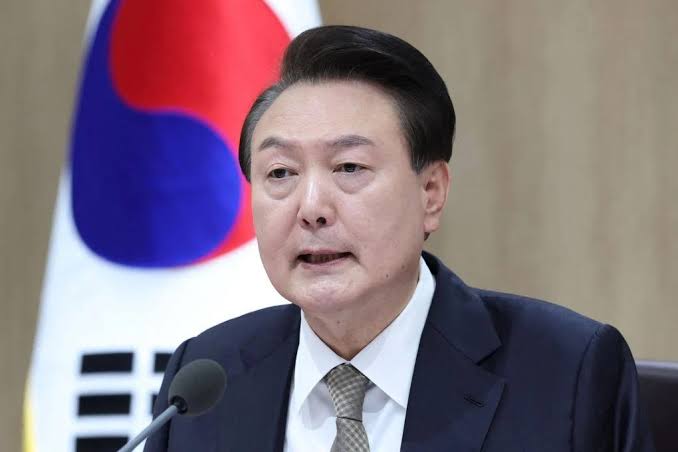
It’s been three days since South Korean President Yoon Suk-yeol made the controversial decision to declare martial law, a move widely condemned as unwise and authoritarian. Although the National Assembly swiftly voted down the declaration, the nation is still reeling from the shock of what many see as an alarming attempt to undermine South Korea’s democracy. Protests have erupted across the country, with citizens demanding Yoon’s resignation, reflecting the deep wounds left by South Korea’s history of military dictatorship.

Table of Contents

Toggle
  • South Korea’s Painful History with Martial Law
  • President Yoon’s Martial Law Declaration: A Flimsy Pretext?
  • The Fallout: Protests, Impeachment Threats, and Treason Charges
  • A Wake-Up Call for Democracy

South Korea’s Painful History with Martial Law

South Korea’s democracy is hard-won. For nearly four decades, the country endured harsh authoritarian rule, with three military dictators dominating the political landscape. This dark period ended only after the summer of 1987, when massive street protests forced the last military ruler to accept direct presidential elections. That watershed moment culminated in the election of Roh Tae-woo, marking the beginning of South Korea’s Sixth Republic and a new democratic era.

Since 1988, South Korea has operated under its fifth constitution, which enshrined democratic principles and put an end to decades of oppressive rule. The transition to democracy wasn’t easy, but it forged a robust civil society that has proven resilient in defending the country’s democratic values.
President Yoon’s Martial Law Declaration: A Flimsy Pretext?

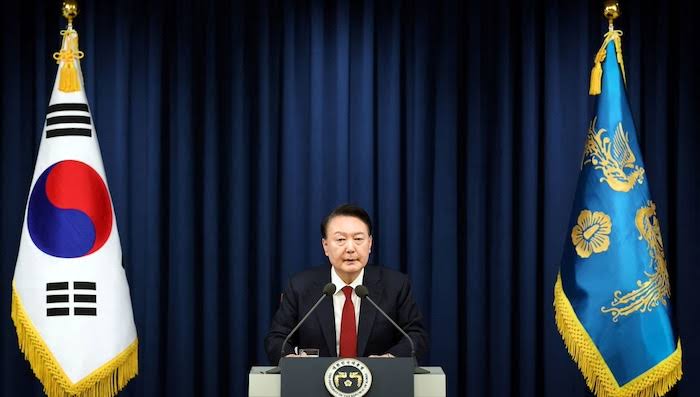
President Yoon’s declaration of martial law has reignited painful memories of South Korea’s authoritarian past. Yoon justified his move by accusing the opposition Democratic Party of turning the National Assembly into a “monster trying to destroy liberal democracy.” He pointed to the opposition’s 22 impeachment motions against officials in his administration and its threats to cut his discretionary budget as evidence of a crisis.

Doubling down on this rhetoric, Yoon branded his opponents as “pro-Pyongyang anti-state forces,” language eerily reminiscent of the justifications used by past military dictators. Such accusations have not only outraged his political rivals but also alarmed South Korea’s international allies, who have long viewed the country as a stable democracy in the region.

The Fallout: Protests, Impeachment Threats, and Treason Charges

The backlash against Yoon has been swift and fierce. Tens of thousands of protesters have taken to the streets, demanding his resignation and accusing him of betraying the democratic principles that South Korea has worked so hard to uphold. Political analysts believe that Yoon now faces an uphill battle for his political survival, with impeachment proceedings looming and even potential charges of treason on the table.

South Korea’s civil society, often hailed as one of the strongest in Asia, has rallied against the president’s actions, further isolating Yoon from the public and political establishment. The swift rejection of martial law by the National Assembly demonstrates the resilience of South Korea’s democratic institutions, which have evolved over decades to prevent a return to authoritarianism.

A Wake-Up Call for Democracy

President Yoon’s misstep serves as a stark reminder of how fragile democracy can be, even in countries with strong institutions. For South Koreans, the incident is more than just a political crisis—it’s a battle to protect the democratic ideals that have become the foundation of their national identity since 1988.

While Yoon’s political future remains uncertain, one thing is clear: South Koreans are unwilling to tolerate any attempt to undermine their democracy.

As the country moves forward, the protests and parliamentary actions send a strong message to leaders in South Korea and beyond—democracy, once won, must be fiercely defended.


Tags: federal characterMartial lawPoliticsPresident YoonSouth KoreaWhy South Koreans Turned Against President Yoon After His Martial Law Attempt?
Share234SendTweet146
Benita Oruma

Benita Oruma

Benita Oruma is a lawyer in training, a 400 level student in the university of Ibadan. She is a content writer with interest in corporate affairs and the marketplace.

Related Stories

Navy Aircraft Mishap Off Virginia Coast Leaves Four Sailors Injured

Navy Aircraft Mishap Off Virginia Coast Leaves Four Sailors Injured

byAyobami Owolabi
0

Two US Navy aviators ejected from their aircraft while attempting to land aboard the USS Dwight D. Eisenhower off the Virginia coast on Monday evening, and four sailors...

Airlines May Ground Flights Nationwide If Airport Blockades Return

Airlines May Ground Flights Nationwide If Airport Blockades Return

byAyobami Owolabi
0

The Airline Operators of Nigeria has warned that domestic airlines could suspend nationwide operations if labour-related disruptions similar to the August incident involving Air Peace are repeated. The...

Three Teens Charged as Adults in Towson Armed Carjacking

Three Teens Charged as Adults in Towson Armed Carjacking

bySomto Nwanolue
0

Three 16-year-old boys have been charged as adults in connection with an armed carjacking at an East Towson shopping center, Baltimore County police said. Officers were called around...

Trucking CEO Dismisses Nationwide Strike Rumors as Diesel Hits $6.57

Trucking CEO Dismisses Nationwide Strike Rumors as Diesel Hits $6.57

bySomto Nwanolue
0

Rumors have been swirling online that truckers nationwide could strike on October 1 amid record-high diesel prices. One trucking executive says those rumors are not grounded in reality....

Next Post
Is Nigeria’s Judiciary Beyond Repair? Chief Justice’s Call for Reform Rings

Is Nigeria's Judiciary Beyond Repair? Chief Justice's Call for Reform Rings

Leave a Reply Cancel reply

Your email address will not be published. Required fields are marked *

Federal Character

We bring to you precise and factual news.
Towson, Baltimore, Maryland, USA

Recent Posts

  • Coal Eyes Took Over the 2026 VMAs. Here’s How to Wear the Trend
  • Iran Court Upholds 74 Lashes for Singer Parastoo Ahmadi
  • Obama to Headline Senate Democrats Fundraiser in October

Categories

  • Beauty
  • Business & Finance
  • Entertainment
  • Fashion & Lifestyle
  • Food & Nutrition
  • Government
  • Health
  • News
  • Politics
  • Sports
  • Tech

Weekly Newsletter

  • Home
  • About Federal Character
  • Advertise With Us
  • Cookie Policy
  • Sitemap

Copyright © FederalCharacter.com 2026 .

Welcome Back!

Login to your account below

Forgotten Password?

Retrieve your password

Please enter your username or email address to reset your password.

Log In
No Result
View All Result
  • Home
  • News
  • Government
  • Business & Finance
  • Entertainment
  • Sports
  • Tech
  • Health
  • About Federal Character
  • Advertise With Us

Copyright © FederalCharacter.com 2026 .