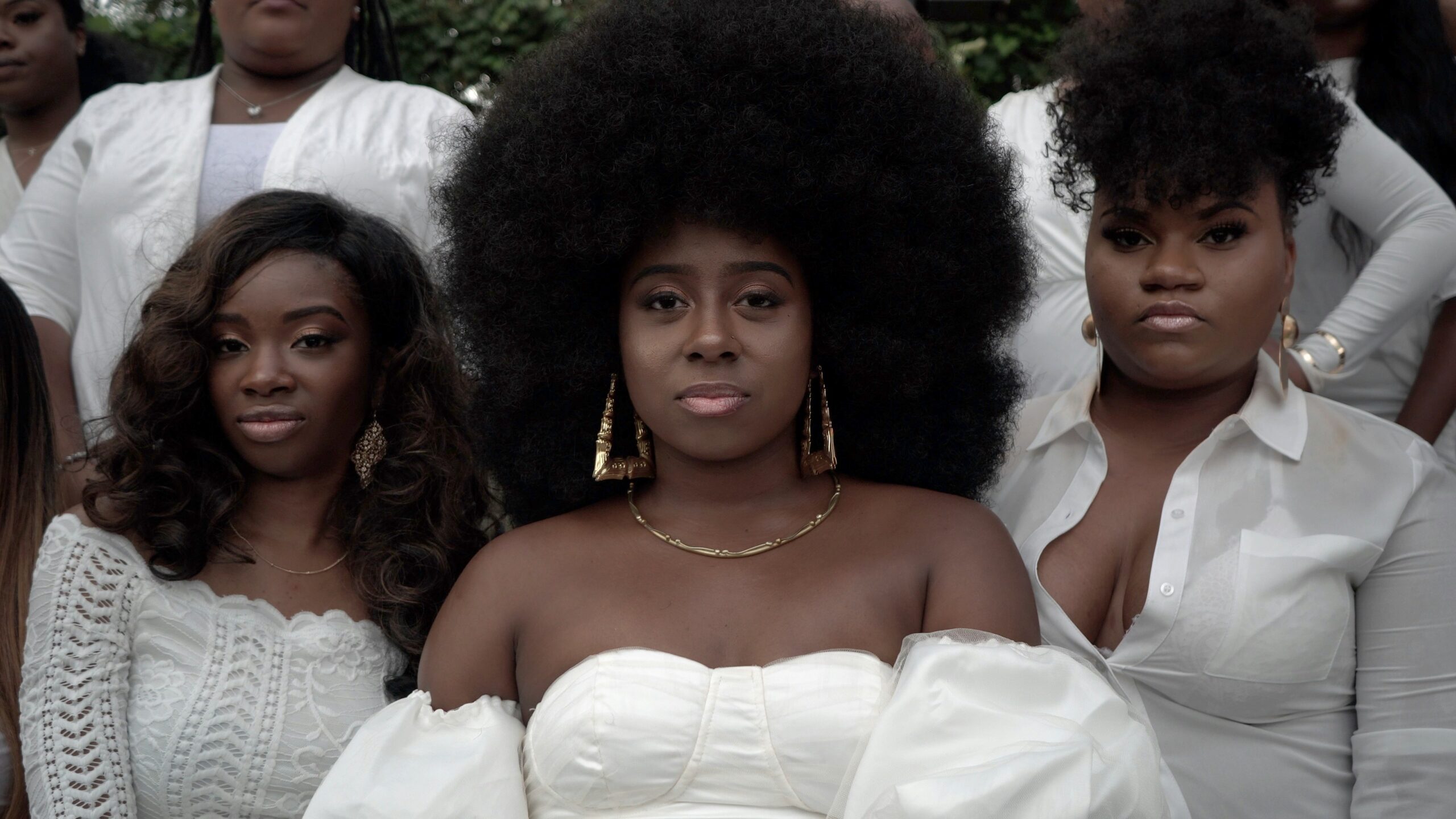

In the comment section of a wedding hashtag, between the professionally shot videos and the congratulations, a debate was simmering. A bride had worn braids, and a subset of the internet could not compute. Why would she not wear a frontal? Why would she not “doll up”? The implication, unspoken but deafening, was that her natural hair, in its most adorned and traditional form, was not enough for her own wedding day.
In the days since the lavish wedding of #meetthedapsons, the conversation has spiraled into a bigger thing on the internet. It has forced us to sit with a question we have spent decades dodging: have Nigerian women been conditioned to hate the hair that grows from their own heads?
The answer, if we are truly honest, is yes.
Let us rewind to secondary school. For generations of Nigerian girls who attended public schools, the routine was the same. You entered JSS, and you were required to cut your hair into the unappealing “Low Cut.” The authorities told you that it would be neat, tidy, and easier to manage that way. Never mind the message it conveyed:
That your hair, in its natural state, is inconvenient. It is a problem to be solved, not a crown to be nurtured.
You spend your formative years looking in the mirror and seeing something that needs to be “controlled.” By the time you graduate, you are handed back a head of hair you do not recognize and have no idea how to care for. The cycle of dependency begins—on relaxers, on weaves, on anyone but yourself.
A 2021 study on female adolescents in North-Central Nigeria found that knowledge of proper hair care was poor in 61.4 percent of the girls surveyed. Nearly 70 percent used chemical relaxers, and 90.8 percent had engaged in the dangerous practice of relaxing and tightly plaiting their hair simultaneously. We are not born knowing how to damage our hair. We are taught. By salons that charge extra for natural textures. By aunties who shake their heads when they see coils reaching for the sky, instead of silk flowing downward. By a culture that has, for too long, equated Eurocentric smoothness with beauty.
And so, we arrive at the wedding debate.
When the majority of women in the comment sections said they would choose a frontal over braids or their natural hair, were they really making a choice? In a society where your hair is still judged in boardrooms and on red carpets, where natural hair has historically been deemed “unprofessional” or “unkempt,” the frontal becomes an armor. It is the safest way to show up, to take up space, to be beautiful without having to defend yourself.
But it is also a loss.
The traditional hairstyles of the Yoruba, Igbo, and Edo peoples were not just aesthetic. The shuku, koroba, and patewo were not just names; they carried statements of identity, status, and occasion. They required skill to create and pride to wear. Somewhere along the way, we traded them for bouncy frontals and called it elevation.
Olivia Emeodi, founder of Nigerian hair brand Captive Hair, put it plainly: “Hair isn’t just about fashion. It’s politics. It’s how you are treated the moment you walk into a room”. When we choose the frontal over the braid, we are not just choosing a hairstyle. We are choosing the path of least resistance. We are choosing not to have to explain ourselves.
Titilolami Bello of OriLifestyle has spent years fighting this mindset. She notes that for many, the thought of wearing their own hair on their wedding day—their graduation, their most important moments—is terrifying. “Many will shiver at the thought,” she says. This mentality can only spring from decades of being told, implicitly and explicitly, that what you have is not enough.
The women opting for frontals are not the enemy. They are the product of a system. The real work is not in shaming them but in dismantling the conditions that make the frontal feel like the only option.
That begins with education. It begins with teaching young girls—from secondary school—that their hair is not a burden. It begins with salons that do not upcharge natural textures, with workplaces that do not police kinky hair, with a media that does not reserve “glow-ups” for characters who swap their afro for a weave. It begins with brands truly creating products for Nigerian hair, by Nigerians who understand it.
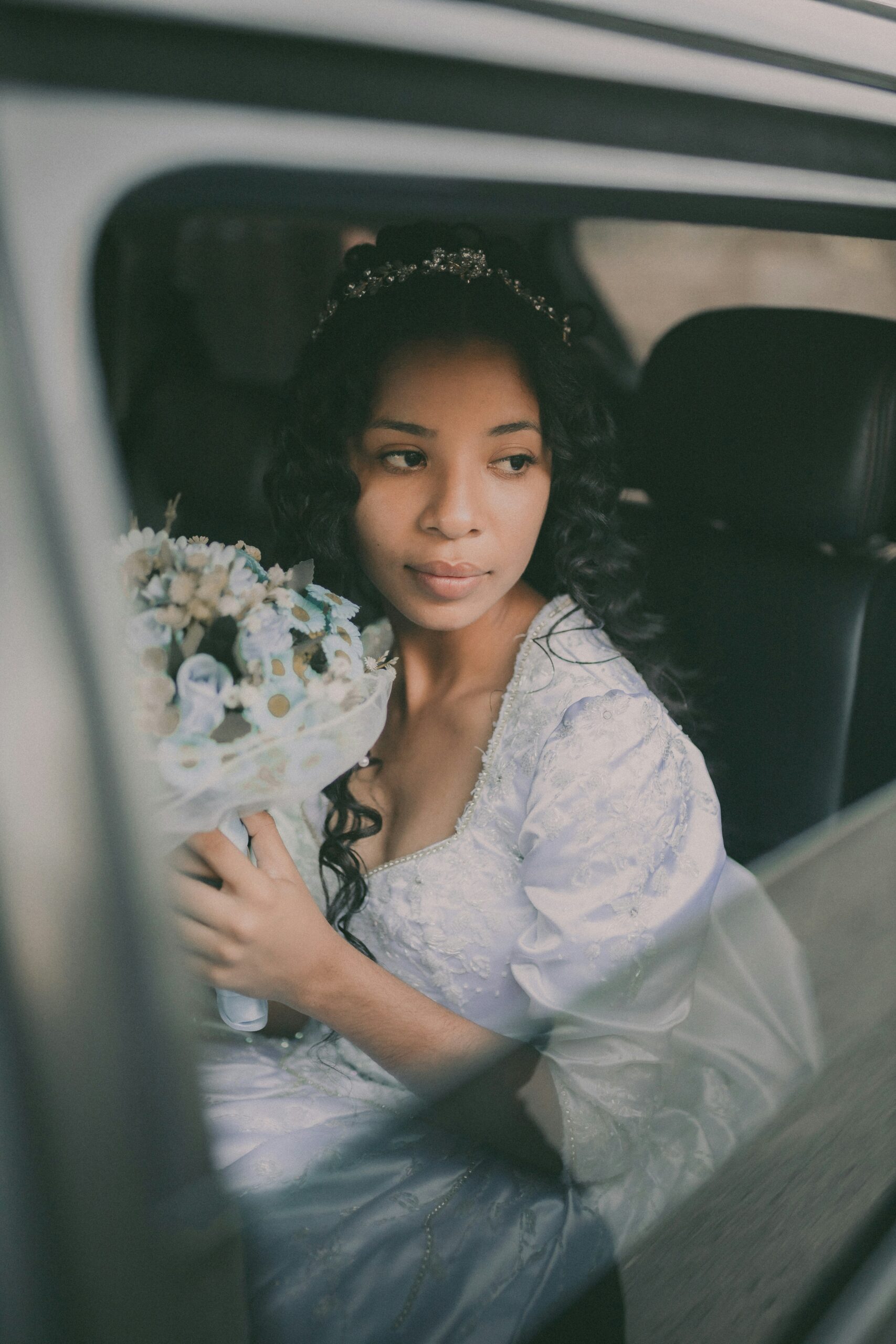
The return of braids and natural textures to wedding spaces will be slow, hard, and, for obvious reasons, meet with resistance. But it will happen; it is happening. Brides are beginning to walk down aisles with hair that looks like theirs, adorned with beads and coral, and the weight of generations.
The debate over frontals versus braids is not really about hair. It is about whether we have the courage to look in the mirror and see something whole. It is about whether we can show up to the most important rooms of our lives wearing ourselves, unarmored, and still feel like we belong there.