The Trump administration is assigning denaturalization cases to regular prosecutors, a move that could lead to a surge of people stripped of US citizenship. The Justice Department has identified 384 foreign-born Americans whose citizenship it wants to revoke, part of a push to increase the pace of denaturalizations by assigning the cases to prosecutors in dozens of US attorney’s offices across the country.
Senior Justice Department officials in Washington told colleagues during a meeting last week that civil litigators in 39 regional offices would soon be assigned to file denaturalization cases against the individuals. Two people familiar with the plans confirmed the broader effort to ramp up denaturalizations. It was not clear what led the department to target these 384 specific individuals.
The message this sends to naturalized citizens is that their citizenship is not as secure as they thought.
How Denaturalization Works
Under federal law, the government may ask a court to strip the citizenship of people who obtained it fraudulently — for instance, by entering into a sham marriage or by withholding information about their past that would have made them ineligible. Some who commit crimes may also be denaturalized. The government must present evidence to a federal judge through a civil or criminal proceeding, making the process challenging and time-consuming.
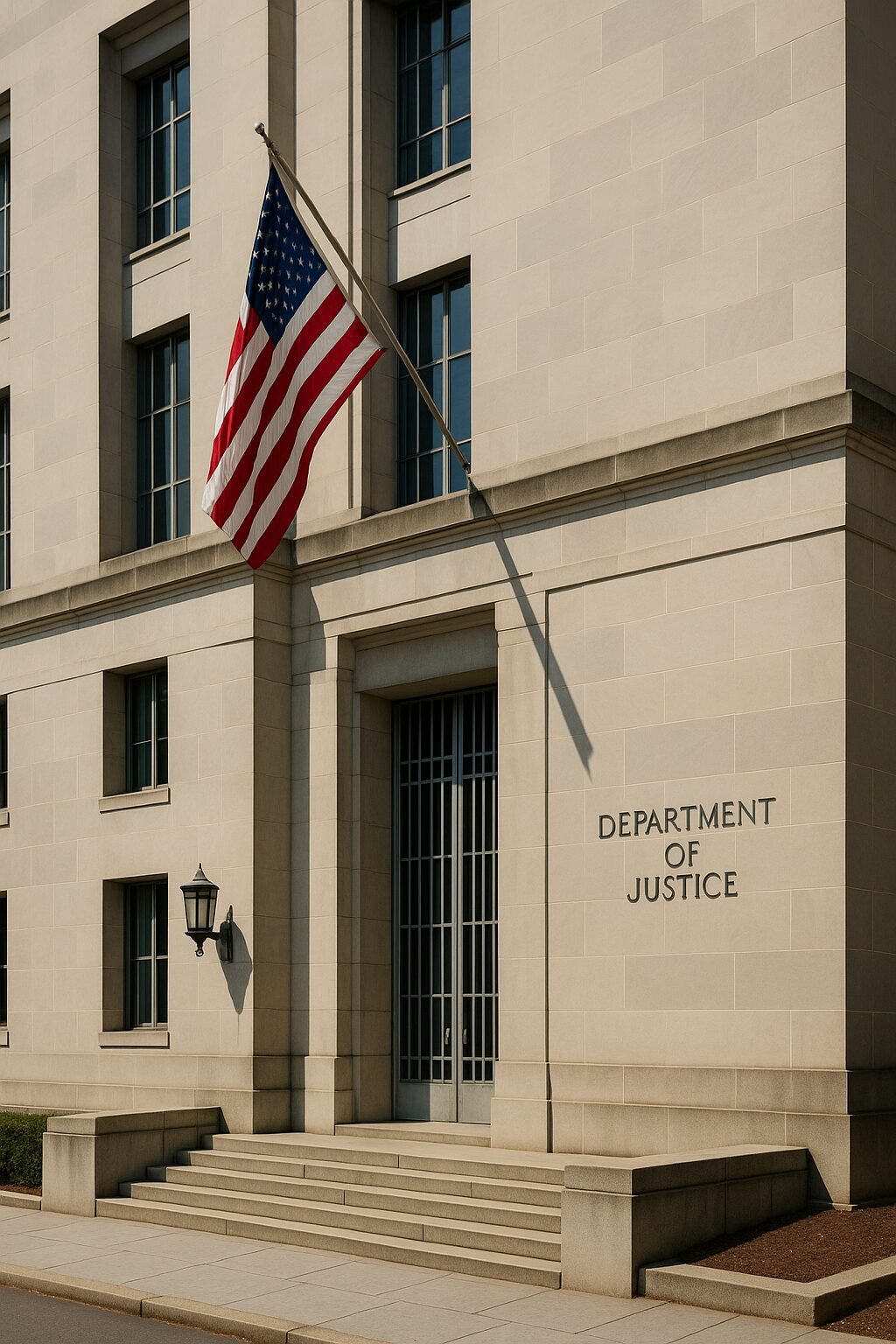
Traditionally, experts in the department’s office of immigration litigation have handled denaturalization cases. But the effort to enlist regular prosecutors to pursue these cases could lead to a surge in denaturalizations, which have been rare in recent decades. It also comes just months after Trump administration officials ordered Department of Homeland Security staffers to refer upward of 200 denaturalization cases a month to the DOJ.
Matthew Tragesser, a Justice Department spokesman, said that officials were “pursuing the highest volume of denaturalization referrals in history” from the Department of Homeland Security. “The Department of Justice is laser-focused on rooting out criminal aliens defrauding the naturalization process,” he added.
Abigail Jackson, a White House spokeswoman, said: “Citizenship fraud is a serious crime; anyone who has broken the law and obtained citizenship through fraud and deceit will be held accountable.”
The Scale of the Push
Between 2017 and late last year, the government sought to strip just over 120 naturalized Americans of their citizenship. Such cases were far less common before President Trump was first elected. Between 1990 and 2017, the government filed 305 denaturalization cases — an average of just 11 per year.
Now, the DOJ has identified 384 individuals in a single wave. That is more than three times the annual average of the pre-Trump era. And officials describe this as only “the first wave of cases.”
The push indicates that the Trump administration aims to make good on its plan to increase the pace of denaturalizations as part of its broader crackdown on immigration. The move will likely scare many naturalized immigrants as the administration has sought to curtail immigration across the board and spoken disdainfully about migrants from certain countries.
During last week’s meeting, Francey Hakes, the director of the Executive Office for United States Attorneys, described the 384 individuals identified for denaturalization as “the first wave of cases” the government intended to pursue. Hakes acknowledged that several civil divisions at US attorney’s offices are understaffed and struggling to cope with an avalanche of lawsuits filed by immigrants challenging the legality of their detentions.
“I hope these cases will not be too much of an additional burden,” Hakes told colleagues, adding that boosting denaturalization cases was a “White House initiative.”
Jackson, the White House spokeswoman, pushed back: “This isn’t a White House initiative — it’s federal law.”
The Legal and Historical Context
People who become US citizens are extensively vetted. Applicants must provide biometric data and answer wide-ranging questions about their travel history, run-ins with the law, and ties to the Communist Party. Some qualify through marriage to US citizens after three years. Others become eligible after having held green cards for at least five years. The final steps include passing civics and English tests.
Naturalized citizens enjoy almost all the rights and responsibilities of native-born citizens — a notable exception is that foreign-born citizens may not run for president. As such, the bar for stripping someone of citizenship is high. “For civil revocation of naturalization, the burden of proof is clear, convincing, and unequivocal evidence which does not leave the issue in doubt,” the US Citizenship and Immigration Service says on its website.
There have been instances of fraud. In 2017, the inspector general at the Department of Homeland Security said in a report that an initiative to digitize fingerprints collected on paper in old immigration cases revealed that more than 800 immigrants obtained American citizenship despite having been previously deported under a different name.
But legal scholars warn that the new push goes beyond targeting clear fraud. “The message it sends is that naturalized citizens don’t have the same rights and stability as native-born citizens,” said Amanda Frost, a law professor at the University of Virginia. “The government has used this power in the past to target people it views as political opponents.”
Lucas Guttentag, a former DOJ official in the Biden administration and a professor at Stanford Law School, was blunter. “This kind of mass denaturalization campaign will be based on a distortion of the law and is another transparent effort to destabilize long-established principles of US citizenship. Genuine fraud when it actually occurs has always been aggressively pursued.”
The Cost and Consequences
Making denaturalization cases a core part of the work of civil divisions at US attorneys’ offices stands to divert resources from the types of cases litigators have historically prioritized. Those include health-care fraud, procurement fraud, enforcement of civil rights laws, and asset forfeiture cases.
A rise in denaturalizations may also send a chilling message, Frost said, hearkening back to an era in the 20th century during which the government denaturalized political activists it disdained. President Trump said in an interview in January that Americans of Somali descent could be among those targeted in the denaturalization push.
During the years when the government pursued denaturalization cases infrequently, it tended to go after people who had committed war crimes overseas before becoming Americans. The new wave appears to be broader — and the criteria for targeting remain unclear.
In recent months, the Trump administration has filed denaturalization cases against a broad range of immigrants. They include a Marine from Ghana who was court-martialed over a sex crime, an Argentine man accused of having obtained citizenship by falsely claiming to be Cuban, and a Nigerian man convicted of running a tax-fraud scheme.
The Bottom Line
The Justice Department has identified 384 foreign-born Americans whose citizenship it wants to revoke. The Trump administration is assigning denaturalization cases to regular prosecutors in 39 regional offices, a move that could lead to a surge of people stripped of US citizenship. Officials describe this as “the first wave of cases.”
Between 1990 and 2017, the government filed an average of 11 denaturalization cases per year. Between 2017 and late last year, it sought to strip just over 120 naturalized Americans of their citizenship. The new push represents a dramatic escalation.
Legal scholars warn that the campaign sends a dire message to naturalized citizens that their citizenship is conditional and not secure. The government says it is simply enforcing the law against those who obtained citizenship fraudulently. But with 384 individuals already targeted, more to come, and the criteria for selection unclear, the denaturalization push is reshaping what it means to become — and stay — an American.