Hungary’s new Prime Minister, Péter Magyar, has issued a public apology to citizens who, according to him, were targeted or mistreated during the years of Viktor Orbán’s leadership, marking a symbolic break from the previous administration.
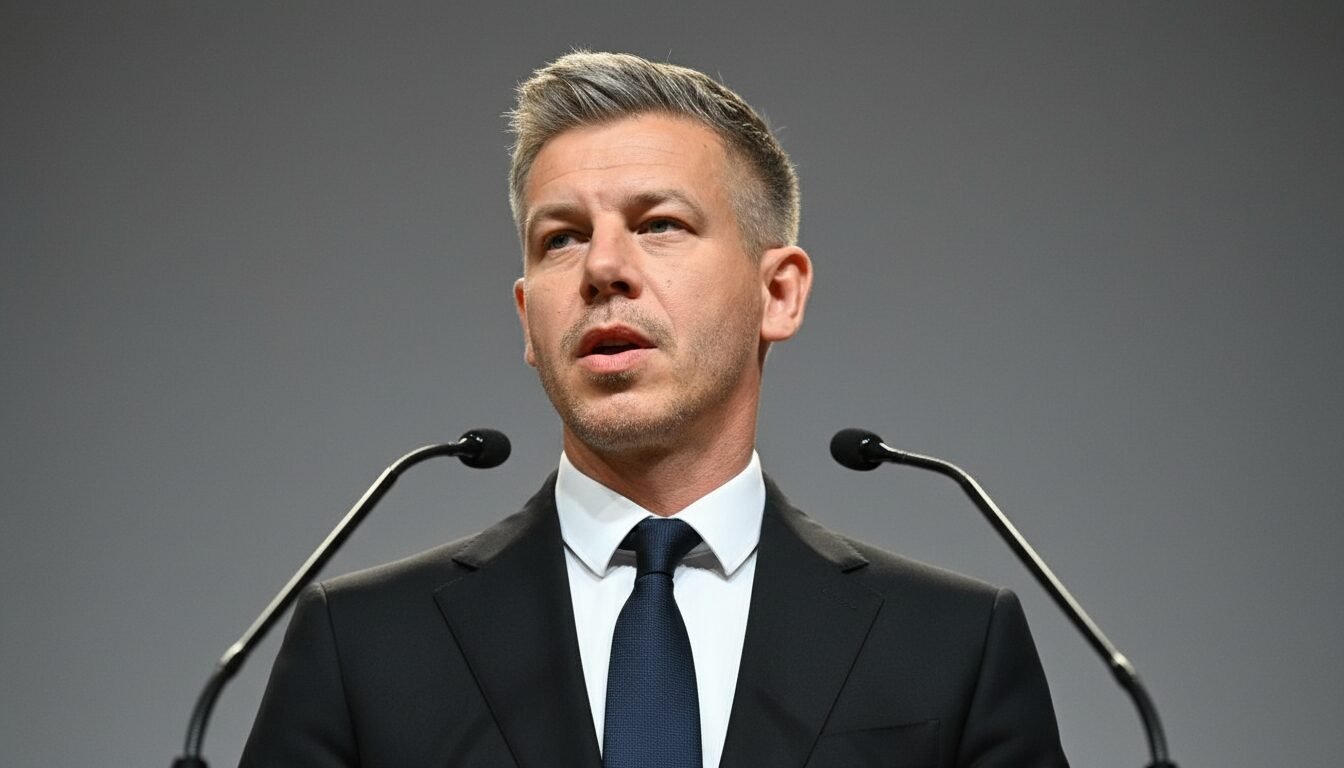
Speaking shortly after being sworn in on Saturday, Magyar used his first address as prime minister to acknowledge years of alleged repression faced by critics of the former government.
“I apologise to all those civilians, teachers, journalists, health workers and public figures who have been stigmatised, harassed, or treated as enemies for daring to speak out, for daring to stand up for the vulnerable, for criticising, or for simply expressing a different opinion,” he said. “I apologise.”
His remarks reflected long-standing accusations that Orbán’s government had used state institutions to pressure critics, including media outlets and civil society groups, through investigations, legal actions, and public smear campaigns.
Over the years, several opposition figures and activists were prosecuted, including cases linked to Pride events and accusations involving journalists, some of which were widely criticised internationally.
Following Magyar’s recent electoral victory, some of those cases have reportedly been dropped, including espionage-related charges against journalists that rights groups had described as unfounded.
In his speech, Magyar called for unity and promised a shift in national direction.
“What connects us will be stronger than what divides us,” he said. “Hungary will be home for every Hungarian, and everyone can feel like they have a place in the Hungarian nation. Family, friends and communities will be able to speak to each other again.”
Political analyst Veronika Kövesdi of Eötvös Loránd University said the apology could play a key role in national reconciliation.
“It’s a very special act … There are material things that people want to see this government do, but there are also emotional expectations,” she said. “We’re talking about healing, a shift in public sentiment, or the way we talk to each other. Society wants this.”
She added that it was “an act of reconciliation, but he highlights that making peace with something doesn’t mean that we will forget it”.
Orbán, who did not attend the swearing-in ceremony, responded the following day with a warning about sovereignty and external influence.
“The new guys must understand one thing very clearly. If you do not fight for Hungary in Brussels, the Brusselians will walk all over you,” he wrote on social media.
“Giving up our patriotic position and surrendering national sovereignty for money or political approval would be a historic mistake. Foreign elites must not be allowed to decide our future for us!”
As Magyar prepares to form his cabinet, attention is shifting to how he will govern after campaigning on promises to dismantle corruption, restore democratic institutions, and reform the political system “brick by brick”.
However, his policy direction remains broadly defined, with critics noting his limited engagement with detailed questioning during the campaign and his past ties to Orbán’s ruling party.
Some analysts have drawn comparisons between Magyar’s political style and Orbán’s early career.
“In a way, Magyar is like Orbán 20 years ago without all the baggage, the corruption and the mistakes made in power,” said Andrzej Sadecki of the Centre for Eastern Studies.
Public reaction remains divided. One voter, Anita, 33, said, “Magyar is not a saint, but Fidesz needs to go.”
Meanwhile, a recent poll suggests many of his supporters expect stronger action on issues such as climate change and LGBTQ+ rights, reflecting competing pressures on the new administration.
Budapest Mayor Gergely Karácsony expressed cautious optimism, writing, “It’s been a long time since I saw so many happy, liberated people in Budapest. It’s a great start.”