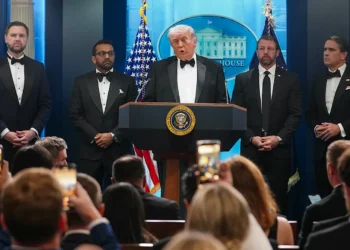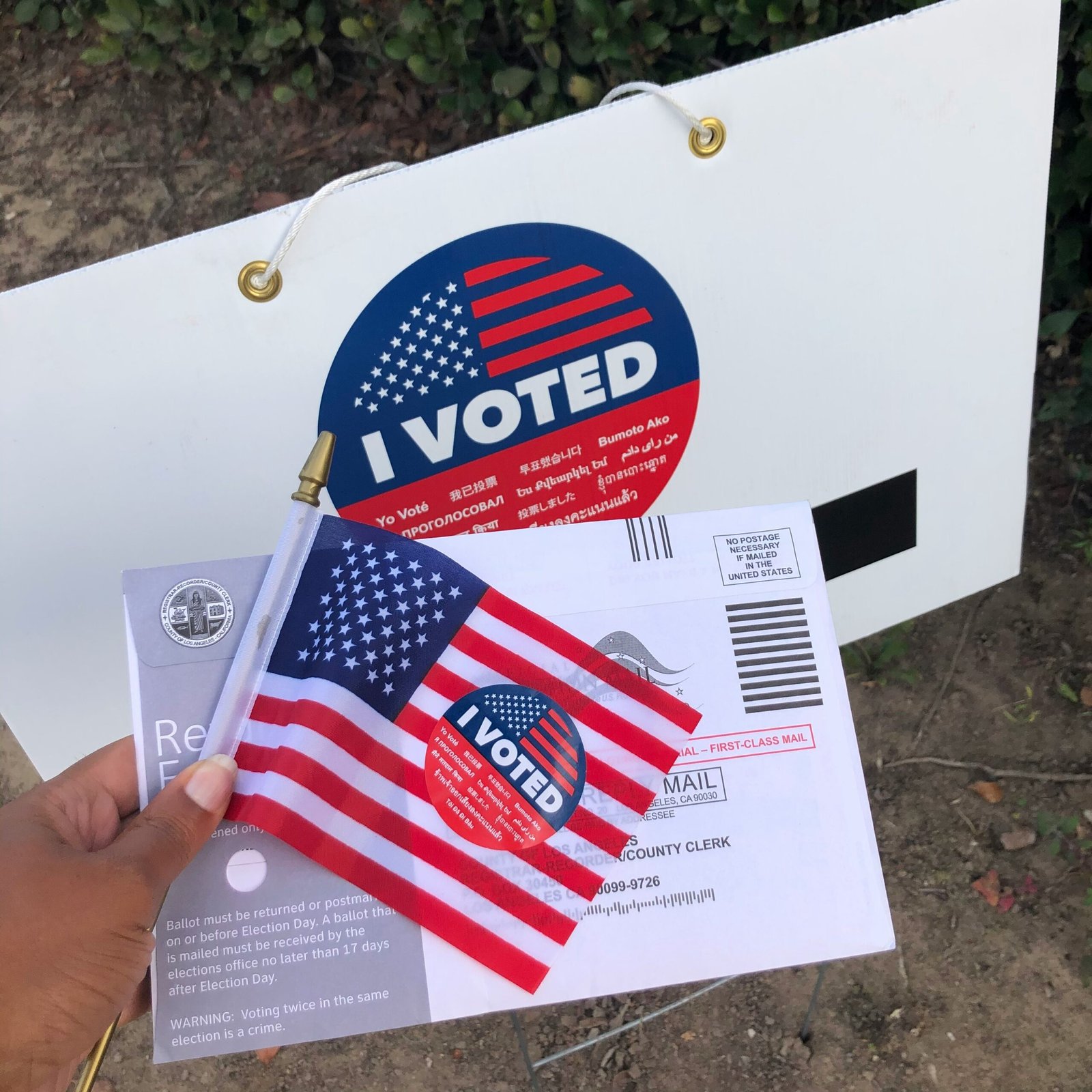

A federal judge has declined to temporarily halt President Donald Trump’s executive order aimed at tightening rules around voting by mail.
The ruling, delivered Thursday by U.S. District Judge Carl Nichols in Washington, D.C., allows the order to remain in effect for now, despite ongoing legal challenges questioning whether the president has the constitutional authority to impose such election-related directives.
The executive order, signed on March 31, directs the Department of Homeland Security to collaborate with the Social Security Administration to compile lists of adult U.S. citizens in every state and provide the information to election officials.
It also instructs the United States Postal Service to create voter eligibility lists and ensure mail-in ballots are delivered only to individuals included on those lists.
In his decision, Nichols said the plaintiffs had not yet shown enough evidence to justify an emergency court intervention.
“The Court recognizes that the Postal Service may ultimately issue a final rule that directly affects Plaintiffs or their members, or that the Government may develop State Citizenship Lists that omit specific individuals due to particularized flaws,” Nichols wrote.
“Plaintiffs may, of course, renew their motions if and when those future actions occur. Until then, however, Plaintiffs cannot show that preliminary injunctive relief is warranted,” he added.
The decision comes as another federal judge in Boston is expected to rule soon on similar lawsuits challenging the order.
Since the directive was issued, questions have remained over how it would be implemented and whether it would affect ongoing mail-in voting during this year’s midterm primaries.
In a court filing earlier this month, the Trump administration said federal agencies were still considering how to enforce the order. Acting Attorney General Todd Blanche later informed a Senate committee that the Justice Department was working with other agencies to “make sure” the goals of the order are carried out.
Democrats, voting rights organizations and nearly two dozen states — along with Washington, D.C. — have filed multiple lawsuits opposing the order.
The challengers argue that the U.S. Constitution grants authority over federal election rules to Congress and state legislatures, not the president. They also claim the order improperly pushes USPS beyond its legal powers regarding election mail.
Trump, who voted by mail himself in Florida earlier this year, has defended the order as a measure to prevent illegal voting by noncitizens.
However, election studies and previous reviews have consistently shown that noncitizen voting in federal elections is extremely rare.
The lawsuits also point out that mail-in voting remains widely used across party lines, although more registered Democrats than Republicans reported voting by mail during the 2024 national election.