
The fragile ceasefire between the United States and Iran has collapsed into a destructive fresh round of military strikes, triggering an economic shockwave back home. On Wednesday, June 10, 2026, the Department of Labor released data showing the U.S. Consumer Price Index (CPI) surged to 4.2% year-on-year for May, up significantly from April’s 3.8% and marking a fresh three-year high.
The inflationary spike immediately rattled Wall Street, causing the Dow Jones Industrial Average to drop 0.6% within minutes of opening, while the S&P 500 and Nasdaq composite index both slid 0.4%. Despite the escalating domestic financial strain, President Donald Trump brushed off the negative economic data during an Oval Office press briefing, labeling the numbers “great” when viewed in the context of the administration’s highly aggressive, classified naval actions against Iranian infrastructure.
The Secret Midnight Tanker War
In his address to reporters, Trump sought to reframe the three-year high inflation rate not as a policy failure, but as an acceptable cost of an active, unannounced nighttime campaign to cripple Iran’s energy infrastructure. The military actions follow an incident on Monday evening where an Iranian drone brought down a U.S. Army Apache helicopter near the strategic Strait of Hormuz.
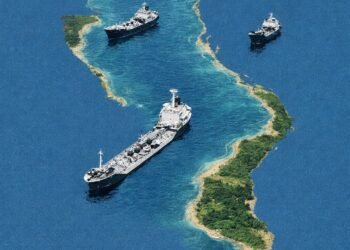
Trump revealed that U.S. naval forces have been actively disabling Iranian oil exports in the dark, claiming the military took out 22 transport ships in a single evening by exploiting blinded Iranian radar systems.

U.S. Central Command (CENTCOM) released footage confirming an attack on the Palau-flagged tanker M/T Settebello in the Gulf of Oman after it defied the U.S. blockade on Iranian ports. The strike left the vessel disabled and on fire, with three Indian mariners reported missing.
The conflict has driven Brent crude, the international oil standard, to roughly $94 per barrel. The effective closure of the Strait of Hormuz, which handles 20% of the world’s oil and gas transport, continues to choke global supply networks.
Bragging About Rising Prices
Calling a three-year inflation high “great” is an absolute slap in the face to regular Americans who are watching their paychecks evaporate at the grocery store and the gas pump. President Trump is attempting a bizarre piece of political alchemy here, trying to turn severe domestic economic pain into a triumphalist war slogan. The reality is that the administration’s decision to launch a hot war against Iran in late February is the direct, unedited cause of this economic misery.
The president loves to boast about running the “most successful blockade in the history of naval warfare,” but he seems completely blind to the fact that blockades cut both ways. You cannot choke off a fifth of the world’s energy supply through the Strait of Hormuz and then act surprised when everyday consumer prices skyrocket. By bragging about blowing up oil tankers in the middle of the night, Trump is admitting that his foreign policy is actively driving up the cost of living for his own citizens.
Worse still, this strategy has no clear endpoint. The U.S. trades strikes with Iran, Iran retaliates by launching drones at American bases in Bahrain and Kuwait, oil hits $94 a barrel, and Wall Street takes a nosedive. Instead of offering a realistic plan to stabilize the economy or negotiate an actual diplomatic resolution, the White House is telling Americans to take comfort in the fact that regular Iranians are suffering worse. Treating a massive, systemic inflation spike like a badge of military honor isn’t leadership; it’s a dangerous delusion that uses working-class wallets to fund an open-ended geopolitical conflict.
Regional Retaliation and Global Alarm
The collapsing ceasefire has triggered widespread panic across international bodies and Middle Eastern capitals. Following the U.S. strikes on nearly 20 Iranian targets, including radar installations and air defense networks, Tehran launched a wave of retaliatory drone and missile attacks targeting American military assets across the Persian Gulf.
Jordan’s military confirmed it intercepted and destroyed five incoming Iranian missiles aimed at the Muwaffaq Salti Air Base, which hosts American F-35 fighter jets. Alerts were also sounded in Kuwait and Bahrain as local air defenses intercepted hostile aerial drones targeting the U.S. Fifth Fleet.
A joint statement signed by 21 nations, including the U.K., Canada, and Australia, strongly condemned Iran’s regional aggression and proxy attacks on European soil. Notably, Germany and Spain refused to sign the bulletin following recent diplomatic disagreements with Trump over his management of the war.
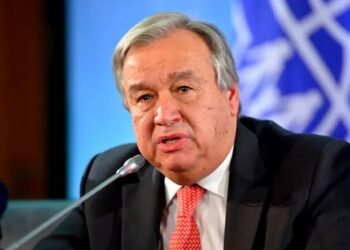
United Nations Secretary-General Antonio Guterres issued an emergency warning to the U.N. Security Council, stating that the continuous cycle of escalation has brought the region to the absolute brink of “full war.”
A Heavy Toll for Aggressive Foreign Policy
The administration’s embrace of a high-friction economic reality suggests that the White House is fully prepared to tolerate persistent domestic inflation as long as the military campaign continues to damage Iran’s sovereign infrastructure. However, with Wall Street showing clear signs of war fatigue and international standard oil prices refusing to drop, the strategy places an immense burden on the American public. As long as the administration prioritizes a total naval blockade over stable trade routes, consumers will continue to pay the price for a conflict that shows no signs of slowing down.