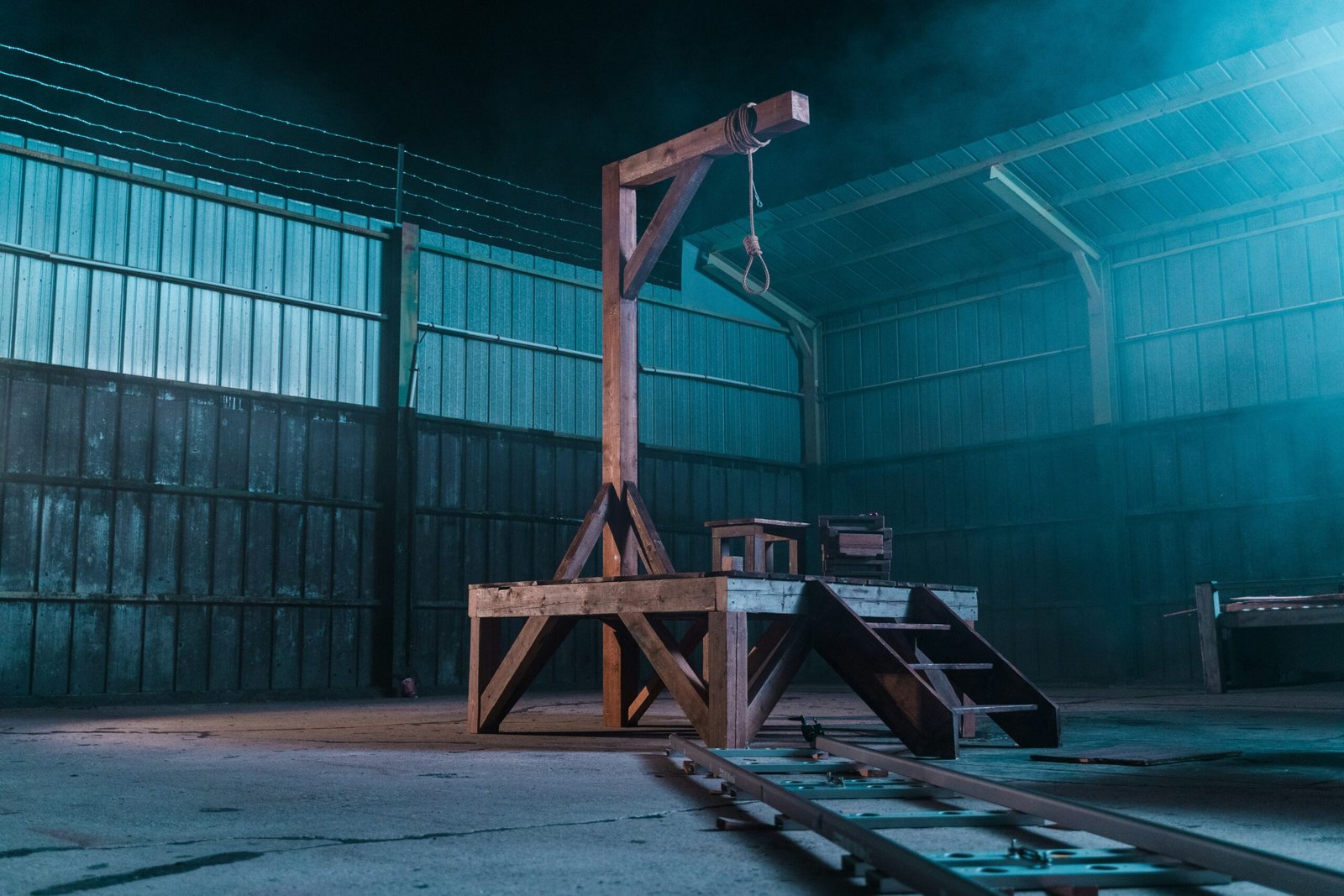

A federal judge has permanently blocked the state of Alabama from executing an inmate using pure nitrogen gas, declaring that the controversial new method violates the U.S. Constitution’s protection against cruel and unusual punishment. On Tuesday, June 9, 2026, U.S. District Judge Emily C. Marks issued a permanent injunction stopping the planned execution of 49-year-old Jeffery Lee, which was scheduled to take place less than 48 hours later.
The decision is a major legal blow to Alabama’s capital punishment system, which in 2024 became the first in the nation to use nitrogen gas. Witnesses to early gas executions reported that prisoners suffered through prolonged convulsions and visible physical distress before losing consciousness. The ruling throws the future use of nitrogen gas across the country into complete uncertainty.
The Appalling Toll of “Air Hunger”
The dramatic shift in the case happened within a matter of days after a higher appellate court stepped in to reverse Judge Marks’s initial thoughts on the matter. On May 29, Judge Marks originally ruled that the nitrogen protocol was constitutional. She argued that the extreme “air hunger” the terrifying panic of conscious suffocation—would only last one to three minutes, which she called an “escapable consequence of death.”
On Monday, June 8, a three-judge panel from the 11th U.S. Circuit Court of Appeals completely rejected that timeline. The appeals court stated that forcing a person to consciously suffocate for up to three minutes presents an “intolerable” risk of severe pain over and above death itself.
Following the appeals court’s instructions, Judge Marks reversed her position on Tuesday. Under federal law, death row inmates challenging an execution method must propose a viable alternative. Lee requested a firing squad, and Judge Marks ruled that Alabama has the materials, space, and ability to fulfill that request.
Gas Chambers belong in History Books
Trying to rebrand a gas chamber as a “humane, modern execution method” was always a sick joke. For years, Alabama politicians told the public that nitrogen gas would cause a completely peaceful, painless passing within seconds. The actual reality was a total horror show. Eyewitnesses and journalists who watched the state’s early nitrogen executions described inmates violently thrashing against their gurney straps, clenching their fists, and gasping for air for over twenty minutes.
Calling three minutes of conscious suffocation an “inescapable consequence of death” is peak clinical cruelty. It is the primal, terrifying feeling of drowning while completely awake. The 11th Circuit Court of Appeals was entirely right to step in and put a stop to this.
What makes Jeffery Lee’s case even more infuriating is that a jury of citizens actually voted 7-5 to spare his life and give him life without parole back in 2000. But a single trial judge used an old loophole called “judicial override” to throw out the jury’s decision and hand him a death sentence anyway.
Alabama realized how unfair that loophole was and banned it in 2017, but they refused to apply the fix to past cases like Lee’s. Fighting tooth and nail to suffocate a man whose jury didn’t even want him dead is bad enough, but doing it with an experimental gas mask is downright ghoulish. The state’s Attorney General is already appealing this ruling, but hopefully, this ban signals the final, permanent collapse of this horrific state experiment.
A Shifting Battlefield for the Death Penalty
While the decision completely removes nitrogen gas from the table for Jeffery Lee, it does not stop Alabama from attempting to carry out his death sentence using older, more traditional means. The state still has lethal injection and the electric chair on its books.
The immediate national fallout from the ruling includes. Alabama and other death penalty states have struggled for over a decade to buy lethal injection chemicals because global pharmaceutical companies refuse to sell them to prisons. This supply shortage is exactly what drove Alabama to build its nitrogen gas system in the first place.
Alabama Attorney General Steve Marshall’s office has already filed an appeal. Legal experts say the battle will almost certainly land on the steps of the U.S. Supreme Court, which has previously allowed nitrogen executions to happen in other states.
National Impact: Alabama is one of five states alongside Oklahoma, Mississippi, Louisiana, and Arkansas, where nitrogen gas executions are legal. The permanent ban in Alabama will freeze the expansion of the method in those regions as lawyers prepare fresh constitutional challenges.
A Sobering Check on State Power
In her final 26-page opinion, Judge Marks noted that there is likely no method of capital punishment that will ever be completely immune to legal challenges. “The Constitution does not guarantee a painless death, and human life cannot be purposefully extinguished without some risk of pain,” she wrote. However, by drawing a clear line against the prolonged psychological terror of conscious suffocation, the federal courts have forced Alabama to stop treating its death chamber as a laboratory for unproven chemical experiments.