
President Donald Trump ordered a fresh wave of precision airstrikes against Iranian military installations. The strikes targeted surveillance networks, communication links, and air defense systems, primarily in southern Iran. The administration’s stated goal is clear: use overwhelming military force to drag a defiant Tehran back to the negotiating table. However, as the region edges closer to an all-out inferno, a critical question hangs over Washington: is the administration repeating a fundamental foreign policy blunder by assuming that bombs can buy a peace deal?
The Escalation Cycle
The conflict has completely deteriorated from a fragile ceasefire into an erratic, high-stakes game of chicken. Trump expressed deep public irritation, complaining that Iran has been “playing us for suckers” and intentionally stalling diplomatic progress. Defense Secretary Pete Hegseth doubled down on this aggressive approach, directly stating, “If we need to negotiate with bombs, we will negotiate with bombs.”
Rather than backing down under pressure, Tehran has responded with immediate, aggressive defiance.
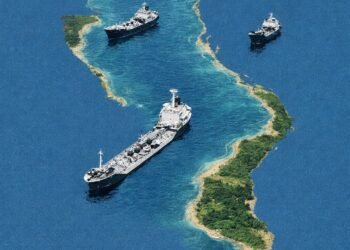
Minutes after the U.S. strikes, Iran launched retaliatory attacks against American military bases stationed in Kuwait, Bahrain, and Jordan. Iran declared the vital Strait of Hormuz completely “closed to all vessels.” This directly contradicts White House claims that commercial shipping is still managing to transit through the critical oil corridor.

Qatari negotiators traveled to Tehran on Wednesday morning to try to rescue a delicate memorandum of understanding. However, the unexpected U.S. airstrikes have shattered trust and upended months of quiet diplomacy.
You Cannot Bomb a Regime Into a Real Estate Deal
President Trump is trying to run the United States military like a New York real estate firm, treating a complex geopolitical conflict as a simple street fight where the guy with the bigger hammer automatically wins. He is genuinely shocked and frustrated that the Iranian regime hasn’t crumpled yet, so his immediate reaction is to just drop more bombs. It’s an erratic, shortsighted strategy that fundamentally misjudges how the Iranian leadership operates.
Every single piece of evidence from the last three months proves that when Washington intensifies military pressure, it only hardens Iran’s resolve. The Islamic Republic wants the world to know it cannot be intimidated into submission, and the regime actually views its survival through an all-out U.S. and Israeli onslaught as a massive geopolitical victory. By launching these strikes right as Qatari mediators arrived in Tehran to bridge the final gaps on a peace deal, Trump completely pulled the rug out from under his own diplomats.
Furthermore, this strategy leaves the American people holding the bag. As Representative Jim Himes pointed out, Iran still has incredibly dangerous cards left to play. If they decide to target regional energy infrastructure or command their allied Houthi rebels to totally sever Red Sea shipping routes, global oil markets will panic.
Trump is terrified of his cratering domestic poll numbers and the public’s intense disapproval of this war, yet his actions are guaranteed to send gasoline prices through the roof. You cannot bomb an adversary into a lasting peace deal when your actions convince them that you can never be trusted to keep your word in the first place.
The Architecture of a Broken Policy
The core failure of the current strategy lies in a total misperception of leverage. The White House operates under the assumption that because the U.S. military has achieved clear tactical wins, it has already “won” the conflict. Tehran sees the board entirely differently.
The structural flaws keeping the U.S. trapped in this cycle include:
1. Control of the Strait: Iran’s stranglehold on the Strait of Hormuz is dealing severe, compounding economic damage to the global financial system. Because this pressure directly translates into domestic political heat for Trump, Tehran believes it holds the actual upper hand in negotiations.
2. Disregard for Human Toll: While Western analysts believe Iran cannot indefinitely survive a crushing economic blockade, the brutal authoritarian regime has routinely proven it is entirely willing to let its population starve to preserve its hold on power.
3. The Nuclear Reality: Even if these airstrikes miraculously forced a temporary ceasefire, it would only be the precursor to months of grueling, hostile negotiations regarding Iran’s enriched uranium stockpiles and demands for major sanctions relief.
The Illusion of Coercion
The administration’s approach relies on the idea that an adversary can be pummeled into an absolute, unilateral surrender. But by continually bypassing diplomatic windows to unleash military force, the White House risks turning a controlled tactical campaign into an uncontrollable regional firestorm. If this latest wave of strikes fails to break Tehran’s stubbornness, the administration will be left with an uncomfortable reality: an approach rooted entirely in brute force has left the United States with fewer diplomatic options, more volatile energy markets, and a war with no visible end in sight.