Nigerian social media has been at war this week, and the current battlefield is on Instagram and Snapchat. The weapon and bone of contention here is a doctored photo. And the combatants? Content creator Ogechi Ukonu, popularly referred to as Caramel Plug, and Nollywood actress Anita Joseph.
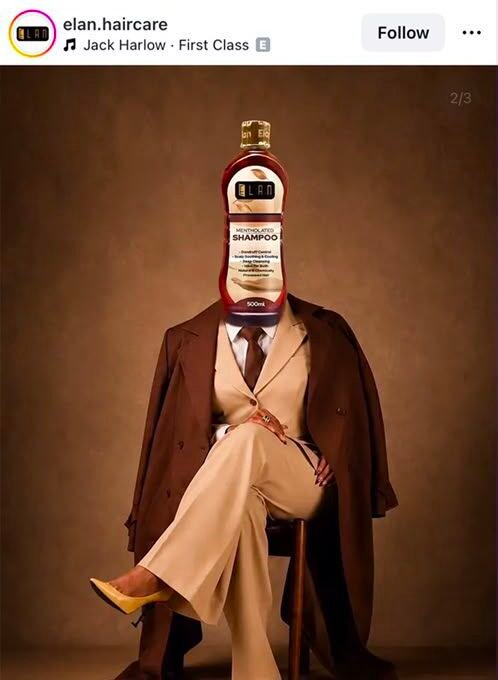
The drama began when Caramel Plug posted a birthday photoshoot several weeks ago—a striking image of her in a cream suit, coffee-brown tie, matching jacket, and yellow shoes. The photos circulated without incident.
Then, on July 6, 2026, Anita Joseph posted the same image on her Instagram page. It was the same outfit with the same background, the same pose, and the same everything. Except for one thing: Caramel’s face had been removed and replaced with Anita’s.
Anita Joseph’s caption for the post read, “A woman cannot submit and be in survival mode at the same time”.
The AI Excuse That Fooled No One
Following intense social media backlash, Anita Joseph took down the controversial photo and issued a public apology. She blamed the mix-up on an “AI boy” who had generated the image without her knowledge. “Chai, my AI boy said it was an inspiration from AI; this guy wan implicate me,” she wrote.
To some, this was a reasonable explanation—AI-generated imagery has become increasingly common, especially in Nigeria. But Caramel wasn’t buying it. When she noticed Anita receiving praise in the comments for the photograph, she replied with three words: “SHE STOLE IT.”
Caramel’s Callout
Caramel, who was apparently taking a break from Instagram at the time, only discovered the post later. She took to Snapchat to express her disbelief. “You don’t even follow me on any socials, we don’t know each other, Anita, you removed my head from my picture and inserted your head in it and posted it publicly,” she wrote.
She also claimed that when she attempted to comment on Anita’s Instagram post to address the issue, her comments were repeatedly deleted.
Caramel rejected the apology, demanding that the actress ensure her “imaginary AI boy” does better next time. She also cautioned the actress against calling her “Baby,” firmly stating, “I really don’t know you.”
The Plot Thickens: Angela Okorie Enters the Fray
As if the drama wasn’t enough, actress Angela Okorie decided to weigh in—and she did not hold back. Taking to Instagram, she called Anita a “bad person” and a “complete yeyebrity”. “How do you say you are a celeb who uses another person’s picture, swaps their head for your own, and says, ‘You are what we call a complete yeyebrity’?” she wrote.
But Anita was not about to be dragged without a fight. She fired back at Angela, calling her an “ex-convict” and questioning her sanity, referencing a previous prison incident.
The “Trend” That Wasn’t: Other Actresses Hop on the Bandwagon
As the controversy raged, a curious development emerged. Other Nollywood actresses began posting the same Caramel Plug image with their own faces superimposed. What started as a one-woman offence quickly became a bizarre “trend.”
Caramel was forced to address the situation in real-time, noting that her photo was becoming an unlicensed template. She described how her image was being passed around on WhatsApp groups, with actresses swapping out her face for theirs and posting the result.
According to Caramel’s statements on Snapchat, she felt she was being bullied. “They are cyberbullying me,” she wrote, referring to the coordinated posting. “If I were doing all of this, una for don use me do pass me”.
Two notable examples of this ‘trend hopping’ involved actress Mercy Aigbe and another actress, Iyabo Ojo.
This unexpected twist complicated Caramel’s efforts to assert ownership over her image. Instead of a single offender, she found herself fighting a mini-movement of celebrities who seemed to see her photo as public property.
The Brands That Should Have Stayed Neutral
Adding to the chaos, a few corporate brands and their representatives on social media decided to wade into the drama, a move many observers deemed unnecessary and unprofessional.
Silverbird Cinemas, a major Nigerian cinema chain, used its official Instagram handle to further add fuel to the drama by posting the same image of Caramel Plug, minus her head, which was swapped with a popcorn box with the company’s logo on it.
The caption for the Instagram post reads:
“@caramel.plugg & @realanitajoseph how do you like your popcorn?
Disclaimer: This publication is made in good faith and is not intended to cause harm, defame or infringe on the rights of any person.
We love @caramel.plugg & @realanitajoseph “
The joke landed badly. The post was mostly criticised as a corporation using its platform to poke fun at an ongoing personal dispute and possible intellectual property theft. Some users accused Silverbird of being insensitive and unprofessional.
In a separate but similar post, notable haircare brand Elan also joined the bandwagon, posting the same image but swapping the head for their Mentholated Shampoo container.
This move, possibly an attempt at public relations or solidarity, was questioned by some fans as brands leveraging drama for visibility and fan engagement.
The Latest: Anita Claims She Made the Photo Trend
Anita has since retracted her apology. In her latest Instagram story post, she claimed Caramel’s photo only gained attention because of the controversy involving her: “Nobody knew you took a picture like that. Girl, your picture didn’t even trend; I made it trend. Now put some respect on that name you don’t know.”
The Bigger Picture
This controversy is not just about one photo. It speaks to a larger tension in Nigeria’s entertainment industry: the line between inspiration and appropriation, the casual dismissal of intellectual property, and the way AI-generated content is blurring the boundaries of authorship and ownership.

As AI image generation tools become more accessible, disputes over authorship and identity in photographs have grown more frequent across social media, with the lines between inspiration, imitation, and outright theft becoming harder to draw.
In this case, the “AI boy” defence attempts to shift responsibility away from a public figure and onto an invisible, conveniently unidentifiable artist. While AI is reshaping the concept of an original image, the legal and ethical frameworks for ownership have not yet caught up. In Caramel’s case, she produced a physical photo shoot that is, by all accounts, an original creation. The only AI involved appears to be the software used to swap faces, not to create a new image from scratch.
The “trend” of sharing her image as a template is also a symptom of a larger cultural issue: the diminishing sense of intellectual property. By using Caramel’s photo as a viral “meme,” the actresses and their followers dehumanised the image from an original creative work to a public free-for-all, where the original creator’s feelings and rights are secondary to the entertainment value of the joke.
In the end, the scandal is about power dynamics and accountability. Anita Joseph’s quick apology, followed by a defiant retraction, shows a celebrity culture that feels entitled to take what it wants and only apologises when caught. Brands like Silverbird, which should have stayed neutral, have only made the situation messier.