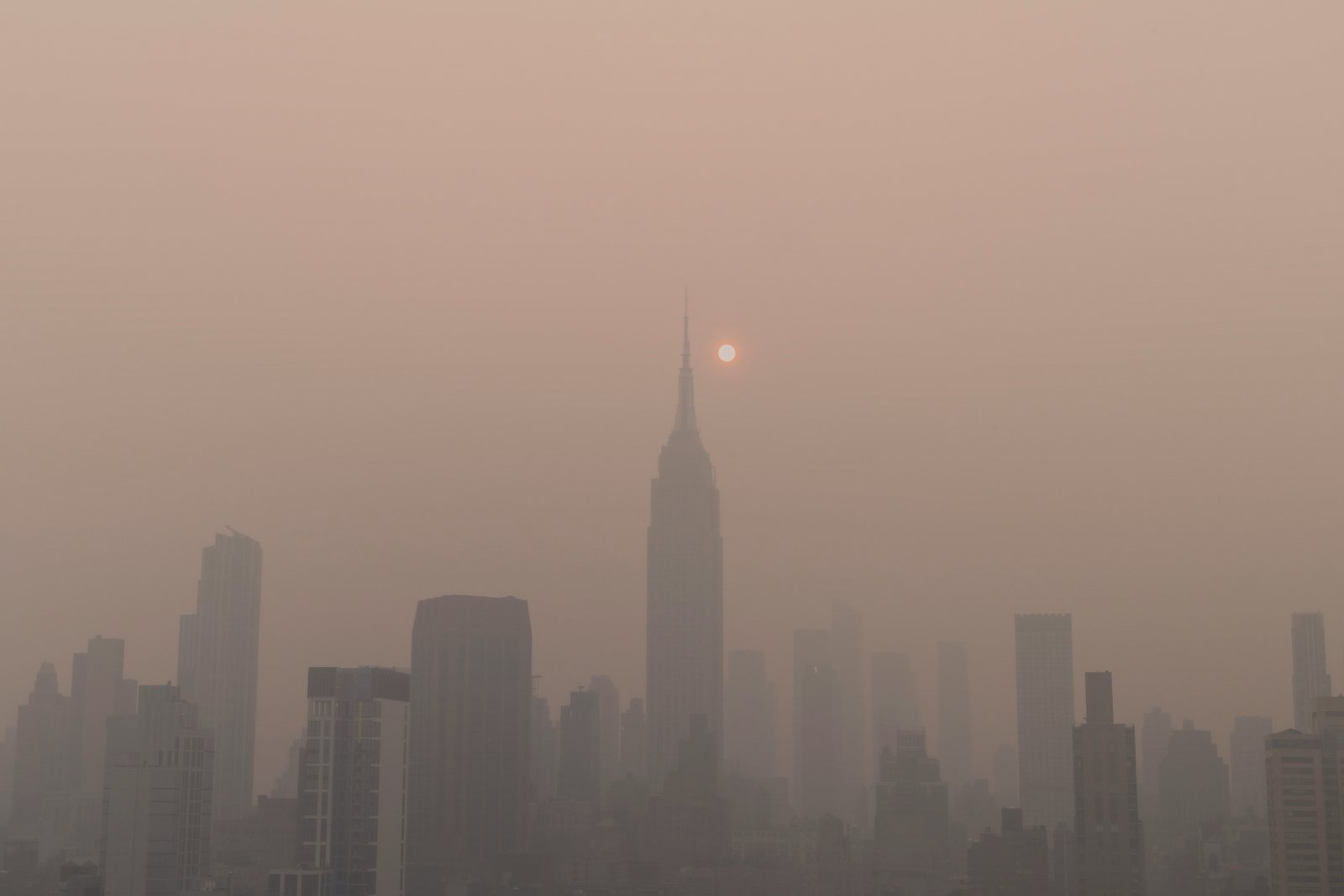

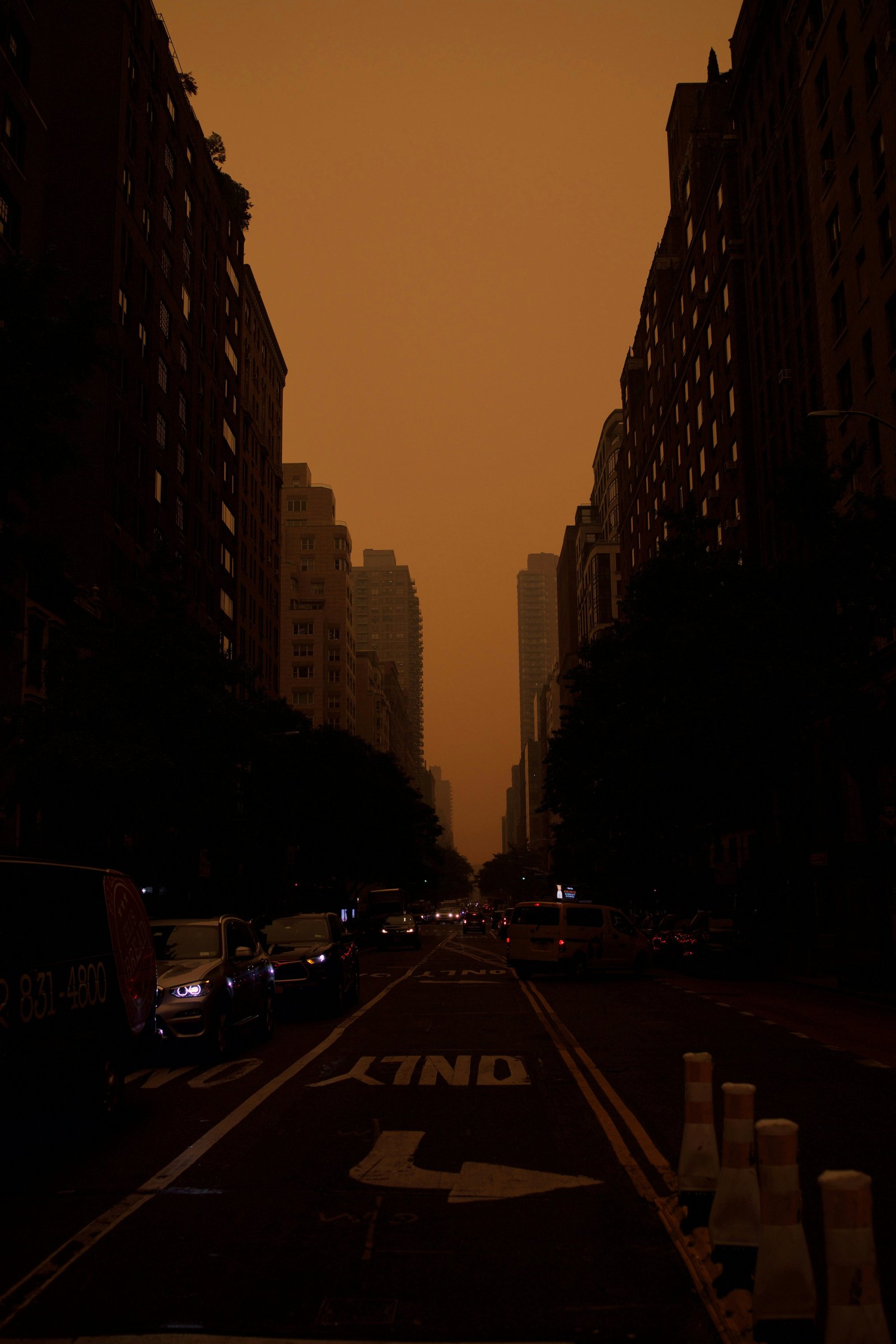
Relief is finally on the way as a heavy weekend downpour is expected to clear the dangerous NYC wildfire smoke just in time for Sunday’s highly anticipated World Cup final. Thick, orange haze from ongoing Canadian wildfires has blanketed the northeastern United States all week, triggering severe air quality alerts and threatening to disrupt the massive football match between Spain and Argentina.
However, meteorologists confirm that a powerful storm system on Saturday, followed by a cold front on Sunday morning, will push the remaining pollution out of the metropolitan area.
While the shifting New York weather forecast brings great news for the 80,000 fans heading to MetLife Stadium, health experts warn that the combination of lingering particles and high summer heat could still pose a minor risk to players and sensitive spectators.
Clearing the NYC Wildfire Smoke Before Kickoff
The timing of the incoming cold front is incredibly tight. For days, local authorities have urged residents to stay indoors and limit outdoor workouts. By Thursday, air quality index (AQI) levels in parts of New Jersey and New York were officially flagged as “unhealthy for sensitive groups.”
Fortunately, a rainstorm scheduled for Saturday acts as a natural air filter. The falling rain physically washes fine particulate matter (PM2.5) out of the sky, drastically dropping the AQI back into a safe zone. When the cold front sweeps through early Sunday morning, it will introduce fresh, clean air from the northwest, successfully dispersing the lingering NYC wildfire smoke before the 3:00 PM Eastern kickoff.
Surviving the Heat at the World Cup Final
Even if the rain successfully clears the hazy skies, the physical demands on the players will still be immense. Sunday is expected to be incredibly hot and humid. When you combine even minor trace levels of smoke with high humidity, it places a massive strain on the human cardiorespiratory system.
Medical professionals have already recommended that FIFA implement extra hydration breaks during each half. They also advise older fans or those with pre-existing heart and lung issues to wear protective masks at the stadium or watch the historic clash safely from their air-conditioned living rooms.
Greenwashing the Climate Reality of Major Sporting Events
It is ironic that we are relying on a sudden downpour to save a multi-billion-dollar sporting event from a climate disaster. The fact that the World Cup final was nearly compromised by smoke drifting thousands of miles from Canadian wildfires is a wake-up call that global sports organizations can no longer ignore.
FIFA and other sporting bodies love to talk about sustainability, but they continue to schedule massive tournaments in open-air stadiums during peak summer wildfire seasons without any real backup plans. Relying on “luck” and a Saturday rainstorm to clear the air so players do not choke on the pitch is not a real strategy.
We need to face the reality that summers are changing. If we want to protect the health of these world-class athletes and the millions of fans who travel across the globe to see them, we have to start building weather and air quality safety nets directly into how these massive tournaments are hosted. Otherwise, it is only a matter of time before an international match is cancelled mid-game because the air is simply too toxic to breathe.
Bottom Line
Fortunately, the latest New York weather forecast shows that nature is going to cooperate this weekend. The incoming rain is set to wash away the worst of the NYC wildfire smoke, ensuring that the World Cup final can proceed safely in front of a global audience. But while the immediate crisis will likely wash away by Sunday, the long-term challenge of hosting global events in an era of unpredictable summer wildfires is here to stay.