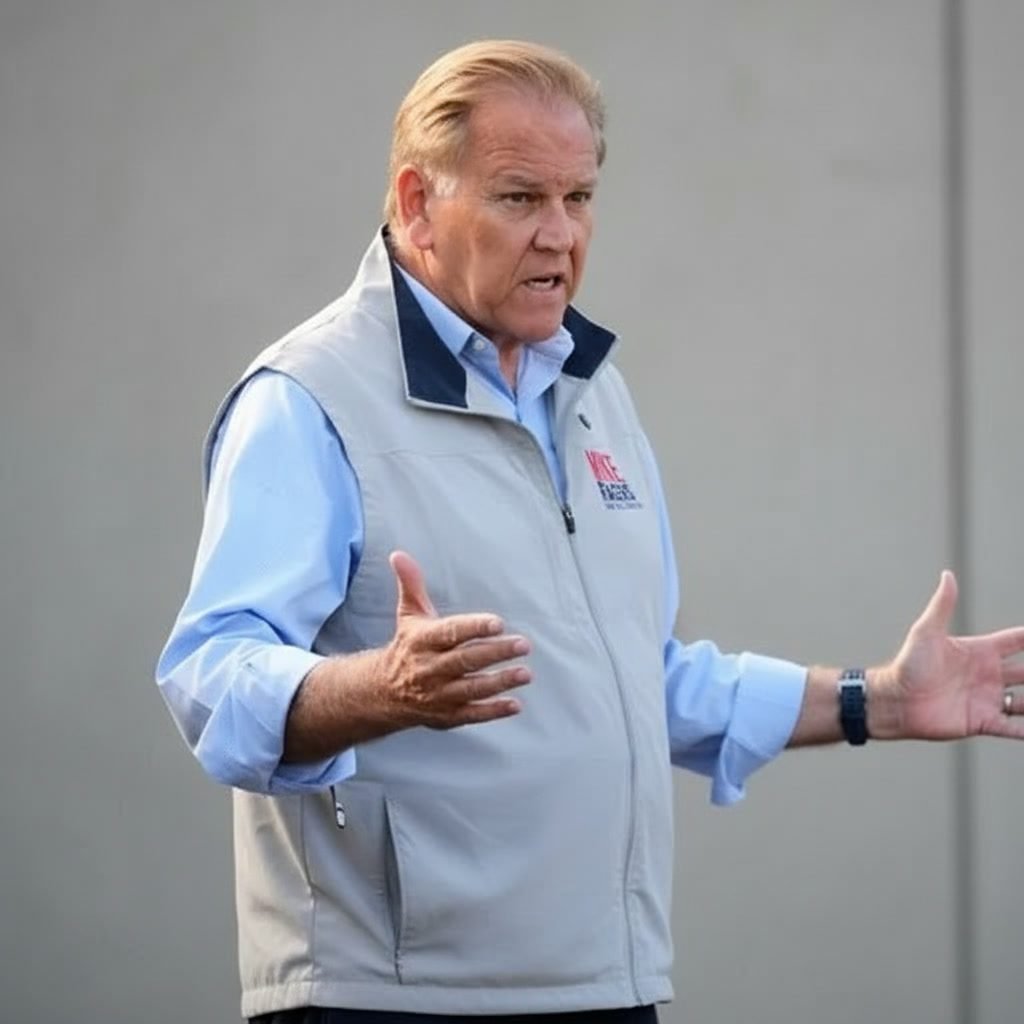
Republican Senate candidate Mike Rogers has asked the American Israel Public Affairs Committee not to campaign on his behalf, fearing that support from the pro-Israel lobby could damage his prospects in the November election, according to a weekend report from Axios.
The extraordinary tension underscores how far AIPAC’s political standing has fallen amid voters’ anger over the war in Gaza. Even Rogers — a staunchly pro-Israel Republican — fears the group’s public support could be a liability.
The move by Rogers’ team has angered AIPAC officials, who had spent more than $30 million to try to defeat his Democratic rival, Abdul El-Sayed, in the primary and prepared to spend millions more to help elect Rogers.
The Backfire
Rogers spoke with AIPAC chair Michael Tuchin in Los Angeles last week. The next day, AIPAC shelved an already-produced video ad targeting El-Sayed.
El-Sayed, a progressive former Wayne County health official, made AIPAC’s spending a centerpiece of his successful primary campaign against moderate Democrat Haley Stevens. He used the group’s $30 million investment against him to portray Stevens as beholden to the pro-Israel lobby.
El-Sayed has called Israel a “rogue state,” accused it of genocide and apartheid, and has declined to say whether Israel has a right to exist as a Jewish state. That made defeating him a priority for AIPAC.
Despite Rogers’ team warning AIPAC before the Aug. 4 primary that El-Sayed would likely win, the group insisted on staying involved, believing Stevens would prevail. She lost by just one percentage point — 48.5% to 47.5%.
The Standoff
Rogers’ team believes AIPAC’s primary advertising backfired by giving El-Sayed a powerful political target — one he is eager to use again. “AIPAC, if you’re listening, come back and burn it again,” El-Sayed said before his primary victory.
Rogers’ allies urged AIPAC to get involved without putting the group’s name front and center, such as directing donors to a pro-Rogers super PAC instead of running its own ads.
But AIPAC officials were not satisfied: the group wanted a visible role in defeating El-Sayed and argued that because Rogers is strongly pro-Israel, El-Sayed would tie him to the lobby regardless.
Direct talks between Rogers’ team and AIPAC have since gone cold, prompting a broader Republican effort to mediate. Some national Republicans now worry that AIPAC — whose super PAC ended July with nearly $60 million in the bank — could sit out the general election entirely.
The Bigger Picture
The Michigan race has become the most notable proxy battle between the Democratic Party’s establishment and progressive wings, with positions on Israel and the Middle East at the forefront.
Rogers, who has President Donald Trump’s endorsement, is running in a swing state with one of the country’s largest Arab American populations. A recent Fox News poll found 55% of Michigan voters oppose continued US aid to Israel.
Beyond Michigan, several progressive Democratic candidates have defeated AIPAC-backed opponents this cycle, as primary voters increasingly push back against the organization’s influence.
The Bottom Line
Mike Rogers has asked AIPAC not to campaign for him in Michigan’s Senate race, fearing its involvement could damage his chances. The request came after AIPAC spent over $30 million to defeat his Democratic rival Abdul El-Sayed in the primary — a campaign that backfired and helped El-Sayed win. The standoff has angered AIPAC officials and exposed the group’s declining political standing amid growing voter hostility toward Israel’s policies. Talks have stalled, and Republicans are now working to mediate.