Secretary of State Marco Rubio announced a new visa restriction policy on Wednesday targeting individuals who engage in or facilitate commercial birth tourism, the latest escalation in the Trump administration’s crackdown on the practice.
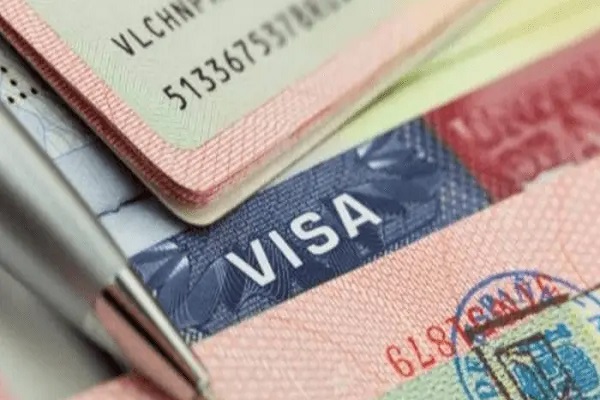
The policy, issued under Section 212(a)(3)(C) of the Immigration and Nationality Act, targets owners, operators, and managers of commercial birth tourism facilitation networks, visa “fixers” who coach applicants to commit fraud, foreign medical providers who knowingly abet such travel, and other individuals who support the schemes.
“Foreign commercial birth tourism networks have exploited the US immigration system to sell US citizenship for profit,” Rubio said in a statement. “These networks advertise and coach foreign nationals to lie on US visa applications and collect tens of thousands of dollars to arrange births on American soil for the sole purpose of obtaining US citizenship.”
The Broader Crackdown
The announcement follows the establishment of a Birth Tourism Prevention Task Force by the State Department in August. That task force has already revoked more than 600 visas from foreign nationals across the globe after detecting ineligibility .
The enforcement spans Europe, North Africa, and West Africa. A US embassy in West Africa uncovered a network involving more than 100 foreign nationals accused of using false documents and visa facilitators . In Europe, investigators identified more than 400 suspected birth tourism cases since 2024, linked to at least six companies accused of helping applicants prepare for visa interviews and arranging childbirth-related travel . North African authorities revoked more than 100 visas from parents accused of traveling to the US primarily to give birth .
What the Policy Means
The State Department has warned that foreigners who willfully misrepresent the purpose of their travel or entry into the United States may be permanently ineligible for a US visa or entry to the United States .
The new policy is an extension of a 2020 rule that allows consular officers to deny B-1/B-2 visitor visas if the primary purpose of travel is childbirth. The August 2026 executive order expanded that prohibition to all nonimmigrant visa categories, creating additional uncertainty for lawful immigrants .
It is important to note that traveling to the US while pregnant is not illegal. The issue is the primary purpose of travel and whether the applicant has been honest with consular officers. If the main reason for travel is believed to be giving birth in the United States so that the child can obtain citizenship, the visa application may face refusal .
The Bottom Line
The United States has announced new visa restrictions targeting commercial birth tourism networks, including operators, visa fixers, and medical providers who facilitate the schemes. More than 600 visas have already been revoked in a global crackdown spanning Europe, West Africa, and North Africa. The policy is part of the Trump administration’s broader effort to restrict birth tourism, though traveling to the US while pregnant is not itself illegal. The focus is on fraud and misrepresentation of travel purposes.
My Opinion
Birth tourism is not a victimless crime. It is a scheme that sells American citizenship to the highest bidder, often for tens of thousands of dollars. The networks that run it coach applicants to lie on visa applications. They exploit a system designed for legitimate travel. And they undermine the integrity of the immigration process for everyone else.
But there is a line between cracking down on fraud and punishing pregnancy. The State Department says the focus is on commercial networks, visa fixers, and those who facilitate the schemes. That is fair. But the August executive order extended the prohibition to all nonimmigrant visa categories, which creates uncertainty for lawful immigrants. A pregnant woman applying for a work visa or a student visa now faces additional scrutiny, even if her pregnancy has nothing to do with her reason for travel.
Traveling to the US while pregnant is not illegal. It never was. The question is whether the applicant is telling the truth about why she is coming. If the answer is fraud, the visa should be denied. But the government must be careful not to treat every pregnant traveler as a suspect. The crackdown on birth tourism networks is necessary. The blanket suspicion of pregnant women is not.