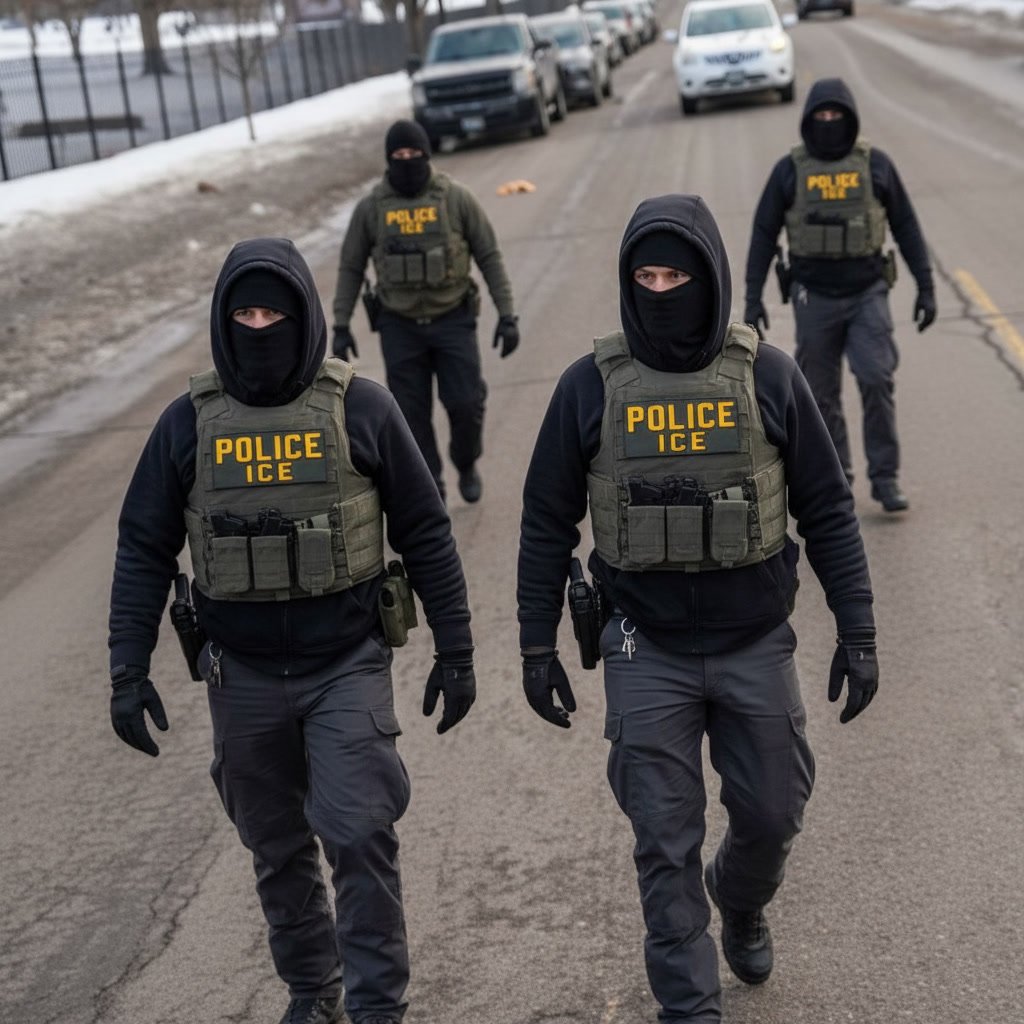

US Immigration and Customs Enforcement leadership has directed agents across the country to increase arrests by about 1,000 people a day, according to two sources familiar with the verbal instruction.
The directive, issued Tuesday, would return the agency to a previously established target of 3,000 immigration arrests per day as the Trump administration intensifies its deportation campaign.
ICE had recently been averaging about 2,000 arrests daily, with officials seeking to maintain that level. Under the latest instruction, agents are being encouraged to reach the higher figure despite growing concerns among some Republicans about the people being targeted by immigration enforcement.
One of the sources said agents were also told to aim for 19,000 arrests each week. The weekly figure takes into account reduced enforcement activity during weekends and the smaller number of officers typically available in the field.
The source said the emphasis was on arresting as many people as possible for deportation.
The push comes as ICE faces increasing pressure to expand its operations. In late June, the agency recorded slightly more than 12,500 arrests in one week, according to the Deportation Data Project.
However, the Department of Homeland Security has rejected the suggestion that agents are operating under arrest quotas.
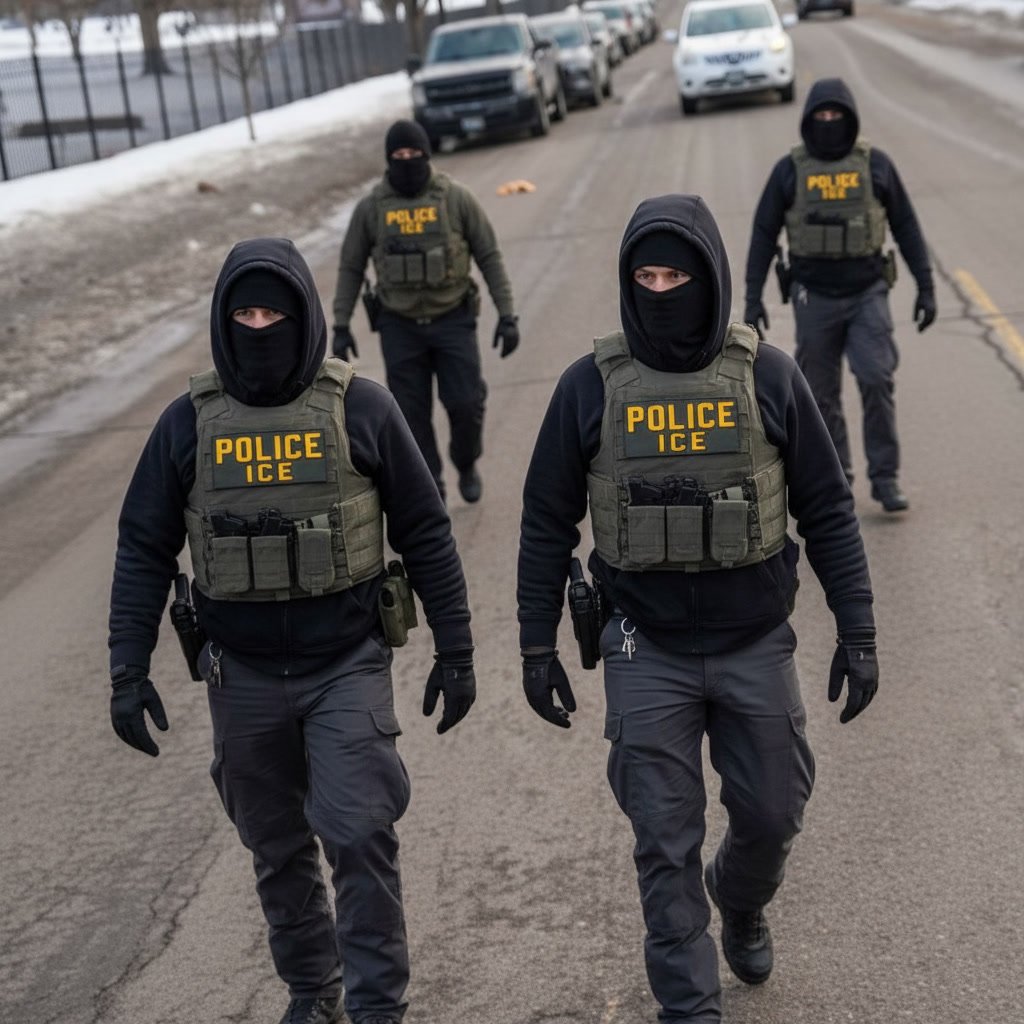
In a statement to CNN, a DHS spokesperson said there are “NO quotas on arrests.”
The spokesperson added: “Under President Trump and Secretary Mullin’s leadership, ICE has been supercharged to find, arrest, and deport illegal aliens from the United States using every lawful tool available. This is promises made, promises kept in action, and the results speak for themselves.”
Immigration enforcement remains a major political issue for the White House ahead of the US midterm elections. Officials have remained determined to maintain President Donald Trump’s mass deportation agenda, while disagreements have occasionally emerged within the administration over how enforcement operations should be conducted.
Some Republicans have also criticised the administration’s approach, particularly the growing number of undocumented immigrants without criminal records being arrested.
Florida Republican Rep. Maria Elvira Salazar, who represents a heavily Hispanic district, recently distanced herself from the president’s approach in a campaign advertisement ahead of the midterms.
The agriculture sector has also expressed concern about increased ICE activity, with the largely Republican-leaning industry warning that enforcement operations have disrupted some agricultural businesses.
ICE’s arrests have already been rising sharply. The agency detained approximately 51,000 people in August, the highest monthly figure recorded during the Trump administration at the time. The previous record had been set only a month earlier, when ICE arrested more than 46,000 people.
Trump administration officials have repeatedly denied that officers are required to meet specific arrest quotas. They have instead described the numbers as targets and said officers would not be punished for falling short.
Homeland Security Secretary Markwayne Mullin made a similar argument during an appearance on CNN’s “Inside Politics” last month.
“I have never talked to anybody at the White House about any quota. We do our job every single day and we do it effectively,” Mullin said. “Our focus is to go after the worst of the worst, but when we make contact with an illegal, regardless of how many years you’ve been here, we are obligated by statute to at that point arrest you.”
The increase in arrests has also created pressure on ICE’s existing detention infrastructure.
A contract solicitation reviewed by CNN last month showed that the Department of Homeland Security was seeking contractors to construct three types of temporary facilities to ease pressure on existing sites.
“Temporary infrastructure is urgently needed to expand secure processing and holding of illegal alien (IA) capacity and non-detained hearing space on site,” the solicitation stated.
The proposed facilities include a field-detention unit, an interview and processing space, and a facility for virtual immigration court proceedings.
A DHS spokesperson, however, said the department has “no new facility plans to announce at this time.”
Meanwhile, ICE has introduced changes to some enforcement operations, including vehicle stops.
Internal guidance reviewed by CNN showed that officers were told last week they could conduct vehicle stops only after completing relevant training. They were also instructed to ensure vehicles used for such operations were fitted with functioning lights and sirens.
The guidance followed several controversial vehicle stops that resulted in fatal and non-fatal shootings. The incidents have also contributed to disagreements within the Trump administration over the use of vehicle stops as ICE expands its enforcement activities.
An ICE spokesperson disputed claims that the guidance represented a new policy, saying: “Occasionally, ICE leadership issues guidance reminders to law enforcement officers.”
The spokesperson maintained that vehicle stops would continue and said the memo “makes no changes to how ICE conducts vehicle stops.”