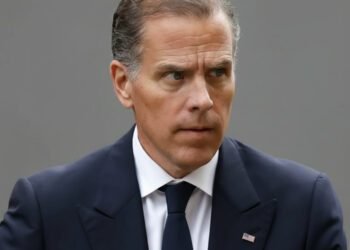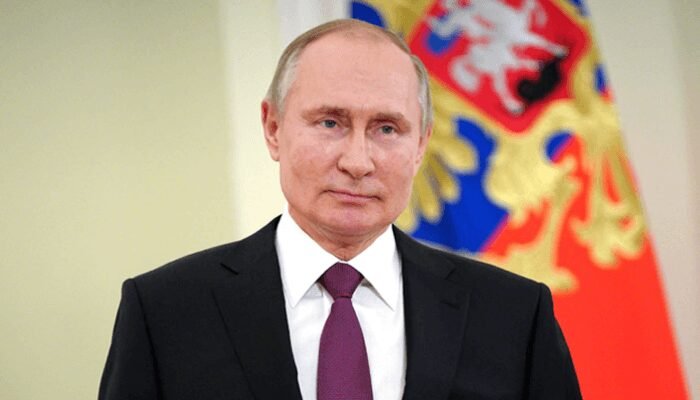

Russian influence networks are stepping up efforts to shape American voters’ perceptions ahead of Election Day, using fabricated allegations against Democratic candidates, AI-manipulated videos and fake social media posts designed to resemble legitimate news reports.
Researchers monitoring foreign influence campaigns, as well as US lawmakers briefed by intelligence officials, say Kremlin-backed groups are reviving tactics previously used to create political divisions and undermine trust in democratic institutions.
Rep. Jim Himes of Connecticut, the ranking member of the House Intelligence Committee, described the scale of the activity as extensive.
“It’s a carnival out there,” Himes told reporters this week. “They’re throwing everything out there to generate a sense of chaos and anarchy.”
According to researchers, the campaigns are intended to deepen political divisions, weaken confidence in the democratic process and, importantly, reduce American support for Ukraine.

“At the end of the day, the main issue for Russia is and has to be Ukraine,” said Darren Linvill, co-director of Clemson University’s Media Forensics Hub, who has studied foreign propaganda operations for years.
Linvill explained that the Russian strategy typically begins with a false allegation or divisive narrative being introduced through social media, fake news websites, or websites pretending to represent think tanks. The material is then amplified by Russian state media, automated accounts, and increasingly, influencers who can reach specific audiences.
“In the same way that marketing companies will pay an influencer to disseminate, you know, ‘Nike’s a great shoe,’ the Russians do it with false information and made-up lies,” he said.
“They use influencers that know their audience, that are part of that audience, and they know how to give that audience a message that they want to hear,” Linvill said.
One such campaign emerged this week after Russian-linked operatives circulated fabricated allegations targeting a Democratic candidate for the US Senate.
Linvill and other research organisations linked the activity to a Russian operation known among researchers as Storm-1516. The group has previously been associated with staged videos featuring actors and efforts to distribute false claims through influential social media accounts.
Two fraudulent videos targeting the Senate candidate appeared Tuesday on X from an account created the previous month with a small following. Although the account claimed to be based in the United States, X flagged it as potentially using a proxy service such as a virtual private network, which can conceal a user’s actual location.
Research company Graphika said the videos were likely generated with artificial intelligence. Linvill noted that Storm-1516 has previously used real actors whose faces were digitally altered with AI to resemble other individuals.
The videos were quickly circulated by a network of 15 accounts that Linvill identified as bots. Around 12 hours later, three prominent X accounts with large followings shared one of the videos. Researchers said those accounts had previously amplified narratives associated with Storm-1516.
One of the accounts had also sought paid partnerships on X. Other users subsequently spread the posts by responding to politicians and journalists.
An analysis by threat intelligence firm Alethea found that one of the fabricated videos accumulated approximately 857,000 views within 24 hours.
By Wednesday evening, X had suspended the account that initially uploaded the videos and one of the major accounts that amplified the material. The other two large accounts had removed their posts.
Storm-1516 also used similar tactics during the 2024 US presidential election, when it circulated fabricated videos containing unsubstantiated allegations against Democratic vice-presidential candidate Tim Walz and another fake video purporting to show ballots cast for President Donald Trump being destroyed.
Linvill said the objective is often not necessarily to convince people to adopt completely new beliefs but to exploit views they already hold.
“It is hard to persuade anybody of anything, ever,” he said. “But what you can do is reinforce beliefs.”
Beyond the latest operation, Russian-linked campaigns during the current election cycle have circulated claims alleging that Democrats are abandoning support for Israel, alongside fabricated reports accusing Democratic candidates of corruption.
Lisa Kaplan, founder of Alethea, compared the Russian influence campaigns to a political spending operation.
“I increasingly have come to think of Russia as essentially a dark money PAC,” Kaplan said. “You know they’re going to be running advertisements. You want to understand what’s out there. You want to understand if they’re actually effective in moving people in one direction or another.”
US intelligence officials have previously said Russia has favoured Trump and sought to weaken American backing for Ukraine by targeting Democrats.
Himes and Senator Mark Warner, vice chairman of the Senate Intelligence Committee, said Wednesday that they had reviewed a recent classified intelligence assessment concerning foreign interference in the election. According to the lawmakers, the assessment indicated that Russia opposes candidates from either major party who support Ukraine.
However, Himes stressed that there was no evidence that foreign actors had compromised the actual voting process.
“Nothing out there suggests that there is either the capability or the intent to do interference, whereas there is a pretty robust influence environment,” he said.
The influence operations being deployed in the US have also been used during elections in countries including France and Germany this year, according to a new Graphika report.
The campaigns have included AI-generated audio as well as impersonations of politicians, celebrities and established media organisations.
“They have run this playbook in half a dozen other countries in the past six months throughout Europe. We’re just the next in line,” Linvill said. “They attack with these same themes. Anything that’s going to make a candidate seem degenerate, seem corrupt, seem incapable.”
Kaplan said the strategy in the final days before an election may be less focused on changing voters’ political opinions and more concerned with provoking strong emotional reactions that could influence whether people turn out to vote.
“In these final posts in the lead-up to the election, it’s really more about evoking that emotion,” she said.