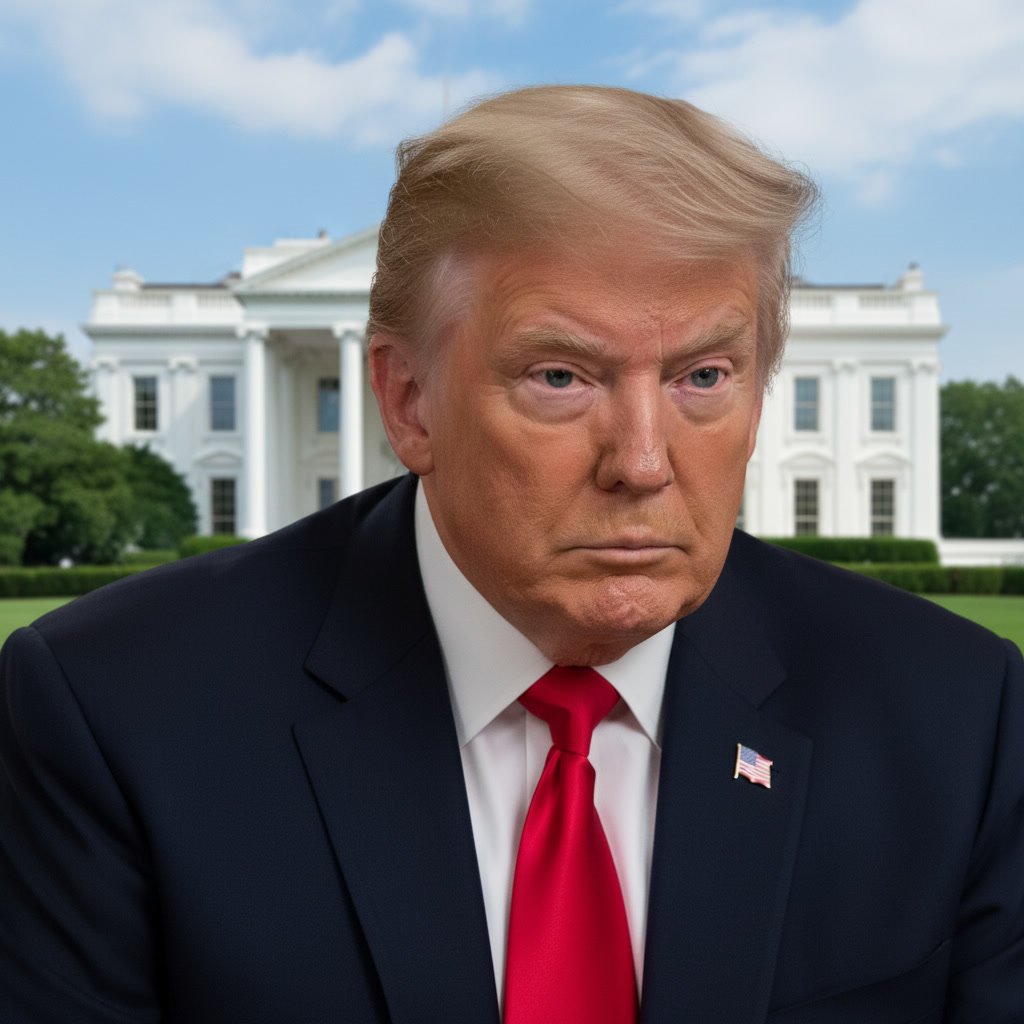

President Donald Trump has scrapped plans for weekend rallies in the reliably red states of Iowa and Kansas, opting instead to hold as many as 20 telerallies in a strategy shift just days before the midterm elections.
The decision, confirmed by two sources familiar with the matter, comes as some Republican officials quietly expressed relief. “He hasn’t moved the needle anywhere,” one GOP official told CNN. Another said the rallies were too time-consuming during a peak period when activists should be door-knocking and canvassing.
Trump will no longer headline a rally in Dubuque, Iowa, scheduled for Sunday. Earlier Thursday, he called off a separate rally in Kansas. For now, the only in-person event he has planned before Tuesday is a rally in Daytona Beach, Florida, on Friday. He is expected to spend Tuesday evening at the White House as results come in.
The Contrast with 2018
The move is a sharp departure from Trump’s previous midterm strategy. In the final 72 hours before the 2018 midterms, Trump held seven rallies in as many states — Montana, Florida, Georgia, Tennessee, Ohio, Indiana, and Missouri.

Addressing the cancellation of his Kansas rally, Trump said Sen. Roger Marshall, the GOP candidate there, was “doing very well.” He lashed out at a reporter who inquired about his health. “The reason is, I don’t feel I have to go to Kansas,” Trump said. “I feel perfect.”
At a rally earlier in the day, Trump had boasted about how hard he was working on the trail. “No president has ever worked so hard on a midterm,” he said.
The Polling Picture
The cancellations come as Democrats see rising optimism. The forecaster Inside Elections shifted 63 races in Democrats’ favor this week. New CNN polling shows Democratic candidates leading in Michigan and Texas.
In Michigan, Senate candidate Abdul El-Sayed holds a 7-point lead over Republican Mike Rogers. In Texas, Democrat James Talarico is running against Republican Ken Paxton in a race considered a toss-up.
The Final Push
With less than a week before Election Day, both parties are racing to reach voters. Trump rallied in South Carolina on Thursday, where he dubbed Black and Jewish voters supporting El-Sayed “crazy” and slammed recent polling as “totally phony.”
Vice President JD Vance appeared in a Fox News town hall in Texas, where he said he is an “exception” among Republicans in focusing on young people’s affordability issues. “Most Republicans don’t. I think that I’m an exception,” Vance said.
El-Sayed and his former primary rival, Rep. Haley Stevens, will campaign together Sunday in Detroit — their first joint appearance in recent months after reports of tensions. El-Sayed brushed off questions about the delay, growing testy when pressed.
The Bottom Line
Trump has canceled rallies in Iowa and Kansas days before the midterms, pivoting to up to 20 tele-rallies. Some GOP officials are relieved, saying the rallies were time-consuming and Trump “hasn’t moved the needle.” The move contrasts sharply with 2018, when he held seven rallies in the final 72 hours. Democrats are seeing rising optimism, with new polling showing leads in Michigan and Texas.
My Opinion
Trump is canceling rallies in red states because he does not need to win them. Iowa and Kansas are not swing states, and Trump knows it.
What he is doing instead is telerallies — broadcasting into competitive districts where Republicans are actually fighting for their seats. This is the strategy of a man who understands where the votes are and where they are not.
But the relief from some GOP officials is telling. “He hasn’t moved the needle anywhere,” one said. Trump’s rallies fire up his base, but they do not persuade undecided voters. They do not win over independents. They do not change the math in the districts that matter most.
The contrast with 2018 is stark. Six years ago, Trump was everywhere in the final days, trying to drag Republicans across the finish line. This time, he is staying home and phoning it in. That is not a sign of confidence. It is a sign that he knows his presence may do more harm than good in the places that count.