A former senior aide to US Health Secretary Robert F. Kennedy Jr. has accused several officials in President Donald Trump’s administration of putting the interests of major industries ahead of public health, allegedly to secure financial support for the Republican Party ahead of the midterm elections.
Calley Means, who helped establish the Make America Healthy Again (MAHA) movement and played a key role in bringing Trump and Kennedy together during the 2024 election campaign, made the allegations during an interview with CBS’s Face the Nation, which aired on Sunday.
Means accused former White House Chief of Staff Susie Wiles and other senior advisers of maintaining close relationships with lobbyists representing the vaping, processed food, pharmaceutical and pesticide industries.
“Underneath Trump’s nose, in many cases, you had a group of former lobbyists, catering to the vaping industry, catering to the ultra-processed food industry, catering to the pharmaceutical industry, catering to the pesticide industry and doing their bidding with an excuse that we need their money for the midterms and really need to actually go against what voters said,” he told programme moderator Margaret Brennan.
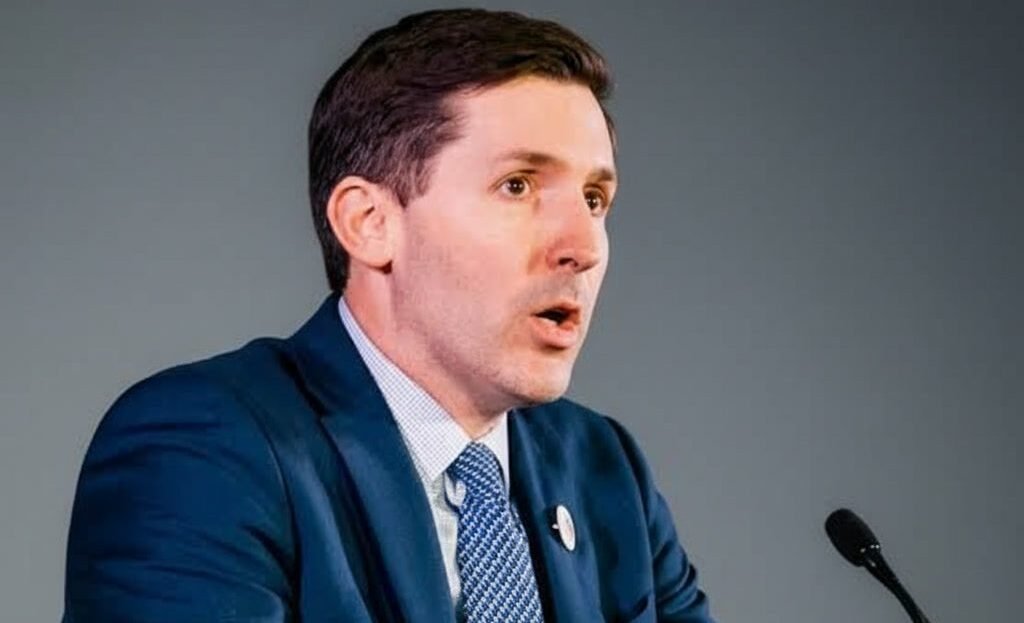
Means, who resigned from the Department of Health and Human Services last month, said Wiles and a small group of advisers were accepting support from industries that the administration had previously pledged to challenge.
He had earlier made similar accusations during an interview recorded on Thursday for The Joe Rogan Experience podcast and released on Friday, calling on Trump to “clear his house”.
Among his claims was that Wiles and her deputy, James Blair, pressured the Department of Health and Human Services to create a route for approving fruit-flavoured electronic cigarettes.
The Food and Drug Administration approved some fruit-flavoured e-cigarettes in early May.
Blair rejected Means’ account of his involvement, saying his responsibility was to ensure that the FDA handled applications for nicotine products according to existing federal law.
“I didn’t promote flavored vaping specifically at all,” Blair told CBS News.
He said applicants were entitled to receive a decision on their applications within six months and accused Means of deliberately misrepresenting his role because of his opposition to the issue.
Two sources familiar with the matter told CBS News that Trump had assigned Blair to push then-FDA Commissioner Dr Marty Makary to speed up responses to applications from the nicotine industry. They also said the president wanted greater availability of flavoured vaping products.
Trump had expressed support for vaping during his 2024 presidential campaign, promising to “save” the industry. He also defended his earlier efforts to support flavoured vaping, saying they were intended to help smokers quit traditional cigarettes.
His position attracted backing from e-cigarette manufacturers, shop owners and vaping enthusiasts.
Makary was later pressured to leave his position in May amid reports that the White House had pushed him to approve fruit-flavoured vaping products.
“Big tobacco exploited their connections to administration and HHS officials to put repeated pressure on me to approve fruit-flavored vapes that appeal to children—I wouldn’t do it,” Makary said in a statement to CBS News.
He also accused the kratom industry of using similar tactics to obstruct his efforts to restrict a substance he described as “gas station heroin”.
Makary added that he had rejected political interference during his time as FDA commissioner.
Multiple sources also confirmed reports that tobacco industry lobbyists met Trump at his golf course in Florida to discuss the FDA’s regulation of e-cigarettes. Means alleged that Wiles arranged the meeting.
Wiles submitted her resignation to Trump on Thursday night, according to a US official and a senior White House adviser who spoke to CBS News. Three sources familiar with the matter linked her departure to the Republicans’ poor performance in the midterm elections.
Asked whether he had sought to have Wiles removed, Means replied: “Yes. I think President Trump has been subverted by people who are beholden to special interests and not what President Trump ran on, and what voters voted for.”
It remains unclear whether his public allegations influenced Trump’s decision regarding Wiles’ departure.
Wiles, however, denied Means’ claim that she arranged a meeting between tobacco industry representatives and the president to discuss vaping regulations.
The former aide also questioned the administration’s position on glyphosate, a herbicide used in Roundup weedkiller that the World Health Organisation has classified as “probably carcinogenic to humans.”
Earlier this year, Trump signed an executive order aimed at increasing domestic production of the chemical, despite Kennedy’s long-standing legal campaign against Monsanto over its use.
Kennedy, who had spent decades challenging the chemical company as a private attorney, said after the order was issued that “our agricultural system depends heavily on these chemicals.”
However, during congressional testimony in March, Kennedy disclosed that he had expressed dissatisfaction with the president’s decision.
He told lawmakers that the directive originated from the Pentagon and that Trump considered it necessary for national security reasons.
In June, the US Supreme Court ruled in favour of Monsanto, now known as Bayer, in a case concerning claims that the company should have warned consumers about alleged cancer risks associated with Roundup.
Means accused White House adviser Heidi Overton of working with the Department of Justice to prepare a brief urging the Supreme Court to take up the case before Trump’s executive order was issued.
A senior White House official told CBS News that the solicitor general prepared the brief at the court’s request. The official acknowledged that Overton contributed during its final stages but said her input was limited to adjustments to its tone.
The Trump administration had argued in court filings that federal regulations should take precedence over state-level claims concerning liability, a position also supported by Monsanto.
Meanwhile, the Environmental Protection Agency is conducting a review of glyphosate, with its findings expected in early 2027.
Means alleged that an earlier EPA assessment of the chemical was discarded because it contained research that had been ghostwritten and showed Bayer bribed agency officials.
He also criticised the administration’s handling of policies targeting ultra-processed foods, saying his efforts to establish a federal definition of such products had faced sustained resistance from industry lobbyists.
“There was relentless lobbying against this because the industry and they said this in meetings with me and other people, they just don’t want a definition because they don’t want Americans to have more transparency into what they’re eating because there’s a shift away from ultra-processed food right now,” he said.
Means said he remained confident that Trump supported efforts to improve children’s health but accused some of the president’s advisers of preventing him from receiving accurate information.
He alleged that the officials “treated him like a baby in many respects and used him.”
“They would block access to and information to him all the time,” Means said, adding that the president might have approved decisions without fully understanding the issues because of his busy schedule.
He, however, excluded Stephen Miller, who is expected to assume the White House chief of staff position on Monday, from his criticism.
Means described Miller as someone interested in pursuing major changes alongside Trump and Kennedy, regardless of political affiliations.
“Stephen Miller wants to get transformative things done with Bobby Kennedy and President Trump that are not partisan, but structural,” he said.
“He wants to get the same things done that Elizabeth Warren and (Abdul) El-Sayed and other people are running on. And I think there is a major opportunity to come together and get some big things done, which, quite frankly, we have to do.”
Trump nominated Overton, a policy adviser, to become the next FDA commissioner in August, with Kennedy publicly supporting her nomination.
However, Means described her as the biggest obstacle to implementing MAHA policies during his time in government.
He alleged that she followed Wiles’ instructions and resisted efforts to advance Kennedy’s public health agenda.
Means further claimed that, at one meeting, Overton told Makary, whom he described as her mentor, that she could not support him on other policy matters unless he approved Moderna’s mRNA influenza vaccine, mFLUSIVA.
Makary reportedly believed the vaccine did not meet the scientific requirements for approval.
The FDA authorised mFLUSIVA in August for adults aged 50 and above, making it the first influenza vaccine developed using mRNA technology to receive approval from the agency.
The decision came despite Kennedy’s repeated criticism of mRNA technology and his cancellation in 2025 of 22 vaccine development projects involving the technology.
The FDA had initially indicated earlier this year that it would not consider Moderna’s application but reversed that position about a week later. Clinical trials showed that mFLUSIVA was slightly more effective than the standard flu vaccine.
Means maintained that Overton’s actions after Makary’s departure demonstrated a shift towards a more relaxed approach to vaping regulation.
“It’s just a factual statement that after Marty left, partly due to the vaping issue, she drove the creation of the relaxed vaping strategy,” he said.
He added that he did not believe Overton possessed the “character or integrity” required to lead the FDA.
Means left the Department of Health and Human Services last month, saying he was departing “with tremendous respect for President Trump and Robert F. Kennedy Jr.”
His exit was followed by a rise in food stocks, while he maintained that his disagreements with industry influence and the stalled efforts to regulate ultra-processed foods contributed to his frustration.