Canadian Prime Minister Mark Carney has said his country may explore partnerships with Chinese automakers if negotiations with US President Donald Trump fail to protect the integrated North American automobile industry.
Carney made the remarks on Monday in Cambodia, ahead of his scheduled meeting with Chinese President Xi Jinping in Shenzhen, China, later this week. Discussions between the two leaders are expected to include Chinese automobile manufacturing.
In January, Canada and China reached an agreement that allows tens of thousands of Chinese electric vehicles into the Canadian market at reduced tariffs.
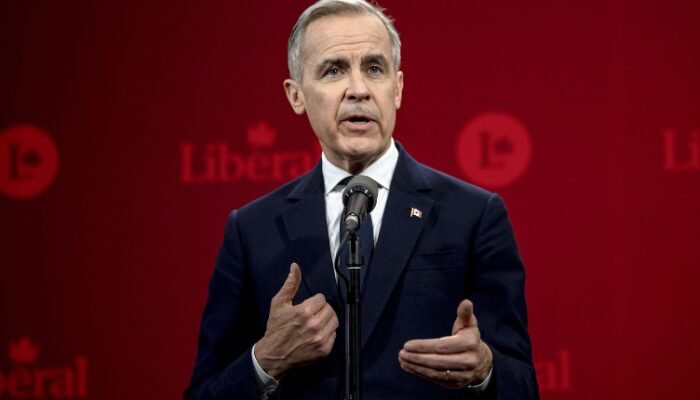
Speaking to reporters in Cambodia, Carney said Canada wanted to make full use of its skilled automobile workforce within an integrated North American market. However, he noted that US trade policies had weakened the industry’s cross-border relationship.
“We have the best auto workers in the world, and we want them fully deployed, full opportunity, in an integrated North American market,” Carney said. “That market has become less integrated because of U.S. trade actions.”
During a visit to Manila, Philippines, on Saturday, the Canadian leader stressed that any trade agreement with Washington must guarantee the survival of Canada’s automobile industry.
Although he maintained that reaching an agreement with the United States remained his priority, Carney said the outcome of the negotiations could influence whether Canada seeks partnerships with automakers from China, Europe or Japan.
When asked if the possibility of Chinese investment was being used as a bargaining tool in discussions with Washington, he rejected the suggestion.
“It’s not leverage. But action, reaction,” Carney replied.
He added that Canada’s automobile workers and manufacturing facilities could be directed towards other opportunities if they were no longer fully utilised within the North American market.
“If they’re not fully utilized in a North American context, that provides other opportunities,” Carney said. “Canada is going to move forward either way.”
The Detroit Three automakers — Ford, General Motors and Stellantis — have manufacturing plants across Canada, the United States and Mexico. Their production system relies heavily on cross-border trade, with vehicle components sometimes moving between the three countries several times before final assembly.
However, Trump has repeatedly urged automobile manufacturers to relocate production from Canada to the United States.
Carney explained that any potential investment from Chinese manufacturers would need to go beyond assembling imported vehicle components. He said investors would be expected to establish substantial manufacturing operations, provide appropriate labour standards and develop domestic supply chains.
He also emphasised the importance of expanding the use of Canadian critical minerals in electric vehicle production.
“It’s not just about kit cars,” he said. “There has to be a manufacturing aspect involved.”
Under the January agreement, Canada lowered its 100 per cent tariff on Chinese electric vehicles to 6.1 per cent. The arrangement initially permits the importation of up to 49,000 vehicles annually, with the limit expected to increase over time.
In return, China agreed to reduce tariffs on some Canadian agricultural exports, including canola.
At the time, Carney expressed hope that the agreement would encourage Chinese companies to invest in Canada’s automobile sector and create employment opportunities.
However, the deal attracted criticism from Ontario Premier Doug Ford, whose province is central to Canada’s automobile industry.
Ford warned that allowing Chinese electric vehicles into the Canadian market could put local jobs at risk and threaten the country’s access to the United States market.