
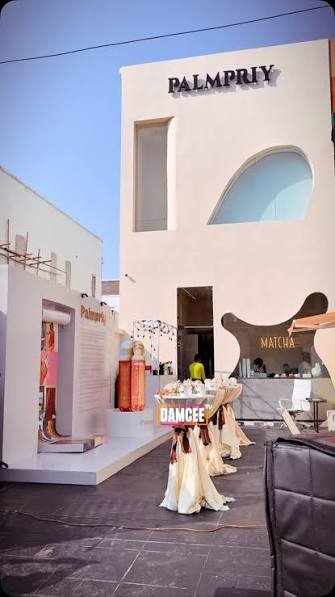
Priscilla Ojo’s Palmpriy collection was supposed to be a fashion moment. Instead, it became a case study in the strange economy of Nigerian celebrity fashion.
On November 11, 2026, a tweet from @ellai63081 went viral for articulating what many Nigerians were already thinking:
“Her celebrity friends will definitely buy it because she has also supported them in one way or another. I cannot buy this cloth because it is not even looking good at all. Since she’s a celebrity, her colleagues will not tell her the truth. They will always hype it and patronise her because she has also supported them. let’s be honest with ourselves. This cloth is not looking good. She should do better. That’s it.”
The critique was brutal but honest. In truth, the clothes were unflattering and the celebrity endorsements were performative because the quality did not match the hype. Then, just when it seemed that the critics might have the last say, Priscilla Ojo announced that the collection had sold out.
The “Sold Out” Defense
In the days following the backlash, Priscilla took to social media to celebrate. The collection, she said, was a success. Despite the viral criticism, despite the mocking, despite the comparisons to maternity wear, the clothes had sold out.
Her supporters echoed the sentiment. “She knows her target audience.” “You’re not the demographic.” “Celebrate a young woman winning.”
But the “sold out” defense raises a question that no one seems willing to answer: Sold out of how many?
Palmpriy is a new brand. Its initial production run was likely small. A sold-out collection of 50 pieces is not the same as a sold-out collection of 5,000. And without transparent sales data, the claim of success is impossible to verify.
More importantly, the “sold out” narrative does not address the original critique. The clothes were called unflattering and were poorly made. Selling out does not make those criticisms untrue. It just means people bought them anyway.
The Celebrity Echo Chamber
The viral tweet identified a real problem: the people closest to a celebrity are the least likely to tell them the truth.
When a celebrity launches a fashion brand, the launch is attended by other celebrities. They post congratulations. They wear the clothes. They hype the brand. But are they giving honest feedback? Are they telling the founder that the tailoring is off? That the fabric feels cheap? That the designs are derivative?
In many cases, no. They are there to support a friend. And that support is genuine. But it is also the reason why so many celebrity fashion brands fail to improve. The feedback loop is broken. The founder is surrounded by yes people who tell them what they want to hear.
As the tweet put it: “Since she’s a celebrity, her colleagues will not tell her the truth. They will always hype it and patronise her because she has also supported them.
The Quality Problem Nobody Wants to Discuss
The tweet was blunt: “This cloth is not looking good. She should do better.”
And that is the crux of the issue. For all the glitz of the launch, for all the celebrity endorsements, the clothes themselves did not pass the basic test. They did not look good.
This is not a new problem in Nigerian celebrity fashion. It is a pattern. A celebrity launches a brand. The prices are high. The marketing is loud. And the quality does not match the promise.
As THISDAY Style noted in a piece on what Nigerian fashion brands need to reach their potential: “A dress that costs ₦350,000 but cannot survive three wears without loose seams, fading fabric, or fit issues immediately becomes a sore point, especially in an economy where inflation, fuel costs, and basic living expenses are already exhausting people.”
The piece continued: “Luxury pricing demands luxury execution. Anything less creates resentment.”
The “You’re Not the Target Audience” Defense
When people question the quality or pricing of Nigerian celebrity brands, the response is always the same: “You’re not the target audience.” This defense is tired and should be retired.
As Deeds Magazine wrote in a blistering critique of Nigerian celebrity streetwear: “‘You’re not the target audience’ is not a defense. It’s a deflection because the real question isn’t ‘who can afford this?’ The real question is ‘what am I paying for?'”
The target audience is not the problem. The value proposition is. If you are charging luxury prices, you need to deliver luxury quality. You need to be able to explain, clearly and specifically, why your garment costs what it costs. Is it the fabric? The construction? The design? The craftsmanship?
If the answer is “because it has my name on it,” then you are not selling fashion. You are merely selling merchandise.
What Other Nigerian Brands Can Learn
The Palmpriy saga is not just about Palmpriy. It is a warning to every Nigerian celebrity considering a fashion line.
First: The launch is not the brand. The celebrities will go home. The Instagram posts will stop. The real question is whether the clothes are good enough to bring customers back for a second purchase. As THISDAY Style put it: “Customers want to know that if they order again, they will not be gambling.”
Second: Quality is not optional. Nigerian consumers are becoming more discerning. They know the difference between a well-made garment and an overpriced one. They are willing to pay for quality. They are not willing to pay for a name.
Third: The echo chamber is real. If the only feedback you get is from friends who are afraid to hurt your feelings, you will never improve. The brands that endure are the ones that seek out honest critique and act on it.
Fourth: A sold-out launch is not a sustainable business model. Selling to your friends and fans is easy. Selling to repeat customers who buy because the product is good is hard. The brands that endure are the ones that make the hard thing look easy.
The Bottom Line
Palmpriy has an opportunity. It can be the brand that breaks the pattern. It can be the celebrity fashion line that delivers on quality, communicates value clearly, and earns repeat customers. Or it can be another launch that fades when the celebrities stop posting.
The choice is Priscilla’s. But the judgment will come from the customers. And they are watching.