
Democratic lawmakers in the United States Congress have widened their investigation into 1789 Capital, an investment firm that appointed Donald Trump Jr. as a partner shortly after his father returned to the White House.
The investigation, led by Representative Jamie Raskin of Maryland, who is expected to become chairman of the House Judiciary Committee, is examining whether the firm benefited from Donald Trump Jr.’s political connections or access to government information to obtain federal contracts and favourable regulatory changes for companies in its investment portfolio.
Investigators said 1789 Capital had expanded significantly since Trump Jr. joined, growing from what they described as “a middling venture capital firm” managing $150 million in assets to “the darling of the venture capital world” with $3 billion under management.
Trump Jr. told Axios last week that his appointment was coincidental, explaining that he had worked with the firm’s founder, Omeed Malik, for several years before joining.
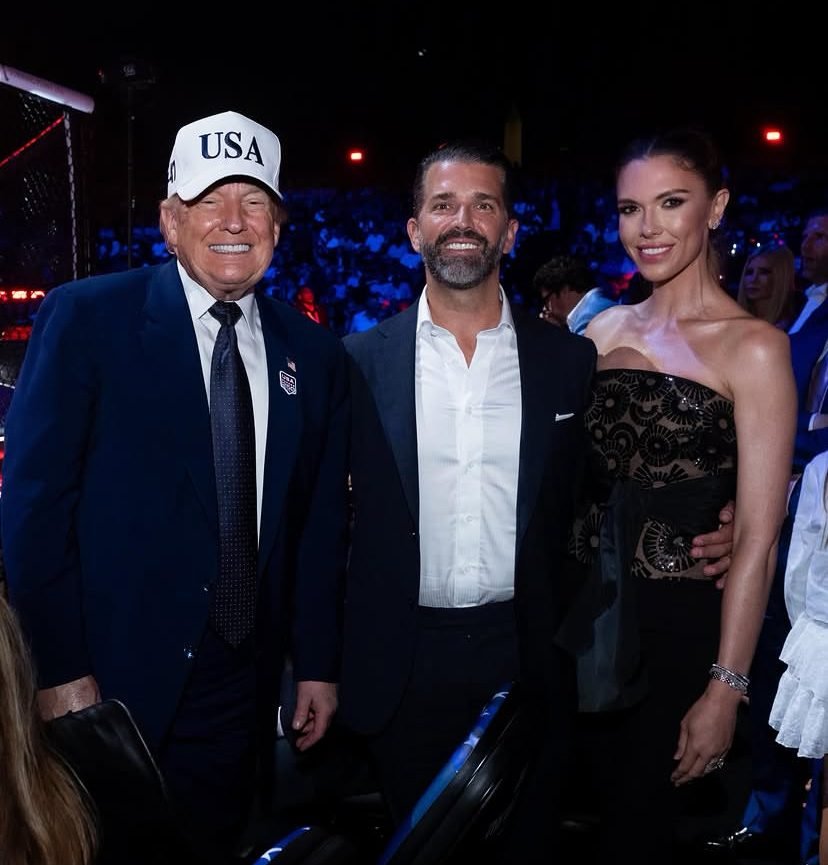
He also insisted that he maintained clear boundaries when raising funds and promoting the firm to investors.
“I make it very clear to foreign investors that I have nothing to do with government,” Trump Jr. said. “The president is my father, but he’s also busy and I probably haven’t spoken to him in three weeks.”
He further argued that the firm did not depend on political connections to identify profitable investment opportunities.
“Trying to do the things that we’re alleged to be doing every day, I think that would last for about two seconds before it was out there very publicly,” Trump Jr. said.
He added that the firm employed teams of analysts to identify opportunities in sectors with significant public and national security needs but limited numbers of companies capable of meeting them.
Responding to Raskin’s request for documents, Bill Burck, a lawyer representing 1789 Capital, told NPR that the firm had addressed the congressman’s concerns in September but received no response.
“We responded to Congressman Raskin back in September pointing out in detail the many flaws in his understanding of how 1789 has operated and a number of basic factual errors. He never bothered to reply. Facts are facts and Congressman Raskin has them wrong here but persists in his tall tales against 1789. These are personal attacks untethered to actual evidence.”
On Monday, investigators sent letters to four companies linked to 1789 Capital, requesting that they preserve relevant documents and submit a wide range of records to the committee.
The companies are military contractor Hadrian, electronic cigarette manufacturer Juul, prediction market platform Polymarket and online firearms retailer GrabAGun.
One area of interest is Hadrian’s military contracts, reportedly signed in March 2026 and valued at nearly $1 billion.
Investigators noted that the company had only one manufacturing facility in 2024 and “no history of fulfilling government contracts.” They also highlighted donations worth tens of thousands of dollars made by its chief executive, Chris Power, to political organisations aligned with Trump ahead of the 2024 election.
However, political contributions are constitutionally protected and do not, by themselves, establish wrongdoing.
1789 Capital invested in Hadrian in July 2025. The company also has the backing of major investors, including Morgan Stanley, T. Rowe Price, Andreessen Horowitz and JPMorganChase. Hadrian did not respond to NPR’s request for comment.
The committee is also examining 1789 Capital’s investment in Juul, which was made in March 2025 when the e-cigarette manufacturer was reportedly facing possible insolvency.
The company had been affected by decisions taken during Trump’s first administration that restricted the sale of several flavoured e-cigarette cartridges.
However, investigators said Juul’s financial prospects improved four months after the investment, although the deal had not yet been publicly disclosed, following the Trump administration’s approval of five new Juul products.
The company has also indicated that it intends to submit further applications for flavour authorisations.
A Juul spokesperson confirmed to NPR that the company had received Raskin’s letter and was examining its contents.
“We are reviewing it closely. As always, we intend to cooperate with any Congressional effort to understand our company, our commitment to combating underage vaping, and our mission to help adult smokers of combustible cigarettes transition completely away from smoking.”
Another focus of the investigation is Polymarket. According to lawmakers, 1789 Capital invested in the prediction market company after its executives met Trump Jr. during the 2024 Republican National Convention.
At the time, Polymarket was prohibited from operating in the United States.
However, in July 2025, after Trump took office, the Justice Department and the Commodity Futures Trading Commission informed the company that investigations initiated during the Biden administration had been closed, Bloomberg News reported.
The CFTC subsequently approved the launch of a US version of the platform. Investigators allege that 1789 Capital’s investment in the company generated a 70-fold return.
GrabAGun is also under scrutiny over its relationship with 1789 Capital executives, including Trump Jr., who serves on its board.
The online firearms retailer describes its business as one that “believes people should be able to use their computers, phones, and tablets to shop for firearms the same way they purchase everything else.”
Investigators said 1789 Capital’s leadership played a role in helping the company become publicly traded.
In May 2026, the Bureau of Alcohol, Tobacco, Firearms and Explosives proposed a draft regulation that could make it easier for firearms to be delivered directly to customers’ homes.
GrabAGun said at the time that it was “uniquely positioned to capitalize on this potential opportunity.”
Lawmakers are now seeking information about Trump Jr.’s knowledge of and possible involvement in the proposed regulatory change.
In its response to NPR, GrabAGun described the congressional inquiry as “a political document, and its allegations are baseless.”
The company maintained that the ATF’s review of its regulations was widely known within the firearms industry and that the agency had published several proposed rules for public feedback.
“GrabAGun’s only input came through public comments on several of those proposals,” the company said.