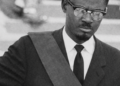

More than six decades after Patrice Lumumba was executed by firing squad and his body dissolved in acid, a Belgian court has ruled that the last surviving suspect can finally stand trial.
Etienne Davignon, now 93, is accused of involvement in the unlawful detention and transfer of Congo’s first prime minister and of his degrading treatment leading up to the January 1961 assassination. At the time, Davignon was a trainee diplomat. He later became a vice-president of the European Commission.
The ruling by a Brussels court allows the criminal case brought by Lumumba’s family in 2011 to proceed against the only surviving member of the 10 Belgians originally accused.
“It’s a gigantic victory,” said Christophe Marchand, the family’s lawyer.
A Family’s Long Wait
Mehdi Lumumba, the independence hero’s grandson, welcomed the decision.
“We are all relieved,” he told AFP. “Belgium is finally confronting its history”.
The ruling is subject to appeal, but for the Lumumba family, the door to justice — closed for 65 years — has finally cracked open.
The Crime
Lumumba was appointed prime minister after Congo gained independence from Belgium in June 1960. At 34, he was one of the most prominent voices in Africa’s anti-colonial movement.
On Independence Day, in a famous speech before Belgian dignitaries, including King Baudouin, Lumumba castigated the former colonial power, declaring that the Congolese had been held in “humiliating slavery”.
Belgium, which had relinquished political control, viewed Lumumba as a threat to its continued economic and political influence. Western powers, including the U.S., suspected him of communist sympathies during the Cold War — a 1975 Senate inquiry found the CIA had plotted to assassinate him, though that plan was not carried out.
Lumumba was ousted in a coup in September 1960 and captured two months later. In January 1961, with the tacit backing of Belgium, he was shot by a firing squad alongside two associates. His body was dissolved in acid, erasing all physical traces of the man who dared to speak truth to colonial power.
Belgium’s Reckoning
Belgium, the former colonial power, has recognized its responsibility and apologized both to Lumumba’s relatives and to the Democratic Republic of Congo. But apologies are not trials.
The 2011 criminal case sought to hold individuals accountable. Now, with Davignon, the last surviving defendant, cleared to stand trial, that accountability inches closer.
In 2022, Belgium returned Lumumba’s only known remains — a single gold-capped tooth, kept for decades by one of the policemen who disposed of the body. It was a symbolic act, but for the family, it was not enough.
What Comes Next
Davignon’s legal team may appeal the ruling, potentially delaying proceedings further. At 93, the question of whether he can physically stand trial — or whether justice will again slip away — hangs over the case.
But for one day, at least, the Lumumba family allowed themselves to feel what they had waited 65 years to feel: hope.
“Belgium is finally confronting its history,” Mehdi Lumumba said.