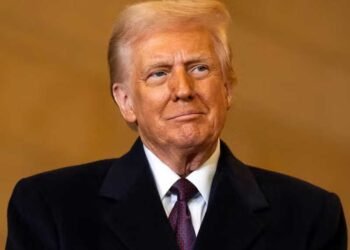
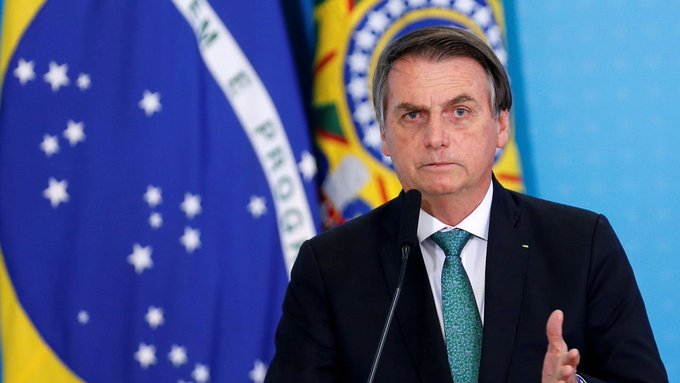
In a surprising reversal that reveals the transactional heart of modern geopolitics, the United States has lifted sanctions on Brazilian Supreme Court Judge Alexandre de Moraes, the chief investigator who put former President Jair Bolsonaro in prison. The move, announced Friday, came just days after a controversial amnesty bill for Bolsonaro cleared a major legislative hurdle, exposing a raw political deal: Washington traded justice for trade.
The sanctions, imposed by President Donald Trump in July, had labeled Judge de Moraes’s prosecution of Bolsonaro a “witch hunt” and accused him of “abus[ing] his judicial authority to target political opponents.” Their abrupt removal, a senior Trump official admitted, was because keeping them had become “inconsistent with U.S. foreign policy interests”—a blunt acknowledgment that principle had become an obstacle to profit.
The Quid Pro Quo: Amnesty for Access
The linchpin of the deal was the progress of a bill in Brazil’s lower house that would slash Bolsonaro’s 27-year coup-plotting sentence to less than three years. While the bill still needs Senate approval and the signature of Bolsonaro’s rival, President Luiz Inácio Lula da Silva, its advance was the green light Washington needed.
“The US has consistently expressed concern over efforts to use the legal process to weaponize political differences in Brazil,” wrote U.S. Deputy Secretary of State Christopher Landau on X, framing the amnesty effort as a step toward “address[ing] these abuses.” He added, “Finally we are seeing the beginning of a path to improve our relations.”
For the Trump administration, “improved relations” is code for commercial access. The July executive order that sanctioned Judge de Moraes also raised steep tariffs on Brazilian goods. Lula’s government has fiercely lobbied for their removal. Lifting the sanctions is the first concession in what appears to be a broader negotiation to roll back those trade barriers, a fact underscored by Trump’s description of a recent call with Lula as “great” on trade.
A ‘Victory’ for Brazil, a ‘Defeat’ for Bolsonaro’s Family
In Brazil, the reaction split along partisan lines. Brazil’s Minister of Institutional Relations, Gleisi Hoffmann, hailed the move as a “victory for Brazil and Lula,” a restoration of sovereignty. For the family and allies of the jailed Bolsonaro, it was a crushing betrayal; their lobbying in Washington had secured the sanctions as a shield, only to see them discarded as a bargaining chip.
The U.S. policy flip, executed in just four months, lays bare a brutal calculus. By lifting sanctions on the judge he once vilified, Trump has effectively endorsed the legitimacy of the very court that imprisoned his political ally. The message is clear: in global diplomacy, alliances are temporary, but deals are eternal. Washington didn’t fold on principle—it finally got the terms it wanted.