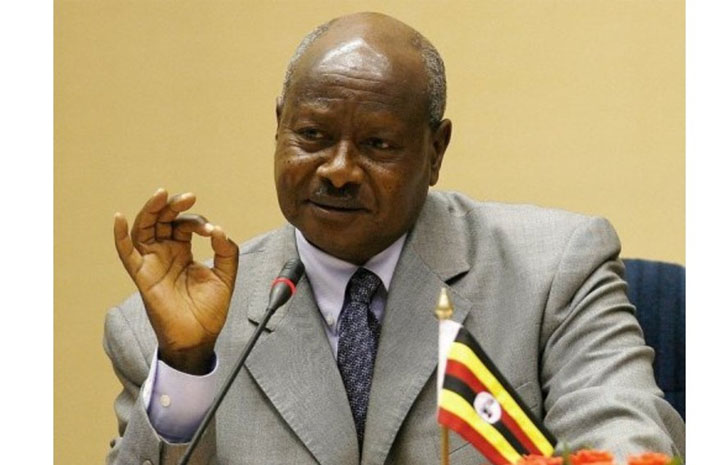
Ugandan President Yoweri Museveni has cemented his four-decade rule, claiming a decisive “mandate” with 72% of the vote in a controversial election, even as his main rival, Bobi Wine, decried “fake results” and an electoral process suffocated by violence, abductions, and a nationwide internet blackout. The 81-year-old former rebel leader, in power since 1986, now secures a seventh term, extending one of Africa’s longest reigns over a nation where most citizens were not born when he first took office.
The electoral commission announced the result on Saturday, handing Museveni an overwhelming victory against Wine’s 25%. Yet the capital, Kampala, remained eerily silent and empty, with minimal celebration and businesses shuttered—a visual testament to the deep division and fear gripping the country. The “mandate” was declared not to the roar of crowds, but over the dead air of a disconnected nation, where an internet blackout since Tuesday has made independent verification of events nearly impossible.
The ‘Strongman’ Playbook: Blackouts, Bullets, and Unverified Claims
The election and its aftermath followed a classic authoritarian script. The government imposed a total internet shutdown, citing the need to prevent “misinformation” and violence—a move condemned by the UN as “deeply worrying.” Beyond the digital curtain, reports of intimidation, arrests, and abductions surfaced.
Bobi Wine’s campaign said at least 21 people have been killed in recent days; authorities confirmed seven. Most chillingly, Wine’s assistant alleged that security forces entered the opposition leader’s home Thursday night to seize him. Wine later claimed on Facebook that he had “evaded an attempt,” but his whereabouts remain unknown. Police spokesman Kituuma Rusoke ambiguously stated Wine’s movements were restricted as his home was a “security interest,” effectively confirming a form of detention.
Observer Concerns vs. The Official Narrative
While the African Union observer mission stated it saw “no evidence of ballot stuffing,” its head, former Nigerian President Goodluck Jonathan, delivered a damning indirect critique. He denounced “reports of intimidation, arrest and abductions” which “instilled fear and eroded public trust,” and explicitly called on the government to “refrain from the suspension of internet access.”
This highlights the central tension: the official tally may be arithmetically unchallenged by observers, but the process that produced it was systematically skewed. The campaign was marred by the violent disruption of opposition rallies and the detention of Wine’s supporters, which police dismissed by blaming “disruptive” opposition elements. The playing field was not level; it was a minefield for anyone challenging Museveni.
What ‘Cemented’ Power Really Means
For Museveni, this victory is the ultimate consolidation. He has argued he is the “sole guarantor of stability” for a nation with a violent history. This result allows him to claim an unassailable popular endorsement to continue his rule indefinitely, leveraging state institutions, the security apparatus, and now, a fresh electoral “mandate.”
For Bobi Wine, the 43-year-old pop star-turned-politician who promised to represent Uganda’s massive youth population and fight corruption, the outcome is a brutal lesson in the realities of challenging a seasoned strongman. His call for non-violent protests echoes into an information void; his location is unknown, and his path forward is blocked by a regime that has just demonstrated its willingness to cut off a nation’s communication to preserve its power.
Four decades of power are now cemented. The method: a mix of ballots, blackouts, and brute force, the lengths to which a determined ruler will go to ensure there is never a successor.