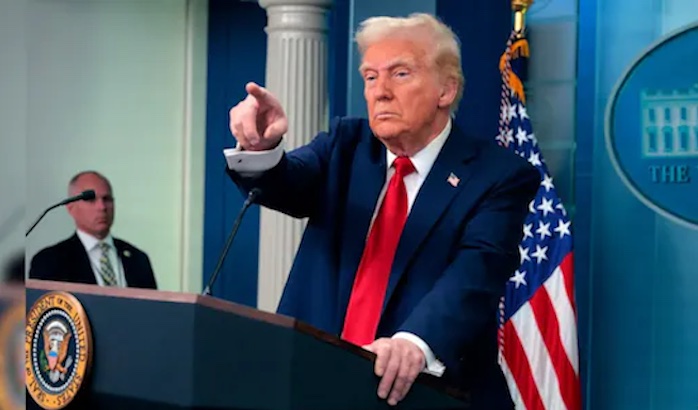

U.S. President Donald Trump has ramped up pressure on Iran, warning that unless Tehran negotiates a nuclear deal soon, the next U.S. strike would be “far worse.” The threat comes amid lingering tensions over Iran’s nuclear program and recent protests across the country.
High Stakes in the Middle East
Trump stressed that time is running out for Iran to come to the table. In a social media post, he called for a “fair and equitable deal” that would ensure Iran has no nuclear weapons, citing a previous U.S. strike last June as a warning. Trump emphasized that a U.S. “armada” is en route toward the region, signaling readiness for military action if negotiations fail.

The warning is serious, but it also underscores the high-stakes nature of U.S.-Iran relations. While Trump frames it as a push for diplomacy, the threat of military escalation cannot be ignored.
Iran Fires Back
Tehran responded firmly, stating it would defend itself “like never before” if attacked. Iran’s mission to the U.N. reminded the world of past U.S. military misadventures in Afghanistan and Iraq, highlighting the costs in lives and money. Iranian Foreign Minister Abbas Araqchi confirmed no recent talks with U.S. envoys, signaling Tehran’s reluctance to rush into negotiations under threat.
Naval Forces on Alert
Reports indicate that the USS Abraham Lincoln and accompanying warships have arrived in the Middle East, part of a larger U.S. naval deployment to pressure Iran. The movement of these forces comes as demonstrations in Iran over economic hardship and political repression have recently declined, but the risk of renewed unrest remains.
Between Diplomacy and Confrontation
Trump’s message is clear: negotiate or face military consequences. Yet the situation is delicate, with both sides trying to signal strength without triggering open conflict. The world watches closely, knowing that missteps could escalate into a major crisis.
Analysts suggest that while Trump frames this as a call for diplomacy, the tone is inherently aggressive. The rhetoric may push Iran toward talks, but it also increases the risk of miscalculation on either side.
Looking Ahead
As tensions simmer, the question remains whether Iran will engage or resist. The coming days will show if words can prevent war or if threats are simply setting the stage for confrontation.
This situation is a reminder that in international diplomacy, the line between negotiation and conflict is thin, and misjudgments can have global consequences.