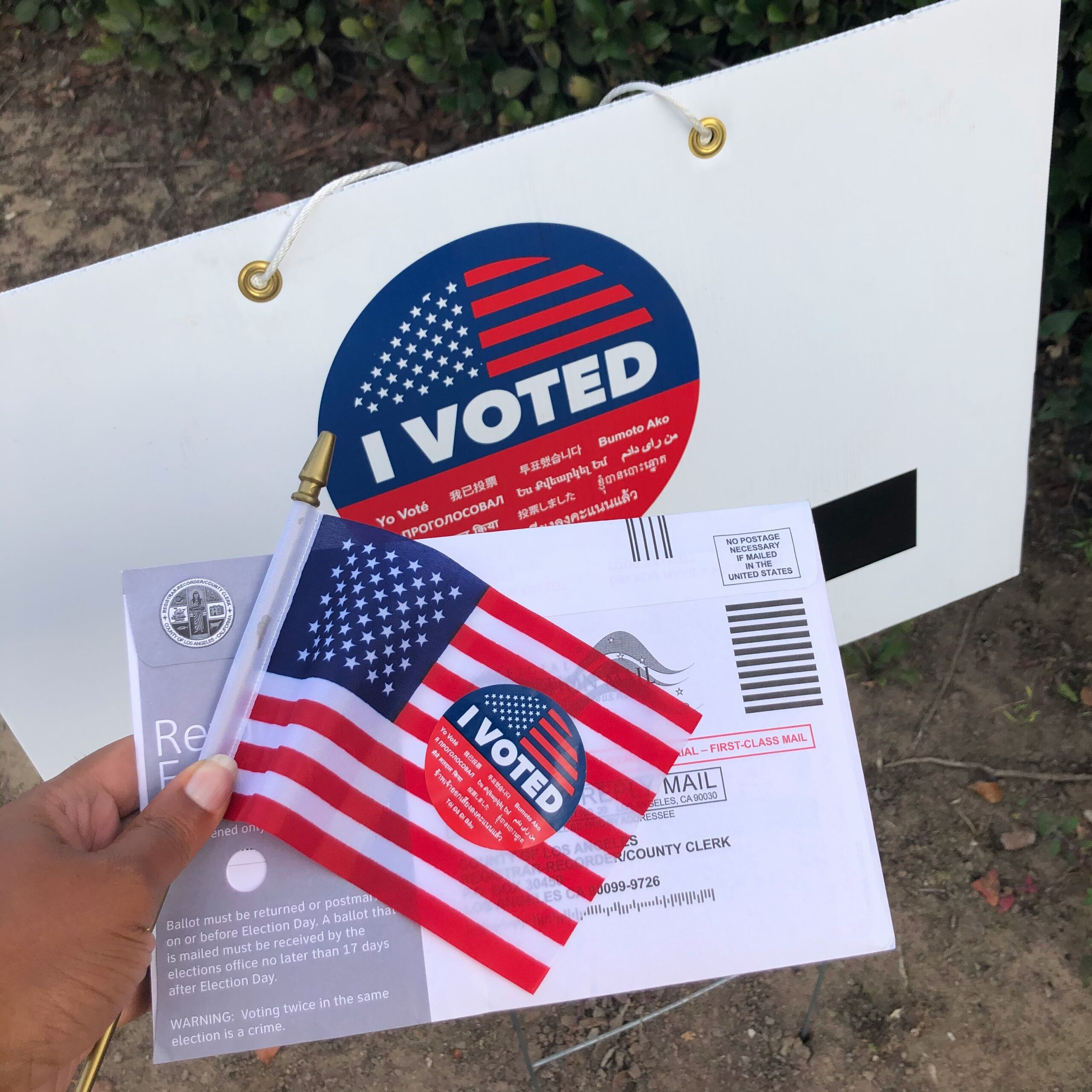

On a near-party-line vote of 218-213, House Republicans on Wednesday muscled through the most sweeping federal election overhaul in a generation—legislation requiring every American to prove their citizenship in person with documents like a passport or birth certificate just to register, and to flash a photo ID every time they vote.
The SAVE America Act, a 32-page expansion of last year’s SAVE Act, now heads to a Senate where it faces mathematical near-impossibility. But its passage exposes a fundamental collision: between a Republican Party convinced that only mandatory documentary proof can secure elections, and Democrats who see a deliberate, data-driven disenfranchisement of more than 21 million eligible Americans.
What the Bill Actually Does
The legislation amends the 1993 National Voter Registration Act to eliminate the “honor system”—the checkbox under penalty of perjury that currently suffices to attest citizenship. Instead, every federal voter registration must be accompanied by “documentary proof of citizenship” presented in person: a U.S. passport, a birth certificate, a naturalization certificate, or an adoption decree.
For the act of voting itself, the bill mandates photo identification for all in-person balloting. Mail-in voters must submit copies of their ID with both their request and their returned ballot. States would be required to audit their voter rolls monthly for noncitizen registrations, using federal databases provided at no cost.
Sponsors—including House Administration Committee Chairman Bryan Steil and Rep. Chip Roy — framed the bill as a response to documented noncitizen registrations in Georgia, Pennsylvania, Oregon, and Alabama, totaling several hundred cases. “It’s just common sense,” Speaker Mike Johnson declared. “Americans need an ID to drive, to open a bank account, to buy cold medicine. So why would voting be any different?”
The 21 Million Figure—and Who They Are
Democrats do not dispute the bill’s text. They dispute its consequences. Rep. John Larson, citing Brennan Center research, placed the number of eligible Americans lacking ready access to documentary proof of citizenship at 21 million.
The category includes:
A) 69 million married women whose birth certificates bear their maiden names, requiring them to re-register, provide marriage certificates, and explain why their legal name no longer matches their proof of citizenship.
B)More than 140 million Americans who do not possess a valid passport and would be forced to either locate a certified birth certificate or pay fees to obtain one, what Larson called a “backdoor poll tax”.
C)High school and college students, whose student IDs are explicitly excluded from the list of acceptable identification.
D)Native American voters, whose tribal IDs are also barred.
E)Military personnel deployed overseas, who face logistical hurdles in producing and mailing documentary proof from combat zones.
Rep. Chip Roy has dismissed these concerns, noting the bill contains provisions for voters with name changes and allows provisional balloting. Sen. Mike Lee argued that “millions of Americans do this every day for work, travel, and financial transactions”.
But the distinction, opponents counter, is that those activities are optional. Voting is a constitutional right.
A Partisan Chasm—and One Democrat
The House vote was 218-213, with all Republicans voting yes. They were joined by a single Democrat: Rep. Henry Cuellar of Texas. The lone defection underscored the depth of Democratic opposition. In 2025, four Democrats supported the original SAVE Act. That number collapsed to one.
House Minority Leader Hakeem Jeffries did not mince words. “This is a desperate effort by Republicans to distract,” he told reporters. “The so-called SAVE Act is not about voter identification, it is about voter suppression. And they have zero credibility on this issue.”
Jeffries pointed to President Trump’s stated ambition to “nationalize” elections and “take over the voting in at least—many, 15 places”—a direct constitutional conflict with Article I, Section 4, which grants states authority over the “Times, Places and Manner of holding Elections”. He also noted that the FBI has seized ballots and voter records from Fulton County, Georgia, as Trump continues to contest the 2020 outcome.
The Popularity Paradox
Republicans possess a powerful rhetorical weapon: the polls. A Pew Research Center survey last August found 83% of U.S. adults favor requiring photo identification to vote, including 71% of Democrats and 76% of Black voters. Speaker Johnson has repeatedly cited these numbers, arguing that “the only people that oppose it are people who want to cheat our system”.
The rejoinder from Democrats and voting rights advocates is that specific policy details matter. “Voter ID” in the abstract is popular. Requiring a passport or birth certificate—documents tens of millions lack—to register and vote is not the same as showing a driver’s license at the polls. Polling on the specific SAVE America Act provisions does not exist.
The Senate: 60-Vote Wall and Republican Dissent
The bill’s path forward is, in the words of Senate Majority Leader John Thune, a procedural maze with no clear exit.
Republicans hold 53 seats. To overcome a filibuster, they need 60 votes. Senate Democrats are unanimously opposed. Senate Minority Leader Chuck Schumer declared the legislation “would impose Jim Crow-type laws on the entire country and is dead on arrival”.
Even among Republicans, unanimity is absent. Sen. Lisa Murkowski of Alaska came out against the bill this week, reminding her colleagues that in 2021 they unanimously opposed Democratic election reform legislation precisely because it would “federalize elections”—the same charge now leveled at their own proposal.
“Not only does the U.S. Constitution clearly provide states the authority to regulate the ‘times, places, and manner’ of holding federal elections, but one-size-fits-all mandates from Washington, D.C., seldom work in places like Alaska,” Murkowski said.
Sen. Susan Collins also expressed reservations, with her office stating the revised bill “went much broader” than the original SAVE Act. Sen. Mitch McConnell, who led the charge against Democrats’ 2021 voting rights package, has long insisted elections should be run by states without federal mandates.
The Talking Filibuster Gambit
Lee has proposed reviving the “talking filibuster”—requiring senators to hold the floor continuously to delay a vote, rather than simply signaling objection. This procedural workaround would not require changing Senate rules or reaching 60 votes.
“The talking filibuster is an important part of our history,” Lee said. “Nothing in the Senate’s an easy move. This one’s certainly not. But if we want to do this, this is how we have to go about it”.
Thune has poured cold water on the idea. “There aren’t anywhere close to the votes—not even close—to nuking the filibuster,” he said, making clear he does not view the talking filibuster revival as distinct from that outcome.
The Irony of 2021
The political role reversal is stark. Four years ago, Democrats held unified control of Congress and the White House and made federalizing election rules their top priority. They were blocked by a Republican Party united in its defense of state control and the 60-vote threshold.
Now Republicans control all three branches—and are discovering that the procedural weapons they wielded in opposition are now obstacles to governance.
“The federal government does not run elections. States run elections,” Murkowski said. “Ensuring public trust in our elections is at the core of our democracy, but federal overreach is not how we achieve this”.
What Happens Next
The SAVE America Act will be transmitted to the Senate, where Thune has promised to bring it to a vote—without specifying when or how.
Short of a negotiated compromise with Democrats (none is apparent), a rules change Republicans lack the votes to enact, or a successful talking filibuster that Lee cannot guarantee, the bill will likely stall.
For House Republicans, that may be sufficient. They have passed their priority legislation, forced Democrats into a 213-1 floor vote against “voter ID,” and teed up a 2026 campaign issue.
For the 21 million Americans whose access to the franchise would, under this bill, depend on documents they do not possess, the math is more personal—and the outcome, for now, deferred to a Senate where 60 votes remain an impossible horizon.