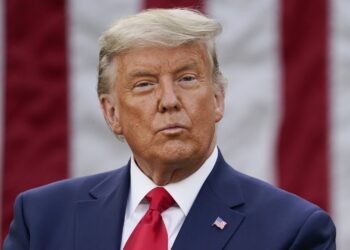

European leaders are increasingly looking to rely less on the United States for their military protection, a shift many attribute to the policies and actions of former President Donald Trump. His push to annex Greenland and other unilateral initiatives have raised doubts in Europe about Washington’s commitment to NATO and the continent’s security.
At the recent Munich Security Conference, European Commission President Ursula von der Leyen highlighted a sense of irreversible change in transatlantic ties. “Some lines have been crossed that cannot be uncrossed anymore,” she said, reflecting widespread unease among European capitals.
Reassurance or Rhetoric?
U.S. Secretary of State Marco Rubio sought to reassure European leaders in his conference speech, using a warmer tone than previous U.S. representatives. However, he remained critical of Europe’s political decisions and avoided mentioning NATO, Russia, or the ongoing war in Ukraine, issues at the heart of the continent’s security concerns.
Despite these assurances, European countries appear determined to take primary responsibility for their own defense. With Moscow viewed as an increasing threat, leaders signaled they would accelerate the development of homegrown military capabilities, including long-range missiles and joint weapons projects.
Building a European Pillar
German Chancellor Friedrich Merz, French President Emmanuel Macron, and British Prime Minister Keir Starmer reaffirmed their commitment to a stronger “European pillar” within NATO. But the move also serves as a hedge against future U.S. leaders potentially retreating from European defense commitments.
Merz went further, disclosing talks with Macron about establishing a European nuclear deterrent. France already maintains an independent nuclear arsenal, while Britain’s Trident missiles are dependent on U.S. technology, highlighting the continent’s current vulnerability.
Can Words Match Action?
Europe’s declarations of increased defense spending and joint projects, including the European Long-range Strike Approach (ELSA) and collaborations on ballistic missile defense, signal intent. NATO members agreed to raise core defense spending from 2% to 3.5% of GDP, with an additional 1.5% allocated for related security investments. Defense budgets have risen nearly 80% since the war in Ukraine began, according to von der Leyen.
Yet, high-profile projects have struggled. The FCAS French-German-Spanish fighter jet project remains stalled over disagreements about work distribution. Debates continue over whether EU defense initiatives should be limited to European companies or open to broader participation.
The Reality of Modern Warfare
Ukrainian President Volodymyr Zelenskiy reminded delegates of the fast pace of modern warfare. Surrounded by screens showing images of Russian attacks, he noted, “During this war, weapons evolve faster than political decisions meant to stop them.” Last month alone, Ukraine faced more than 6,000 drone attacks and 150 missile strikes, underscoring Europe’s urgent need to strengthen its own defenses.
A Shift in Transatlantic Ties
Europe’s move to depend less on U.S. military support is a direct response to perceived unreliability in Washington. While Trump’s policies may have accelerated this trend, European leaders are now focused on ensuring their own security through coordinated spending, joint projects, and the development of a European defense identity.
As debates continue over funding, collaboration, and the speed of implementation, one question remains: can Europe truly safeguard itself without heavy reliance on the United States, or will it face new vulnerabilities as it builds a homegrown military framework?