
It is a small rocky outcrop just 15 nautical miles off Iran’s coast. Tiny on the map, invisible to most of the world. But when Donald Trump ordered strikes on this island Friday, he went straight for the economic heart of the Islamic Republic.
Kharg Island handles 90% of Iran’s crude oil exports. It is the pipeline through which the regime’s wealth flows — and the financial lifeline of the Islamic Revolutionary Guard Corps, the powerful military force that has long been Tehran’s sword and shield.
“Striking Kharg Island is like going for Iran’s economic jugular vein,” said BBC Security Correspondent Frank Gardner.
The message from Washington was unmistakable: we can take away your money. And if you keep fighting, we will.
What Was Hit
Trump announced the attack on social media, describing it as “one of the most powerful bombing raids in the History of the Middle East.” U.S. Central Command, he said, “totally obliterated every MILITARY target in Iran’s crown jewel, Kharg Island”.
But he added a significant caveat: “for reasons of decency,” he had “chosen NOT to wipe out the Oil Infrastructure on the Island”.
Iranian state media confirmed the strikes targeted air defenses, a naval base, an airport control tower and a helicopter hangar. Critically, officials insisted no damage was done to the island’s oil facilities.
Ehsan Jahanian, political deputy to the governor of Bushehr province, said the process of exporting oil from Kharg was “fully underway” and that “all sectors are continuing their routine activities”.
Why Not the Oil?
The question hanging over the strike is why the U.S. deliberately spared the very thing that makes Kharg important.
Military analysts point to a careful calculation. Destroying the island’s oil infrastructure would send global prices soaring — an unwelcome shock for an administration already facing midterm voters worried about inflation. It would also represent a massive escalation, one that could provoke Iran to target energy infrastructure across the Gulf.
“If we destroy all that, we leave a devastated nation for the Iranian people that the US says it wants to liberate,” said Justin Crump, a military analyst and former British Army officer.
Trump framed the decision as mercy. But the message to Tehran was clear: we can take your economy at any time. This was a warning shot across the bow — literally.
Iran’s military responded in kind, warning that oil and energy infrastructure belonging to firms working with the U.S. would “immediately be destroyed and turned into a pile of ashes” if its own energy facilities were attacked.
The Strait of Hormuz Factor
Trump’s restraint came with a threat. Should Iran or others “do anything to interfere” with the safe passage of ships through the Strait of Hormuz, he said, he would reconsider the decision not to target the island’s oil facilities.
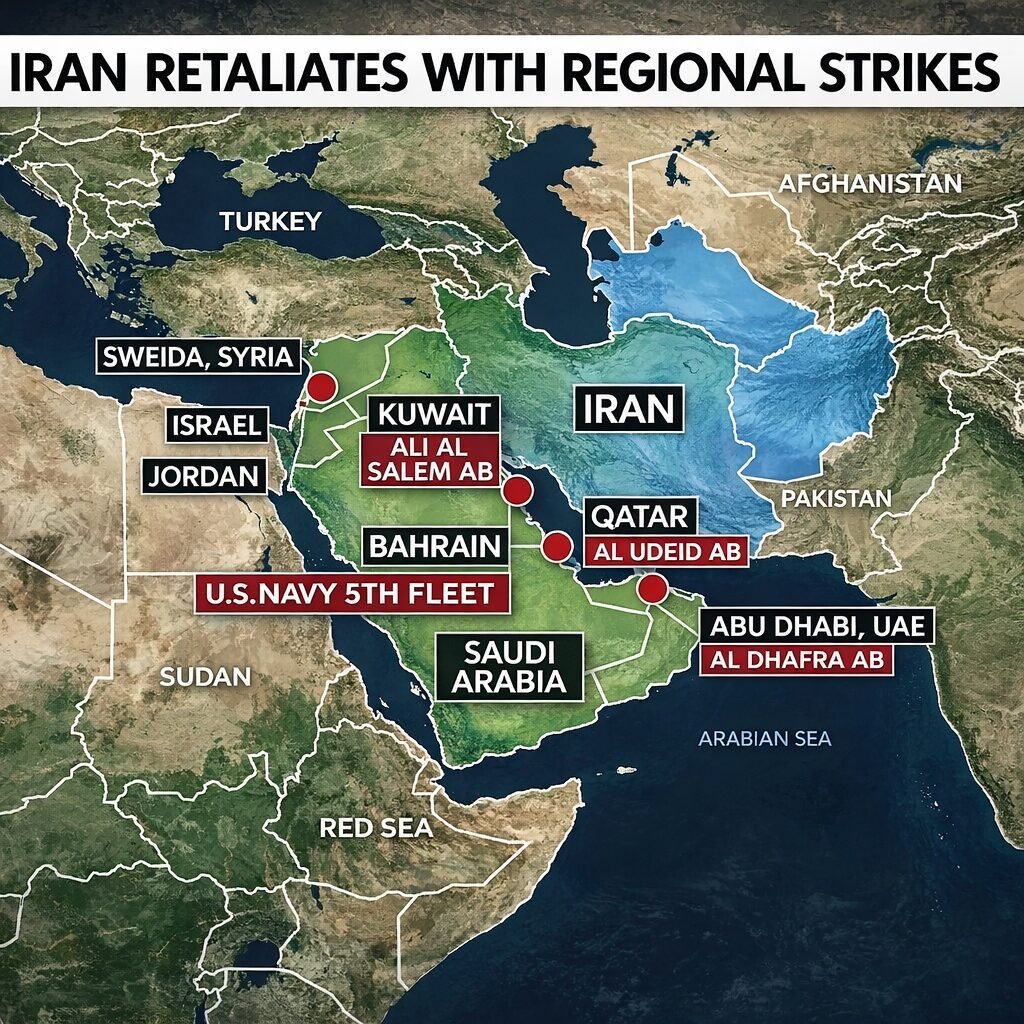
The strait, located south of Iran’s coast, is one of the world’s most important shipping channels. About a fifth of global oil flows through its narrow waters — and Iran has effectively closed it since the war began.
By linking Kharg’s oil infrastructure to the strait’s reopening, Trump made clear that the economic lifeline of the Islamic Republic is now a bargaining chip.
Will the US Seize the Island?
Speculation is growing about what comes next. U.S. media reports indicate that amphibious ships carrying up to 5,000 Marines and sailors are being sent to the Gulf — forces ideally suited for an amphibious assault.
Taking Kharg Island would be a dramatic escalation. But it would also be decisive: seizing the island would choke off Iran’s oil exports entirely and provide a platform for strikes against the mainland.
It would effectively cut off the IRGC’s economic lifeline, crippling its ability to wage war.
The Pentagon has declined to comment.
What Happens Next
For now, Kharg Island remains in Iranian hands, its oil facilities intact, its exports continuing. But the message has been sent: the U.S. can reach your economy whenever it chooses.
Trump described the island as Iran’s “crown jewel.” On Friday, he showed he could touch it without destroying it — a reminder that the crown jewel is now in play.
How Iran responds will determine whether that restraint lasts. As one analyst put it: “He’s showing it as being merciful but saying he could be more punishing”.