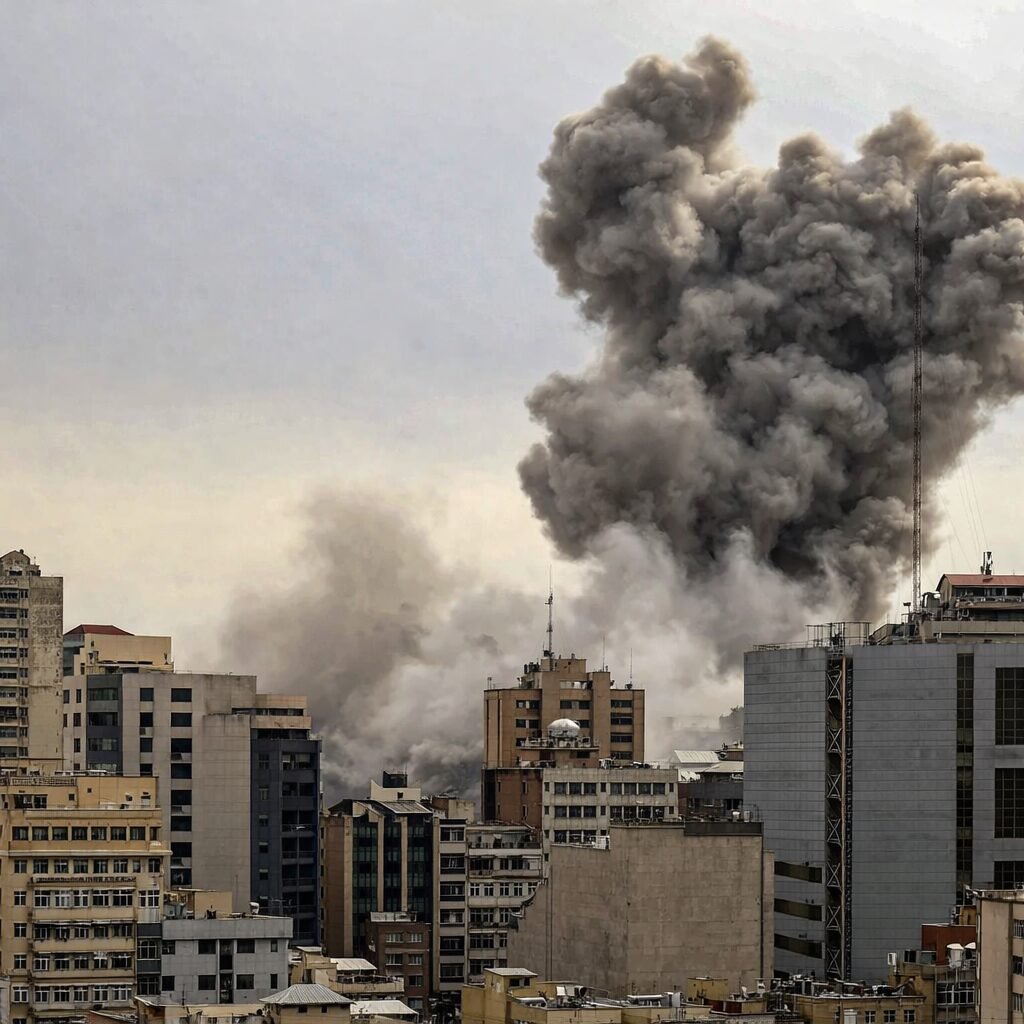

Most people want this war to end as quickly as possible. But on what terms? That is where the agendas diverge — sharply, irreconcilably, and with no end in sight.
Sixteen days into the conflict, the United States, Iran, Israel, and the Gulf states all have fundamentally different objectives. Here’s what each side is actually fighting for.
The United States: Regime Change or Retrenchment?
President Donald Trump’s war aims have vacillated, appearing to shift between a simple curtailment of Iran’s nuclear program, capitulation to all U.S. and Israeli demands, and the total collapse of the Islamic Republic.
So far, Iran has neither capitulated nor collapsed. But its military has been severely weakened by 16 days of relentless precision bombing.
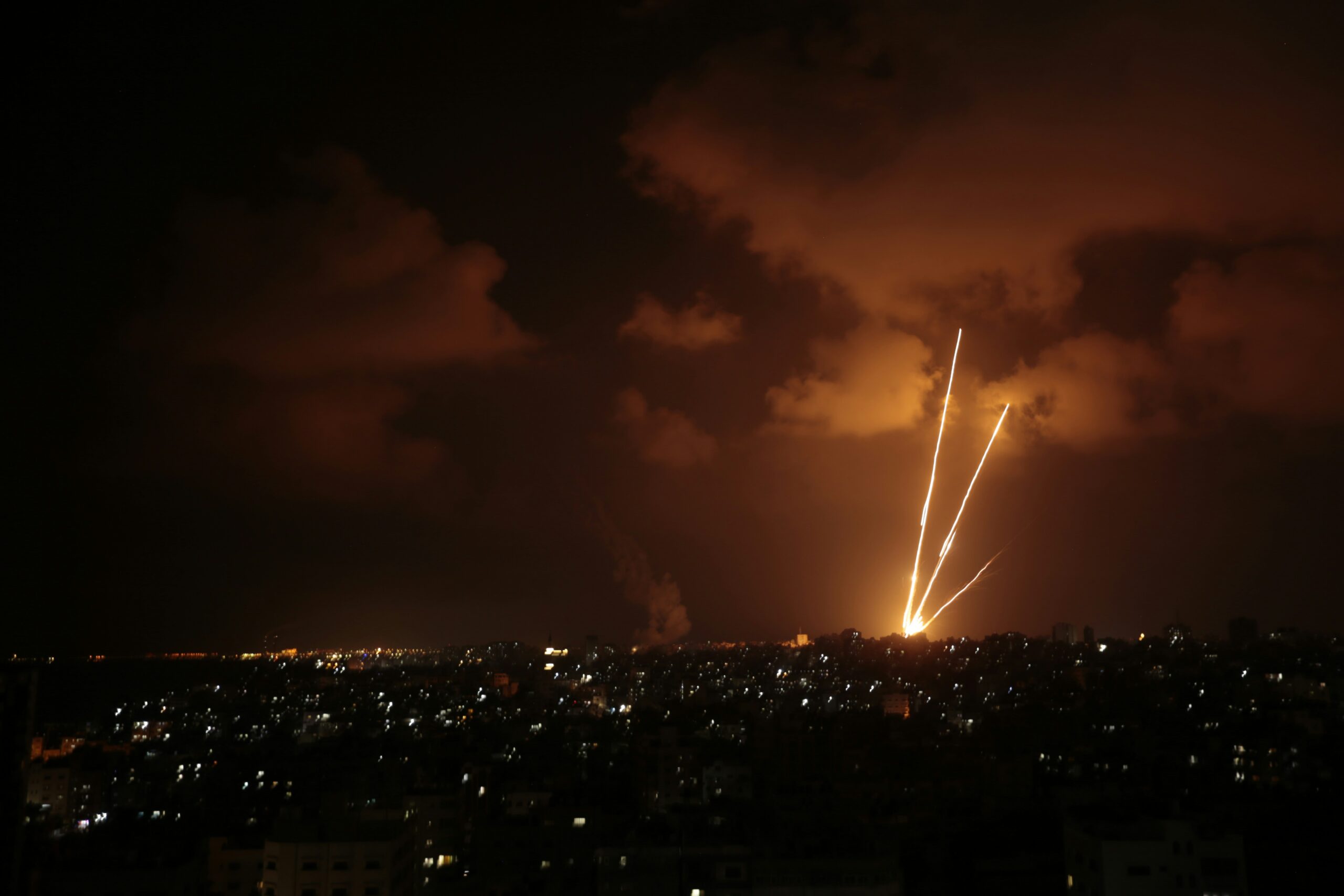
In an ideal world for Washington, this war ends with the collapse of the rule of the ayatollahs, swiftly replaced by a peaceful, democratically elected government. As of Monday, that shows no sign of happening.
A next-best result would be a severely damaged Islamic Republic modifying its behavior, ending repression of its citizens and support for radical militias. This looks increasingly unlikely after Iran chose Mojtaba Khamenei, the hardline son of his late predecessor, as its new supreme leader — a man most likely to irritate Washington.
Indirect U.S.-Iran talks in Geneva last month, mediated by Oman, were making progress on the nuclear file. The Omanis say Tehran was prepared to offer significant reassurance that it was not pursuing a nuclear weapon. What Iran would not discuss was curtailing its ballistic missile program or its support for proxy groups like the Houthis and Hezbollah.
With rising global oil prices, a partially blocked Strait of Hormuz, and increasing unease at home about another costly Middle Eastern conflict, pressure is mounting on Trump to end the war. But it will be hard for him to present it as anything other than a failure if the Tehran regime survives unchastened and defiant.
Iran: Survival at Any Price — But Not Any Terms
Iran wants the war to stop as quickly as possible — but not if it means caving to all Washington’s demands.
The regime knows it has the “strategic patience” to outlast Trump in this conflict. It also has geography on its side. Iran has the longest coastline of any Gulf state and can threaten shipping through the Strait of Hormuz indefinitely, disrupting the 20% of global oil supplies that normally pass through.
Trump’s call for allied nations to help keep the strait open is being met with reluctance. The UK, Europe, and others are wary of putting their navies in harm’s way for a war they never endorsed.
Officially, Iran demands a cast-iron guarantee it won’t be attacked again, plus war reparations for billions in damage. Tehran probably knows it won’t get either. But the Islamic Republic leadership and the Revolutionary Guards only have to survive this conflict to present it to their people and the world as a victory.
Israel: Maximum Destruction, Minimum Timeline
Of the three combatant nations — the U.S., Iran, and Israel — the Israelis seem in the least hurry to end this war.
They want to destroy as much of Iran’s ballistic missile stocks, storage depots, command centers, radar sites, and IRGC bases as possible. All of these can be rebuilt when the shooting stops, so Israel wants Iran to understand there is a severe cost in doing so — namely, that the Israeli Air Force is capable of returning and bombing again in a few months.
Israel sees Iran’s missiles and its suspect nuclear program as an existential threat. Before the war, Iran had a highly developed homegrown missile and drone industry — it gave its ally Russia the Shahed drones that have pummeled Ukraine. It was also enriching uranium to 60% purity, far beyond the level needed for civil nuclear power.
For Israel, this war is an opportunity to push that threat back, possibly for years.
The Gulf States: Caught in the Crossfire
The Gulf Arab states — the UAE, Saudi Arabia, Qatar, Kuwait, and Bahrain — have the simplest objective: they want the war to stop, and they want to stop being targets.
But Iran has made clear that hosting U.S. military installations and economic ties with Washington make them legitimate targets. The UAE has been hit repeatedly, including strikes on Dubai International Airport and the Fujairah oil port. Kuwait has suffered casualties. Saudi Arabia’s energy infrastructure has been attacked.
Behind the scenes, resentment has been mounting at being drawn into a conflict they neither initiated nor endorsed — but are now paying for economically and militarily.
Yet there is little they can do. Their economies depend on the same global energy markets the war is disrupting. Their security depends on the same U.S. alliance that made them targets.
They want out. They have no way out.
The Endgame Nobody Sees
Sixteen days in, none of these objectives has been achieved.
The U.S. has not toppled the regime. Iran has not forced a ceasefire. Israel has not eliminated the missile threat. The Gulf states have not found safety.
What comes next is anyone’s guess. The Omanis, who mediated earlier talks, say they still hope for a diplomatic off-ramp. But with Iran’s new supreme leader chosen to defy Washington, Israel’s air force still striking, and Trump’s reelection campaign looming, that ramp looks increasingly narrow.
As one Gulf analyst put it: “Nobody knows how this ends. Not the White House, not Tehran, not Jerusalem. They all just know they can’t be the one to blink first.”