A controversial secularism law in Quebec heads to Canada’s Supreme Court this week, but legal experts say the outcome will reshape far more than religious expression in the country. The case has the potential to test national unity, redefine the balance between courts and elected officials, and determine whether provinces can use a constitutional loophole to shield discriminatory laws from judicial review.
“This case is probably going to be the most important constitutional case in a generation,” said Christine Van Geyn, executive director of the Canadian Constitution Foundation.
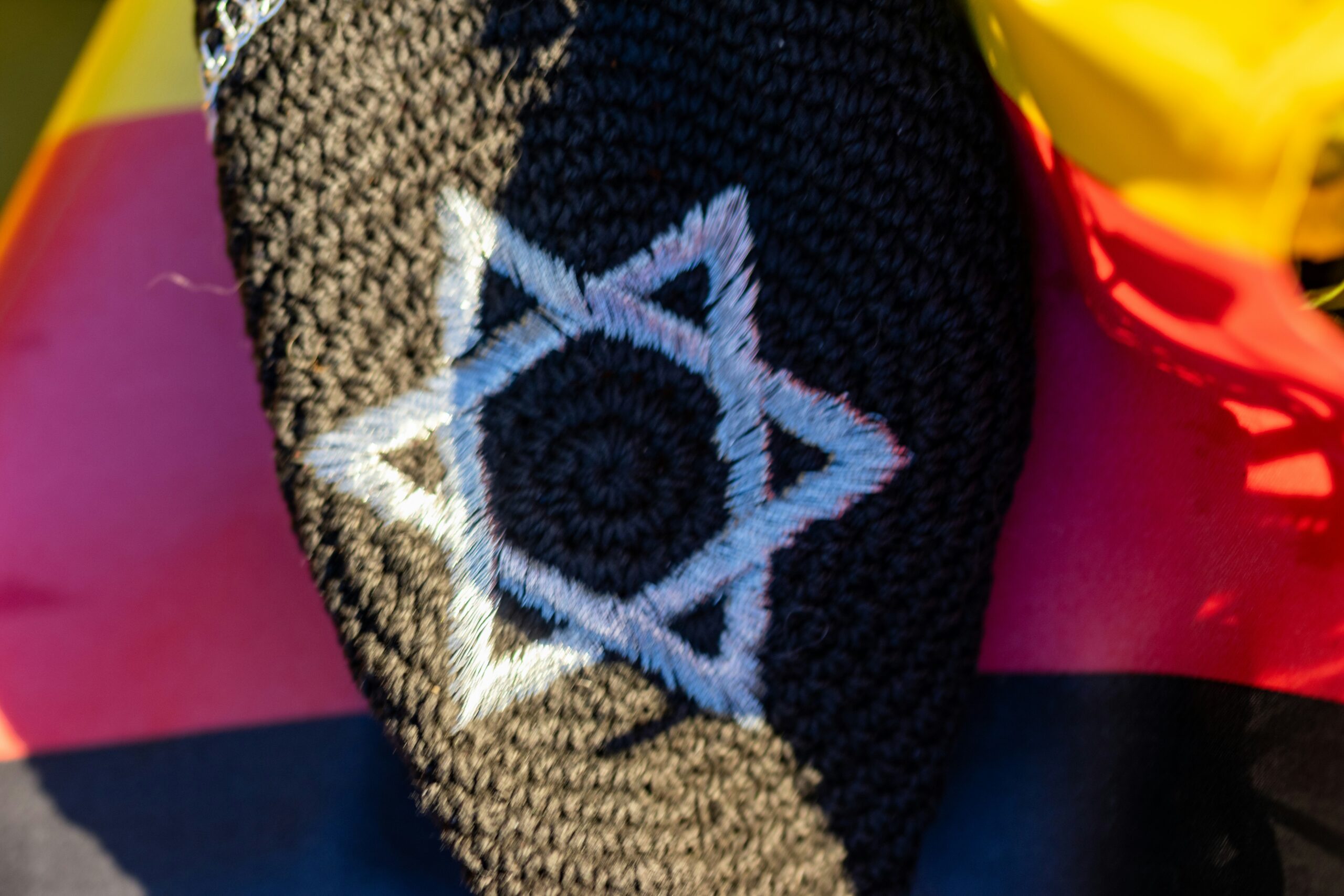
At the heart of the matter is Bill 21, which bars civil servants like judges, police officers and teachers from wearing religious symbols at work. Passed in 2019 by Quebec’s governing Coalition Avenir Québec (CAQ), the law was immediately divisive. Supporters called it a reasonable step toward enshrining the separation of church and state. Critics said it was discriminatory, targeted Muslim women, and made it harder for religious minorities to integrate.
But to shield the legislation from legal challenges, Quebec deployed a unique Canadian invention: the “notwithstanding clause.”
The ‘Constitutional Time Bomb’
Section 33 of the Canadian constitution allows a provincial or federal government to override certain “fundamental freedoms” — including religion, expression, association, and equality rights — for up to five years. The clause was intended as a safety valve, a “grand bargain” to get provinces to sign onto the Charter of Rights and Freedoms in the 1980s.
The clause is subject to renewal. In theory, it can be extended indefinitely. And that, legal scholars say, is precisely the problem.
“Could a government invoke [the clause] to ban abortion? To criminalise political speech critical of the government? To legalise torture?” the Canadian Civil Liberties Association (CCLA) wrote in a recent op-ed. “According to the Quebec government’s logic, even in such cases, the courts would not only be powerless but also bound to silence.”
The CCLA called Quebec’s legal arguments “spine-chilling.”
Errol Mendes, a law professor at the University of Ottawa and an intervener in the case, said he and others warned decades ago that the clause was overly broad. “And our predictions were coming true now, because there slowly started to be more and more use of the clause.”
The Case Before the Court
Beginning Monday, the Supreme Court will hear four days of arguments in a constitutional challenge to Bill 21. More than 50 interveners — including the federal government, civil liberties groups, and legal scholars — have filed briefs.
Among the challengers is Ichrak Nourel Hak, a Muslim teacher in Quebec who wears a hijab. She and the CCLA argue that Bill 21 “has been infringing on the dignity, rights and freedoms of individuals who work in or aspire to work in the public service” and “has a disproportionate impact on specific religious minority groups, such as Muslim, Sikh and Jewish communities.”
Quebec’s position is straightforward: whether or not the bill restricts freedoms is not the issue, because it is shielded by the notwithstanding clause. The province argues the aim is to protect the religious neutrality of the state and support a sense of shared civic identity.
“Section 33 constitutes, in a way, one of the cornerstones of the Canadian Charter,” Quebec argues in its legal briefings.
A Test of National Unity
The federal government has taken a different position. In court filings, Ottawa does not weigh in on the merits of Bill 21. Instead, it argues the notwithstanding clause cannot be used as a blank cheque — and that the court should set limits on how it can be invoked.
The clause was not meant to be “used to distort or annihilate the rights and freedoms guaranteed by the Charter,” the federal government wrote, “or to reduce them to ‘des peaux de chagrin'” — to shrink them beyond recognition.
That argument triggered immediate pushback from the provinces. Quebec accused Ottawa of staging an “attack on the parliamentary sovereignty of the legislative assemblies of all of Canada.” Five premiers — from Saskatchewan, Alberta, Ontario, Quebec, and Nova Scotia — issued a joint statement calling Ottawa’s position a threat to national unity.
“Indeed, the federal government’s position amounts to a direct attack on the foundational constitutional principles of federalism and democracy,” they said.
Alberta, in its own filings, argued the clause was a “hard-fought and hard-won compromise” brought in with the intent to “preserve parliamentary sovereignty.”
What’s at Stake
The Supreme Court last heard a challenge to the notwithstanding clause in 1988. The decision in this case could set the boundaries for how provinces use the clause going forward.
If the court accepts Quebec’s position, any province could pre-emptively shield any law from charter challenges for renewable five-year periods. If the court accepts Ottawa’s argument, the clause could be narrowed — requiring governments to justify its use in specific, limited circumstances.
“Section 33 is, in my view, a ticking legislative time bomb that is now exploding,” former Quebec MNA Clifford Lincoln told the Globe and Mail.
The hearings run through Thursday. A decision is expected later this year.
For now, the question hanging over the court is whether the country’s foundational rights document can survive a legal mechanism designed to override it — and whether a law that bans a teacher from wearing a hijab will be upheld as a valid expression of Quebec’s identity, or struck down as a violation of the fundamental freedoms all Canadians share.