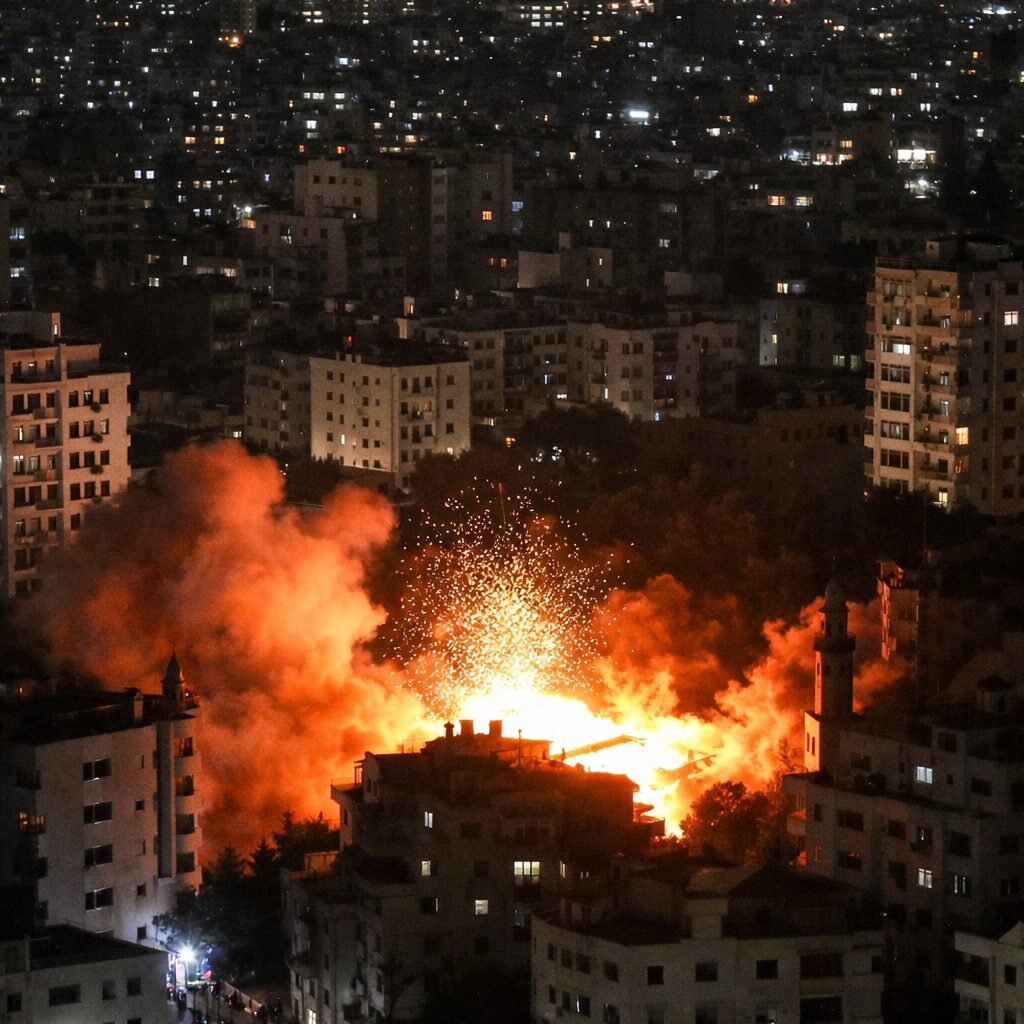

The war that began when the United States and Israel struck Iran on February 28 has spread across the Middle East like wildfire, claiming lives from Tehran to Tel Aviv, from Beirut to Bahrain, from Kuwait to Karachi. The toll, compiled from government statements and rights groups, surpasses 4,500 — and the fighting shows no sign of abating.
These numbers, which Reuters has not independently verified, offer the clearest picture yet of a conflict that has already reshaped the region.
Iran: The Heart of the Storm
The heaviest losses are in Iran itself. The U.S.-based rights group HRANA reported Wednesday that 3,300 people have been killed since the war erupted — 1,464 of them civilians, including at least 217 children. The group says its data comes from field reports, local contacts, medical and emergency sources, civil society networks, open-source materials and official statements.
Iran’s ambassador to the United Nations offered a slightly lower figure on Wednesday, telling the Security Council that at least 1,500 civilians had been killed in U.S.-Israeli strikes.
It was not clear whether either count included at least 104 people, the Iranian military said, who were killed in a U.S. attack on an Iranian warship off Sri Lanka on March 4.
The discrepancy between HRANA’s civilian count and Iran’s official figure — 1,464 vs. 1,500 — is small. But the gap between HRANA’s total of 3,300 and Iran’s state media reports of 1,270 remains vast. The true toll, like so much in this war, is contested.
Lebanon: The Northern Front
Lebanon has paid a terrible price. Israeli strikes since March 2 have killed 1,094 people, according to Lebanese authorities. Among them: at least 121 children.
The bombing has targeted Hezbollah strongholds across the country, but residential areas have also been hit. Entire neighborhoods in southern Beirut have been reduced to rubble. The death toll rises daily.
Iraq: Caught in the Crossfire
At least 88 people have been killed in Iraq, according to Iraqi authorities. Most were members of the Iran-affiliated Shi’ite Popular Mobilization Forces, which have been fighting alongside Iranian forces.
But the violence has also reached Iraq’s Kurdish region. An attack on Kurdish Peshmerga fighters in Erbil on March 24 killed six. The Peshmerga, who are allied with the United States, accused Iran of carrying out the attack on their military headquarters.
Elsewhere in Iraq, one foreign crew member was killed in an attack on tankers near an Iraqi port, according to port security officials.
Israel: The Other Side
Iranian missile attacks have killed 16 civilians in Israel, according to Israel’s ambulance service. The Israeli military said three of its soldiers were also killed in southern Lebanon.
In a tragic incident of friendly fire, Israeli forces misfired and killed an Israeli farmer near the border with Lebanon on March 22. On March 24, a woman was killed following missile fire toward northern Israel.
The Gulf States: Targets of Retaliation
Iran’s reach has extended deep into the Arabian Peninsula.
The United Arab Emirates has seen 10 people killed in Iranian attacks, including two army soldiers, according to UAE authorities.
Kuwait reported six deaths, including two people killed in Iranian attacks, two interior ministry officers and two army soldiers.
Saudi Arabia recorded two deaths when a projectile fell on a residential location in Al-Kharj city, southeast of the capital Riyadh.
Bahrain said two people were killed in two separate Iranian attacks, with the most recent hitting a residential building in the capital Manama.
The UAE’s defense ministry said on March 24 that one of its civilian contractors — a Moroccan national — was killed in an Iranian attack on Bahrain.
Qatar: A Mysterious Helicopter Crash
Seven people were killed on March 22 in a helicopter crash in Qatar’s territorial waters after a “technical malfunction during routine duty,” according to Qatar’s defense ministry.
Four of those killed were Qatari armed forces personnel. One was a Turkish serviceman from the Qatar-Turkey joint forces. Two were technicians working for Turkey’s defense giant ASELSAN.
Officials did not link the crash to combat, but its timing — during active hostilities in the region — has raised questions.
Beyond the Middle East
The war has claimed lives far from the immediate battlefields.
Pakistan has been drawn into the conflict. Iranian strikes on March 18 targeted what Tehran called “terrorist hideouts” in Balochistan province, killing at least 15 people, including women and children, according to Pakistani officials. Islamabad retaliated with strikes on Iranian soil days later.
Afghanistan has also seen violence spill across its border. At least 12 people were killed in Iranian strikes on what Tehran described as militant camps in Herat province.
Western Casualties
The United States has lost 13 service members. Six were confirmed dead after a U.S. military refueling aircraft crashed over Iraq, the U.S. military said. Seven others have been killed in action during operations against Iran.
One French soldier was killed and six others wounded after a drone attack in northern Iraq, where they were providing counter-terrorism training.
The Displaced
Beyond the dead, more than 3.2 million Iranians have been internally displaced by the war, according to ACAPS, a humanitarian assessment organization. Another 1.2 million Lebanese have fled their homes. The numbers grow each day.
What Comes Next
The war is entering its fifth week with no end in sight. Iran’s missile and drone capabilities remain formidable despite U.S. strikes. The Gulf states are reinforcing their defenses. Hezbollah is deeply entrenched in Lebanon. And the United States has shown no willingness to de-escalate.
For the families of the 4,500 killed so far — and the millions displaced — the war is already a catastrophe. For the rest of the region, the question is not whether the toll will rise, but how high.
The numbers here are the best available. But in war, especially this war, no one really knows the full truth.