
The dead were still being counted when they came. Hundreds of Plateau residents, ignoring a 48-hour curfew imposed after Sunday night’s massacre, poured into the streets of Anguwan Rukuba before dawn Monday, demanding answers that have eluded this state for years: Why does the killing never stop? And when will anyone stop it?
The protest, captured in a live TikTok stream that went viral, began at the scene of the attack as early as 9 a.m. — just hours after gunmen dressed in military khaki on motorcycles opened fire on civilians at a market. The demonstrators, visibly agitated, chanted and waved placards, their voices rising as they insisted that a curfew alone cannot solve a problem that has festered for decades.
By midday, Governor Caleb Mutfwang arrived at the protest site. The live stream showed him stepping out of his vehicle to meet the crowd. What he told them, and whether it would be enough to send them home, was still unfolding when this report was filed.
The Attack
The assault began around 8 p.m. Sunday at Anguwan Rukuba market, a commercial hub in Jos North. Witnesses described a scene of chaos: gunmen on motorcycles, some dressed in what appeared to be military camouflage, opened fire on traders and residents closing up for the evening.
The state government imposed a 48-hour curfew immediately after the attack, banning movement across Jos North and Jos South. But the curfew did not stop the counting of bodies.
Police initially reported 12 to 14 deaths. But as residents began to retrieve bodies from the streets and surrounding areas, the number climbed. By Monday morning, community sources told journalists that at least 28 people had been killed. Among them were residents of a nearby student community.
“Gunmen on motorcycles shot through a student community,” one social media post read, capturing the horror of a night that began as Palm Sunday and ended with families identifying their dead.
The University of Jos, which is located in Jos North, announced the postponement of all examinations scheduled for Monday.
A Recurring Nightmare
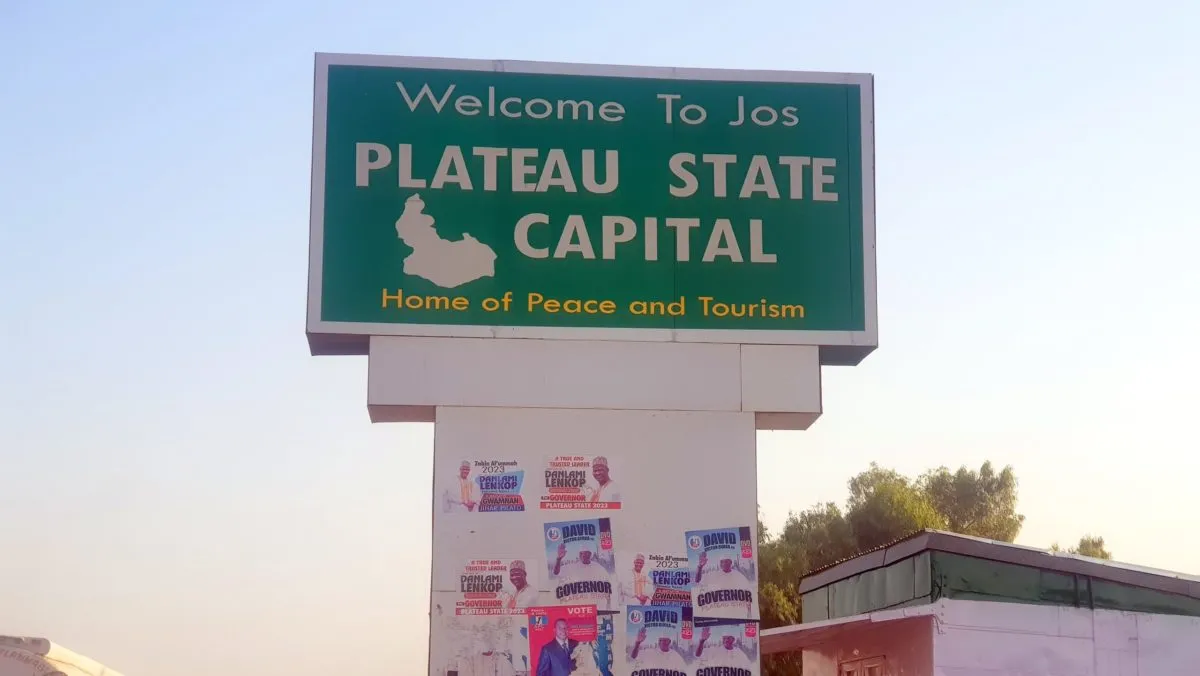
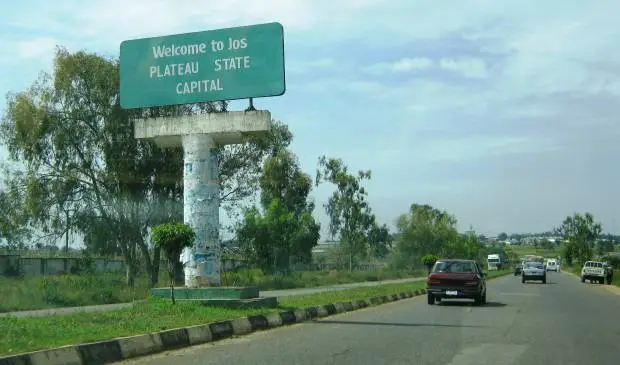
The Palm Sunday attack fits a grim pattern in Plateau State. The “Middle Belt” region has been the site of recurring violence for decades, driven by a complex tangle of ethnic, religious, and economic grievances. Jos, the state capital, has seen some of the worst: neighborhoods burned, residents displaced, and cycles of revenge that have claimed thousands of lives.
Each new attack brings the same cycle: condemnation, curfew, investigation, and then silence until the next massacre.
This time, residents appear determined to break that cycle.
The Monday protest was not merely a response to the latest killings. It was a reckoning with years of accumulated grief. Chants demanding government action were interspersed with questions that have gone unanswered for too long: Why are attackers able to move freely? Why do they wear military uniforms? Who is protecting them?
The Governor’s Response
Governor Mutfwang’s arrival at the protest site was a calculated move. By meeting the crowd directly, he bypassed the usual channels of press releases and official statements. But whether his presence would calm the anger or inflame it further remained uncertain.
A government statement issued Sunday night condemned the attack and promised that “the full weight of the law will be brought to bear on the perpetrators.” It also warned against “taking the law into one’s hands.”
But for residents who have watched previous attacks yield no arrests, no prosecutions, and no justice, those words have a hollow ring.
What Comes Next
The 48-hour curfew remains in effect. The University of Jos exams are postponed. The bodies of the dead are being prepared for burial.
And the questions that drove residents into the streets Monday morning remain unanswered.
Why does Plateau keep bleeding?
The protesters who defied a curfew to demand answers are not waiting for another press release. They are waiting for something they have not seen in decades: action that matches the scale of their grief.
Governor Mutfwang met them at the protest site. Now, the question is whether he will meet them with more than words.