The first American pope has a message for the age of artificial intelligence. It is polite. It is theologically precise. And it is a direct challenge to the tech billionaires who see themselves as the new gods of a coming digital age.
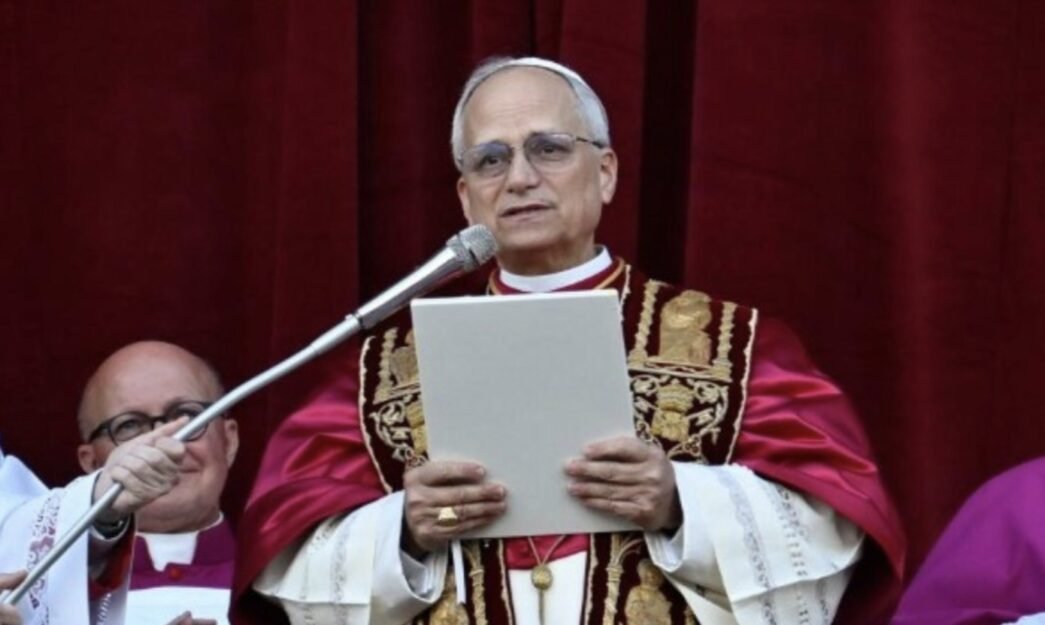
Pope Leo XIV on Monday released “Magnifica Humanitas” (“Magnificent Humanity”), his first encyclical — a 43,000-word letter to the world’s 1.4 billion Catholics and “all people of good will.” The document is being compared to “Rerum Novarum,” Pope Leo XIII’s 1891 landmark teaching on the Industrial Revolution. Just as that encyclical grappled with the dehumanization of workers in factories, this one grapples with the dehumanization of humans in an age of algorithms.
But the new pope went further than his namesake. He apologized for the Catholic Church’s historical complicity in the slave trade. He declared the centuries-old “just war” theory outdated. And he issued a stark warning: artificial intelligence needs to be “disarmed.”
“I know this word is strong, but I use it deliberately, because we are in a moment that demands words that can awaken consciences,” the pope said at the encyclical’s presentation in the Vatican’s Synod Hall, where he appeared alongside AI experts, including Christopher Olah, the co-founder of Anthropic .
Part 1: The Core Message — AI Is Not Human
The encyclical’s title, “Magnifica Humanitas,” is not about the magnificence of technology. It is about the magnificence of people. Leo repeatedly emphasizes that artificial intelligence, despite its speed and computational power, is fundamentally not human.
“These systems merely imitate certain functions of human intelligence,” he writes. “So-called artificial intelligences do not undergo experiences, do not possess a body, do not feel joy or pain, do not mature through relationships and do not know from within what love, work, friendship or responsibility mean.”
That distinction is not academic. It is the foundation of everything else. If humans mistake AI for something it is not — if they begin to treat algorithms as moral agents or themselves as mere data — then they have already lost something essential.
The New York Times analysis of the encyclical notes that Leo is directly challenging what it calls Silicon Valley’s “god complex” — the belief among tech leaders that building superintelligent AI is akin to creating a new form of divine power. The pope is not trying to weaken AI. He is trying to stop the industry from “deifying” it.
Part 2: The Apology — A ‘Wound in Christian Memory’
In one of the most striking passages of the encyclical, Leo addresses the Catholic Church’s own history with slavery. He acknowledges that papal bulls in the 15th century explicitly authorized the enslavement of non-Christians. He notes that it was not until 1839 that Pope Gregory XVI called the slave trade “inhuman,” and not until 1888 that his namesake, Pope Leo XIII, issued an encyclical on abolition.
“This constitutes a wound in Christian memory, one from which we cannot consider ourselves detached,” Leo writes. “For this, in the name of the Church, I sincerely ask for pardon.”
The National Catholic Reporter notes that Leo’s language marks a development in how directly a pope links the church’s moral failures to the institutional church itself, including the role of former popes. Previous apologies focused on “baptized people” or “Christians.” Leo apologizes for the Holy See.
The connection to AI is not random. Leo warns that the world is facing a similar moral crossroads with “new forms of digital slavery.” He cites workers condemned to data labeling, model training, and content moderation, as well as children mining rare minerals for tech devices in dangerous conditions.
“The bodies of these people are scarred, injured and worn down so that computational flow may continue uninterruptedly,” he writes. “This reality deeply challenges the moral conscience of our time” .
Part 3: The Repudiation — Just War Theory Is ‘Outdated’
The encyclical also takes aim at one of the oldest doctrines in Catholic moral teaching: just war theory. For centuries, the church has held that war can be morally justified under strict conditions — self-defense, proportionality, last resort. Leo argues that this framework is no longer adequate.
“The ‘just war’ theory, which has all too often been used to justify any kind of war, is now outdated,” he writes. “The use of force, violence and weapons reflects a relational poverty that always has disastrous consequences for civilian populations.”
That statement is a direct rebuke to the Trump administration, whose officials — including Vice President JD Vance, a Catholic — have invoked just war theory to defend the U.S.-led war in Iran. Cardinal Robert McElroy of Washington had already stated that the Iran war did not meet the moral criteria for a just war. Leo has now effectively endorsed that position from the highest office in the church.
The pope is particularly concerned about AI in warfare. He warns against “autonomous weapons systems” that have developed “almost beyond human control”. He argues that entrusting lethal decisions to algorithms is “not permissible,” and that AI in war must be subject to “the most rigorous ethical constraints.”
“Any algorithm cannot make war morally acceptable,” he writes. “No algorithm can make war morally acceptable.”
Part 4: The Collaboration — Why the Pope Brought an AI Expert to the Vatican
The presentation of “Magnifica Humanitas” was unusual. The pope did not simply release a document. He stood alongside Christopher Olah, the co-founder of Anthropic, an AI company that has refused to allow its models to be used in automated weapons systems or for population monitoring. That decision has put Anthropic in conflict with the Trump administration.
By including Olah, the pope signaled that he is not a Luddite. He is not rejecting technology. He is rejecting the misuse of technology. He wants to participate in the AI conversation, not boycott it.
Olah, for his part, acknowledged that AI labs face immense commercial pressure to prioritize speed over safety. “If we think that the questions raised by AI are best handled by people like me, computer scientists, that is a mistake,” he said at the presentation. “The questions raised by AI transcend AI research communities.”
That is the pope’s point. The questions raised by AI are not technical. They are moral, political, and spiritual. And they cannot be left to the people who are selling the product.
Part 5: The Political Challenge — Slowing Down When Everything Is Accelerating
The encyclical is not just a theological document. It is a political intervention. Leo calls for “a more active political involvement that is capable of slowing things down when everything is accelerating” . He warns against “a race for ever more powerful algorithms and larger datasets, driven by the desire to secure geopolitical or commercial dominance.”
He calls for “sound legal frameworks, independent oversight mechanisms, competent users, and political systems that do not shirk responsibility”. He argues that ownership of AI data should not be left solely in private hands.
And he directly addresses world leaders: “We cannot rule out the possibility that some leaders may consider armed conflict as an effective way of diverting attention from domestic problems and a cynical tool for managing difficulties”.
That is not a veiled critique. It is a public accusation.
Part 6: What Comes Next?
Leo has established a commission to work on AI ethics and regulation. But the Vatican’s power is moral, not legislative. The pope cannot write laws in Silicon Valley or Beijing. He cannot stop autonomous weapons programs in Washington or Moscow.
What he can do is shape the global conversation. “Rerum Novarum” did not end the Industrial Revolution. It changed how the church — and eventually many governments — thought about labor, capital, and human dignity. Leo XIV is aiming for a similar shift.
Professor Anna Rowlands, a theologian at Durham University who participated in the encyclical’s presentation, told Vatican News that the document “will have an enduring impact” . She noted that Leo is not just criticizing false narratives about humanity. He is offering “a rather beautiful vision of a civilization of love” as an alternative.
“There is not a tomorrow to begin thinking about these issues,” Rowlands said. “Because their impact on workplaces, on labour, on immigrants, on families, on political society, and on conflicts globally is now, and was yesterday, and will continue tomorrow as well.”
The Bottom Line
Pope Leo XIV’s “Magnifica Humanitas” is a sweeping, 43,000-word document that addresses artificial intelligence, apologizes for the church’s role in slavery, repudiates just war theory, and warns against the “god complex” of Silicon Valley. He calls for AI to be “disarmed,” for autonomous weapons to be banned, and for political leaders to slow down an arms race that prioritizes profit and power over human dignity.
The first American pope has chosen his namesake’s anniversary to launch a document that will define his papacy. Whether the world listens — whether tech leaders pause, whether governments regulate, whether citizens demand accountability — is now the question.