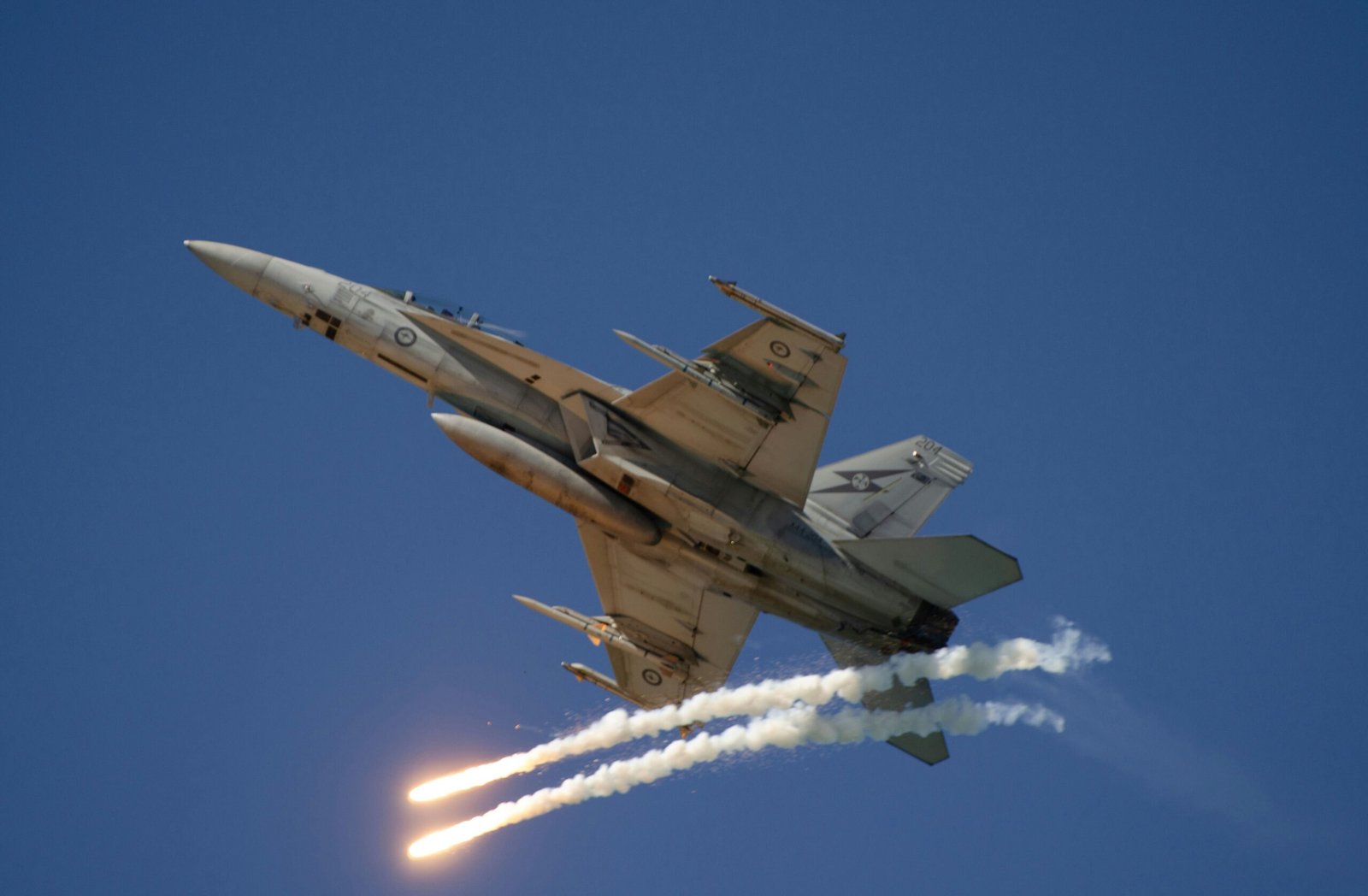
Sweden has announced plans to donate 16 Gripen fighter jets to Ukraine by next year, while Kyiv will also move forward with the purchase of newer Gripen E aircraft as the war with Russia continues.
The announcement was made on Thursday during Ukrainian President Volodymyr Zelenskyy’s visit to an airbase in Uppsala, Sweden.
Swedish Prime Minister Ulf Kristersson said the donated fighter jets would be delivered in early 2027.
“This is a historic decision for Sweden, but it also strengthens Ukraine’s air defence significantly,” Kristersson said.
He added that discussions were ongoing for Ukraine to acquire 20 Gripen E fighter jets initially, with deliveries expected to begin from 2030.
“The aim is to quickly conclude a final agreement with deliveries as of 2030”, Kristersson stated.
Ukraine also has a long-term agreement allowing it to eventually purchase up to 150 Gripen E jets.
“We hope we will be able to secure financing for all of them,” Zelenskyy said.
The Gripen aircraft can carry Meteor air-to-air missiles manufactured in Europe, which are considered among the most advanced long-range missiles in operation.
Meanwhile, American lawmakers voiced support for Ukraine’s request for additional air defence systems and missile supplies.
“My hope and expectation is that America will respond positively to this request,” said Richard Blumenthal after meeting Zelenskyy in Kyiv alongside Jim Himes.
Himes said ongoing tensions involving the United States and Iran had complicated discussions around military aid for Ukraine.
“That conflict needs to be brought to a close yesterday for many reasons, including the fact that the material that is being used in the Persian Gulf right now needs to be used for our defence and needs to be provided to Ukraine,” he said.
At the United Nations, the United States also issued unusually strong criticism of Russia following recent missile strikes on Kyiv.
Tammy Bruce, the deputy US ambassador to the UN, condemned Russia’s use of the Oreshnik ballistic missile during attacks on the Ukrainian capital.
She described it as “an inexplicable, dangerous and barbaric escalation”.
“We caution Russia not to mount so-called systematic strikes against Kyiv, which risk further civilian casualties and setting back the prospect of peace,” Bruce warned.
Russia reportedly dismissed the criticism.
The European Union’s foreign policy chief, Kaja Kallas, also said recent developments suggest Ukraine is gaining ground in the conflict.
“The dynamics of the war are shifting in Ukraine’s favour,” Kallas said.
“Russia is on the back foot, militarily, economically, but also diplomatically, but as the latest strikes on Kyiv have shown, Russia still shows no genuine interest in peace.”
She stressed that Europe would continue backing Ukraine and insisted that any peace negotiations must begin with an unconditional ceasefire.
“Europe will never be a neutral mediator between Russia and Ukraine,” she said, adding that “we are on Ukraine’s side, and we are defending our own core security interests”.
Kallas also said Russia “must stop sabotage operations, cyber-attacks, election interference, airspace violations across Europe”.
As the conflict intensified, Ukraine claimed responsibility for another strike on a Russian oil refinery in Tuapse along the Black Sea coast.
Ukraine’s military said smoke and fire were seen at the facility, while the full extent of the damage was still being assessed.
Elsewhere, Romanian authorities confirmed that a drone struck a residential building in Galați near the Ukrainian border, leaving two people with minor injuries.
Reports also emerged that three oil tankers believed to be linked to Russia’s so-called “shadow fleet” were attacked by drones near Turkey’s Black Sea coast.
According to Tribeca Shipping, the vessels included the Palau-flagged James II and two Sierra Leone-flagged tankers, Altura and Velora.
All crew members reportedly survived the attacks unharmed, while Turkish coast guard officials assisted the affected vessels.