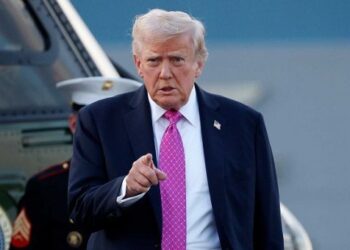
President Donald Trump is engineering a major shift in American foreign policy by building an active partnership with Belarusian President Alexander Lukashenko. Long isolated by Western nations and widely labeled “Europe’s last dictator,” Lukashenko is suddenly being welcomed back to the international stage by the White House.
While the Trump administration defends the relationship as a pragmatic victory that has successfully freed political prisoners, international security analysts and human rights groups warn that Washington is validating a brutal autocrat and falling into a well-worn diplomatic trap.
The Deal: Easing Sanctions for Detainee Swaps
The warming relationship between Washington and Minsk became public when President Trump openly thanked Lukashenko on social media for his “cooperation and friendship” following a high-profile prisoner exchange. In March, Lukashenko released approximately 250 political dissidents in exchange for a substantial easing of U.S. economic sanctions.
The administration has since moved to chip away at penalties that were originally imposed to punish Belarus for serving as the primary staging ground for Russia’s 2022 invasion of Ukraine. Furthermore, the White House has put quiet pressure on European allies to lift restrictions on Belarusian potash fertilizer exports, which have surged in value because the ongoing war in Iran has choked off global chemical supplies.
Lukashenko, who has ruled Belarus with an iron fist since 1994, is now aggressively pursuing a comprehensive trade deal with the United States and has been invited to attend a summit hosted by Trump’s formal Board of Peace later this year.
A Legacy of Totalitarian Crackdowns
For the citizens of Belarus, the U.S. president’s praise of Lukashenko as “nice” stands in stark contrast to their daily reality. Former Belarusian diplomats state that domestic repression inside the country is currently at its highest level since the totalitarian rule of Joseph Stalin.
Lukashenko famously crushed a massive wave of pro-democracy protests following the 2020 presidential election, a vote heavily altered by widespread fraud where the regime claimed an unrealistic 80% victory margin. In the aftermath:
•Mass Incarcerations: Thousands of ordinary citizens were rounded up by state security forces and thrown into notoriously brutal prison camps.
•Forced Exile: Prominent opposition figures, including Lukashenko’s 2020 electoral opponent Sviatlana Tsikhanouskaya, were forced to flee the country under threat of death or permanent imprisonment.
•Ongoing Repression: United Nations watchdogs report that even after the March prisoner release, at least 1,131 political prisoners remain behind bars on entirely fabricated, politically motivated charges.
Token Gestures vs. Real Change
Foreign policy veterans argue that the Trump administration is falling victim to a classic political illusion that Lukashenko has played with the West for over two decades.
Historically, when under intense economic strain, the Belarusian leader will release a small, token handful of prisoners to secure lucrative sanctions relief from Western leaders. Once the economic pressure is lifted, the regime simply arrests a new batch of citizens to use as future bargaining chips, without ever altering its underlying dictatorial structure.
Furthermore, the alliance complicates regional security dynamics. Despite his cozying up to Trump, Lukashenko remains completely dependent on Moscow for economic survival. Last year, he permitted Russia to station tactical nuclear weapons on Belarusian soil, and earlier this month, the two nations conducted highly publicized joint nuclear strike drills.
While Trump’s team insists that engaging with Minsk is entirely separate from the Russia-Ukraine war, Ukrainian President Volodymyr Zelenskyy recently warned that unusual military activity has been detected along Ukraine’s northern border with Belarus, highlighting the danger of treating Lukashenko as a reformed peacemaker.
Validating an Autocrat
The White House’s sudden embrace of Alexander Lukashenko is a deeply cynical move that trades away America’s moral credibility for hollow, short-term headlines. To watch a United States president praise a man who has spent 30 years systematically executing dissenters, shutting down independent journalists, and weaponizing vulnerable migrants against neighboring democracies is genuinely stomach-turning.
Treating the freedom of 250 prisoners as a grand diplomatic breakthrough completely ignores the fact that Lukashenko is running a revolving-door autocracy; he will comfortably arrest 250 more innocent students and activists tomorrow to replace the ones he just sold back to the West.
The administration’s naivety regarding Belarus’ true geopolitical alignment is incredibly dangerous. Lukashenko is not looking to split away from Vladimir Putin; he is looking for a financial lifeline to fund his military state while remaining firmly under Moscow’s nuclear umbrella.
For Lukashenko, an official invitation to Washington or a handshake at Mar-a-Lago represents the absolute pinnacle of his political career. It gives him the ultimate stamp of international legitimacy that he has craved for three decades. By handing Europe’s last dictator the prestige of the American presidency without demanding a single real, structural reform to his totalitarian state, the Trump administration isn’t demonstrating masterful dealmaking—they are showing a weak, desperate willingness to coddle tyrants at the direct expense of the brave citizens fighting for democracy in Belarus.