
It has become something akin to a ritual. President Trump steps before cameras. He posts on Truth Social. He calls into a friendly interviewer. And he says the same thing: a deal with Iran is right around the corner.
A CNN analysis has counted at least 37 times since the war began that Trump has claimed a deal is imminent, that Iran is desperate, or that victory is weeks away. None of those predictions have come true.
The first came on March 23, less than a month into the war. Trump told reporters outside Air Force One that there were “major points of agreement, I would say — almost all points of agreement.” Iran denied any negotiations were happening.
By March 25, Iran wanted to “make a deal so badly.” On March 26, Iran was “begging to make a deal.” Despite being so anxious, Iran somehow resisted for two and a half more months.
The Ceasefire That Wasn’t
On April 7, Trump announced a ceasefire with Iran, saying the two sides were “very far along” but needed two weeks for “the Agreement to be finalized and consummated.” He called it “an Honor to have this Longterm problem close to resolution.”
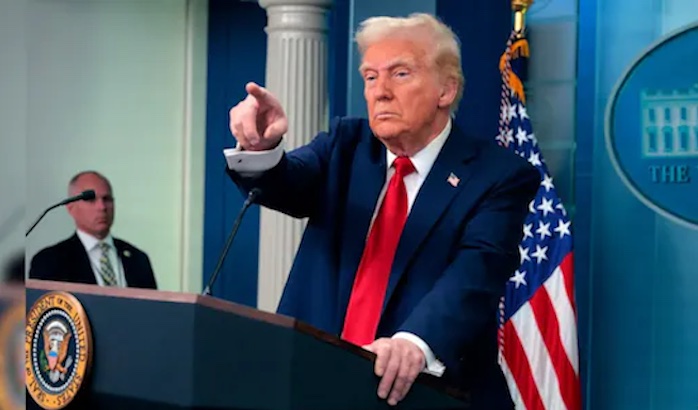
There was no resolution. The ceasefire was supposed to last two weeks. It has now been two months.
Trump has not stopped predicting. On April 15, he told Fox Business, “I think it’s close to over, I view it as very close to over.” On April 17, in three separate appearances, he claimed Iran had “agreed to everything,” that “I think we will get a deal in the next day or two,” and that “I don’t think there’s too many significant differences.”
On April 20, he predicted on Truth Social that “it will all happen, relatively quickly!”
It did not.
The Pattern Persists
Trump held back on his predictions for a spell before announcing on May 18 that he was delaying military strikes for “two or three days” at the request of Middle Eastern countries, “because they think that they are getting very close to making a deal.”
Even Trump seemed to acknowledge how often such predictions had gone awry. “We’ve had periods of time where we had — we thought pretty much getting close to making a deal, and it didn’t work out,” he said. Then he added: “But this is a little bit different.”
It was not different.
By May 23, he was at it again. The administration was “getting a lot closer.” The deal was “largely negotiated, subject to finalization.” It would be announced “shortly.” On May 28, things were “close to a very good deal.”
On Sunday, he assured that they were “very close to having a deal,” but that Iran and Israel were jeopardizing it by engaging in a side scuffle. It was at least the third time Trump told Axios that a deal was imminent.
Then Monday, during a tele-rally for Sen. Lindsey Graham, Trump again predicted a “total victory” in the next two weeks. “We’re negotiating now; they want to make a very good deal,” he said. “They’re willing to give us everything.”
Why Does He Keep Saying It?
The CNN analysis offers three possibilities. Either Trump is delusional, genuinely believing his own predictions despite all evidence. Or he is trying to calm financial markets, which have been roiled by the war and the closure of the Strait of Hormuz. Or he is trying to will a deal into existence through sheer repetition.
There is no indication that any of his 37 claims have brought a deal closer. Iran has not signed anything. The war continues. Oil prices remain volatile. And Trump keeps talking.
At this point, the CNN analysis concludes, his claims are clearly not something people should take seriously anymore.
The Bottom Line
President Trump has claimed an Iran deal is imminent at least 37 times since the war began, according to a CNN analysis. He has said Iran is “begging,” “dying,” and “desperate” for a deal. He has announced a ceasefire that never led to a final agreement. He has predicted “total victory” multiple times. None of his predictions have come true. The war continues. And Trump keeps talking.
The number is now 37. By the time you finish reading this, it may be 38.