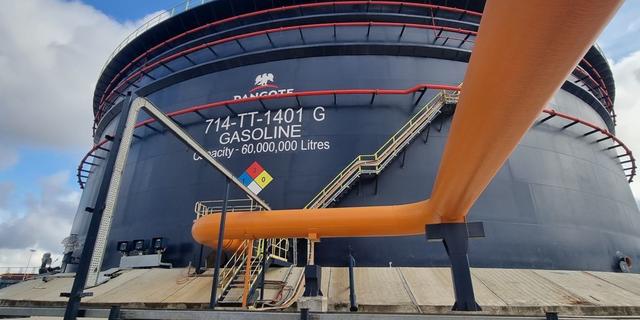

The Dangote Refinery is expected to return one of its major fuel-producing units to full operation by mid-June following repair works on a critical component, according to energy industry tracker IIR Energy.
In an update cited by Reuters, IIR Energy disclosed that the refinery’s Residual Fluid Catalytic Cracking Unit (RFCCU) had experienced operational challenges linked to a faulty flue gas slide gate valve.
“Initially, lighter crude being processed resulted in insufficient feed availability for the RFCCU. However, by the end of May, IIR Energy confirmed that the RFCCU was also facing an issue with its flue gas slide gate valve. Repair work on that issue is almost complete,” the firm said in an email.
The Dangote Refinery had not issued an official response on the development as of the time of reporting.

The RFCCU plays a vital role in refining operations by converting heavy residual oils into valuable products such as petrol, diesel, and liquefied petroleum gas (LPG). As a result, any disruption to the unit can affect fuel production levels, exports, and overall refinery performance.
The impact of the temporary slowdown has already been reflected in export volumes.
Data from commodities analytics company Kpler showed that gasoline exports from the refinery declined significantly, dropping to 17,000 barrels per day in May and averaging about 10,000 barrels daily so far in June. This represents a sharp fall from the 81,000 barrels per day recorded in April.
With a processing capacity of 700,000 barrels per day, the Dangote Refinery remains the largest refinery in Africa and the world’s largest single-train refinery.
The facility reached full operational status earlier this year after years of development and multi-billion-dollar investment. It was established to reduce Nigeria’s long-standing reliance on imported petroleum products despite being one of Africa’s leading crude oil producers.
Since commencing full-scale operations, the refinery has expanded fuel supply across Nigeria and neighbouring West African countries, reshaping regional petroleum trade patterns previously dominated by overseas imports.
Industry observers note that the brief disruption comes at a time when global energy markets are under pressure from rising geopolitical tensions in the Middle East, which have pushed oil prices higher.
Although the affected unit is expected to resume normal operations soon, analysts say the incident highlights the growing strategic importance of the Dangote Refinery to Nigeria’s energy security and the broader African fuel market.
As the refinery continues to strengthen its position as a major exporter of refined products, even temporary operational setbacks are increasingly drawing attention from traders, governments, and fuel marketers across the continent.