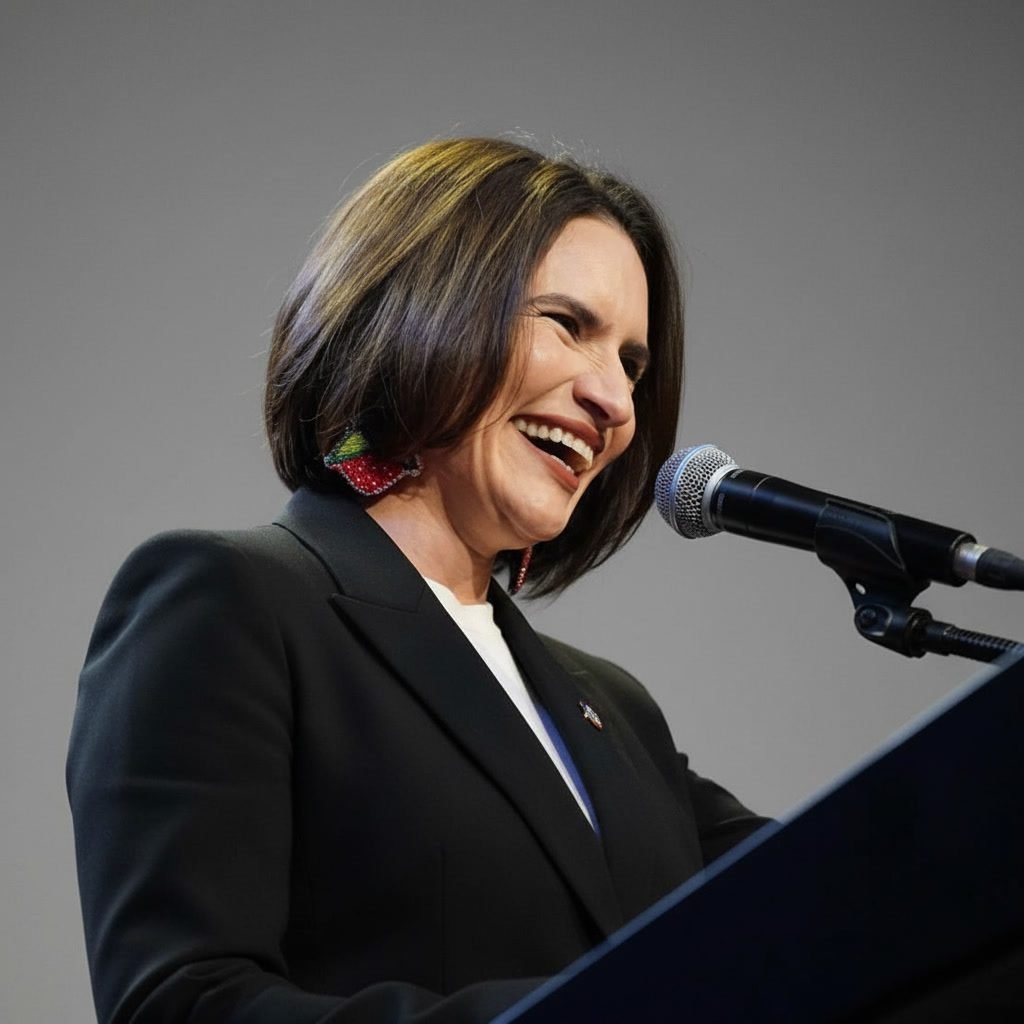
Minnesota Lieutenant Governor Peggy Flanagan has secured the Democratic nomination for the US Senate, defeating Congresswoman Angie Craig in a closely watched primary dominated by debates over immigration enforcement.
Flanagan’s victory represents another setback for the Democratic Party’s moderate wing, as progressive candidates continue to gain ground in primary contests across the country.
“It’s time to fight for what people actually need,” Flanagan recently told the Guardian. “And so often I think Democrats are like: ‘What do we think we can win?’ Instead of: ‘What are the fights that we should be picking?’”
Flanagan will now face Republican candidate Michele Tafoya, a former National Football League sideline reporter, in November. A victory would make Flanagan the first Native American woman elected to the US Senate.
The Minnesota gubernatorial primary also produced a significant result, with Republican election denier and MyPillow founder Mike Lindell losing the nomination to Lisa Demuth, the Minnesota House speaker.
Demuth will face Democratic Senator Amy Klobuchar in November. Klobuchar is considered the favourite in a state that has consistently leaned Democratic.
Minnesota has not elected a Republican to statewide office since 2006, when Tim Pawlenty secured a second term as governor. A Republican presidential candidate has not carried the state since 1972.
Both the Senate and governor’s races will feature open seats. Democratic Governor Tim Walz initially sought another term but later abandoned his campaign amid concerns that fraud scandals involving state social services could overshadow the election. Senator Tina Smith also opted against seeking re-election and endorsed Flanagan.
Immigration enforcement emerged as one of the defining issues in the Senate primary after the Trump administration launched Operation Metro Surge in Minnesota earlier this year. Thousands of immigration officers were deployed during the crackdown, which resulted in hundreds of deportations and the deaths of two residents.
Craig faced continued criticism over her previous support for the Laken Riley Act, which requires immigration detention for undocumented immigrants accused of certain local crimes. Although she later said she regretted voting for the law, the issue remained central to her campaign.
Craig, 54, was first elected to Congress in 2018 after flipping a Republican-held seat. She became the first openly lesbian person from Minnesota elected to Congress and argued that her experience representing a politically competitive district demonstrated her ability to win statewide.
Flanagan, 46, previously served in the Minnesota House before becoming lieutenant governor in 2019. A citizen of the White Earth Nation, she began her political career as an organiser and has positioned herself as a progressive voice within the Democratic Party.
She said she expected to join a progressive group of senators and received endorsements from prominent figures including Elizabeth Warren and Bernie Sanders.
“Peggy Flanagan’s win is further proof that the many can beat the money,” Warren said. “Voters want leaders with backbones who will stand up to dark money super PACs and fight to make life more affordable. I was the very first senator to endorse Peggy because she’s the fighter we need in Washington.”
In other Minnesota congressional primaries, Matt Little defeated Matt Klein and Kaela Berg to secure the Democratic nomination in the state’s competitive Second Congressional District.
Jake Johnson, a high school teacher, won the Democratic nomination in the First Congressional District and will challenge Republican Brad Finstad.
Meanwhile, reality television personality Luke Gulbranson failed to secure the Republican nomination in the Eighth Congressional District, losing to former federal employee Trina Swanson. Swanson will face Republican incumbent Pete Stauber in November.