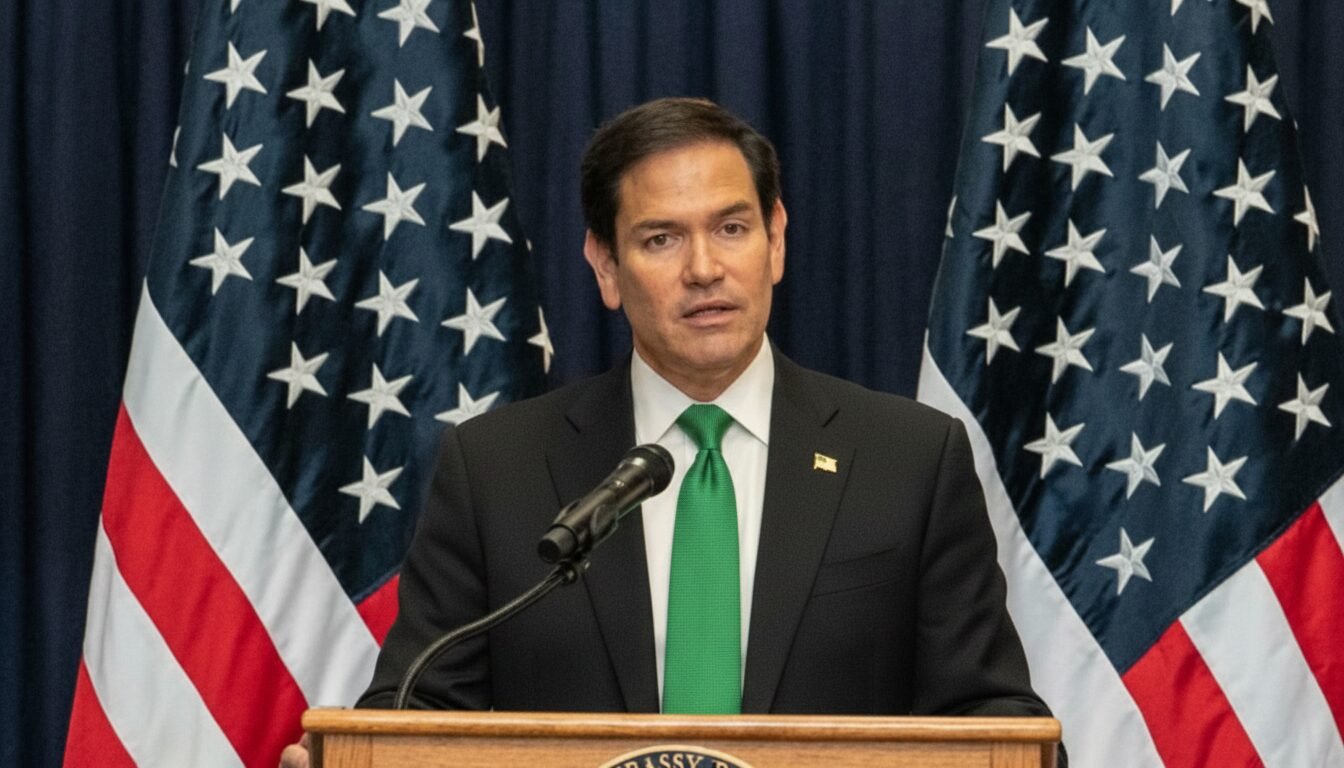
US Secretary of State Marco Rubio on Monday began a campaign aimed at weakening the International Criminal Court (ICC), accusing the global tribunal of interfering with US military and law enforcement activities and posing a threat to American sovereignty.
In a lengthy opinion piece published by the Wall Street Journal on Monday, Rubio warned that US border patrol officers and elected officials could one day be “dragged before an international court” and prosecuted by judges from different countries.
“If we stand idle, all of them will be at the mercy of foreign judges, thousands of miles away – facing the constant risk of prosecution and even imprisonment for the so-called ‘crime’ of defending their own country,” Rubio warned in a companion video posted to X.
According to CNN, the US State Department intends to pursue efforts to “dismantle” the International Criminal Court (ICC) by encouraging other countries to withdraw their support for the tribunal.
A US official told the outlet that “Nations that refuse to reject the ICC’s false authority while relying on US assistance are likely to come under increased scrutiny,” adding that measures such as sanctions, travel restrictions and visa cancellations could be considered.
However, three international law experts dismissed Rubio’s comments, saying they misrepresented the scope of the International Criminal Court’s authority.
“The ICC is not claiming jurisdiction over conduct in the United States,” said Kenneth Roth, former executive director of Human Rights Watch. “Rubio is dressing up his quest for impunity for American war crimes under the label of national sovereignty, which ignores the sovereign right of other nations to invoke the ICC for crimes committed on their territory.”
The International Criminal Court, based in The Hague, has jurisdiction only over crimes committed in countries that have ratified the Rome Statute, the treaty adopted in 2002 to establish the court. The United States is not a party to the treaty, and the ICC has not initiated investigations into offences committed within US territory.
“Trump wants to be able to commit war crimes on the territory of countries that have accepted the court’s jurisdiction – that’s what this is about,” Roth said.
At different points, the Trump administration has expressed support for the ICC’s jurisdiction, including welcoming the court’s investigation into alleged Russian war crimes committed in Ukraine, which is a party to the Rome Statute.
The Office of the ICC Prosecutor, headed by Karim Khan, launched an investigation into Israel’s actions in Palestine after Palestinian authorities accepted the court’s jurisdiction.
As part of its war crimes investigation, the court later issued arrest warrants for Israeli Prime Minister Benjamin Netanyahu and former Defence Minister Yoav Gallant.
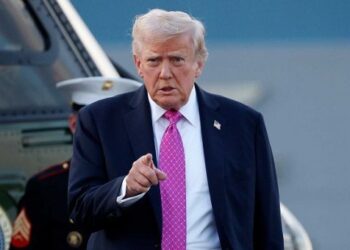
Six weeks after beginning his second term, Donald Trump signed an executive order declaring a “national emergency” over what he described as the ICC’s “illegitimate and baseless actions targeting America and our close ally Israel.”
The order imposed wide-ranging sanctions on ICC officials, including Chief Prosecutor Karim Khan, his two deputies and six judges, over investigations into Israel’s actions in Palestine and alleged offences involving US military personnel in Afghanistan.
Throughout 2025, the Trump administration widened its sanctions programme by targeting Francesca Albanese, the UN Special Rapporteur on human rights in the occupied Palestinian territories, along with three Palestinian human rights organisations involved in gathering evidence of alleged Israeli war crimes.
It remains uncertain how Rubio’s latest pledge to “dismantle” the International Criminal Court could affect the tribunal’s activities in the future.
A former senior US government sanctions official, who requested anonymity because of the political sensitivity of the issue, said the move could prompt Washington to pressure its allies to act against the International Criminal Court.
“Presumably, we will start to hear from foreign counterparts who are pressured to take action against the ICC,” the official said. “When sanctions work well, you use sanctions to reinforce what you’ve achieved through diplomacy.”
The former official said there has been speculation that the Trump administration could extend sanctions to the International Criminal Court itself.
“It gives you the sense that this is a pre-emptive campaign against any action the ICC might be considering vis-a-vis Venezuela or elsewhere abroad,” the official said.
If the proposal is implemented, Americans would be prohibited from working with the International Criminal Court, while US employees, businesses, and financial institutions could face fines or even imprisonment for engaging in transactions with the tribunal.
Raed Jarrar, advocacy director at Dawn, said Rubio’s criticism of the International Criminal Court exposed what he described as US double standards while weakening global efforts to ensure accountability.
In a statement issued on Monday, Jarrar said: “Rubio’s attack doesn’t just underscore US hypocrisy, but undermines access to justice across the globe, from Ukraine to Sudan, and could amount to obstruction of justice, a crime under the Rome Statute in and of itself.”
He added: “It is not the ICC that Rubio is dismantling brick by brick – but the rules-based international order that grew out of the ashes of World War II.”