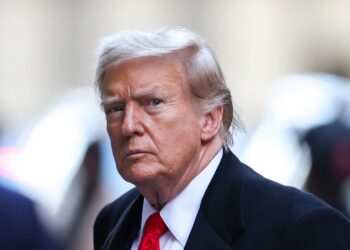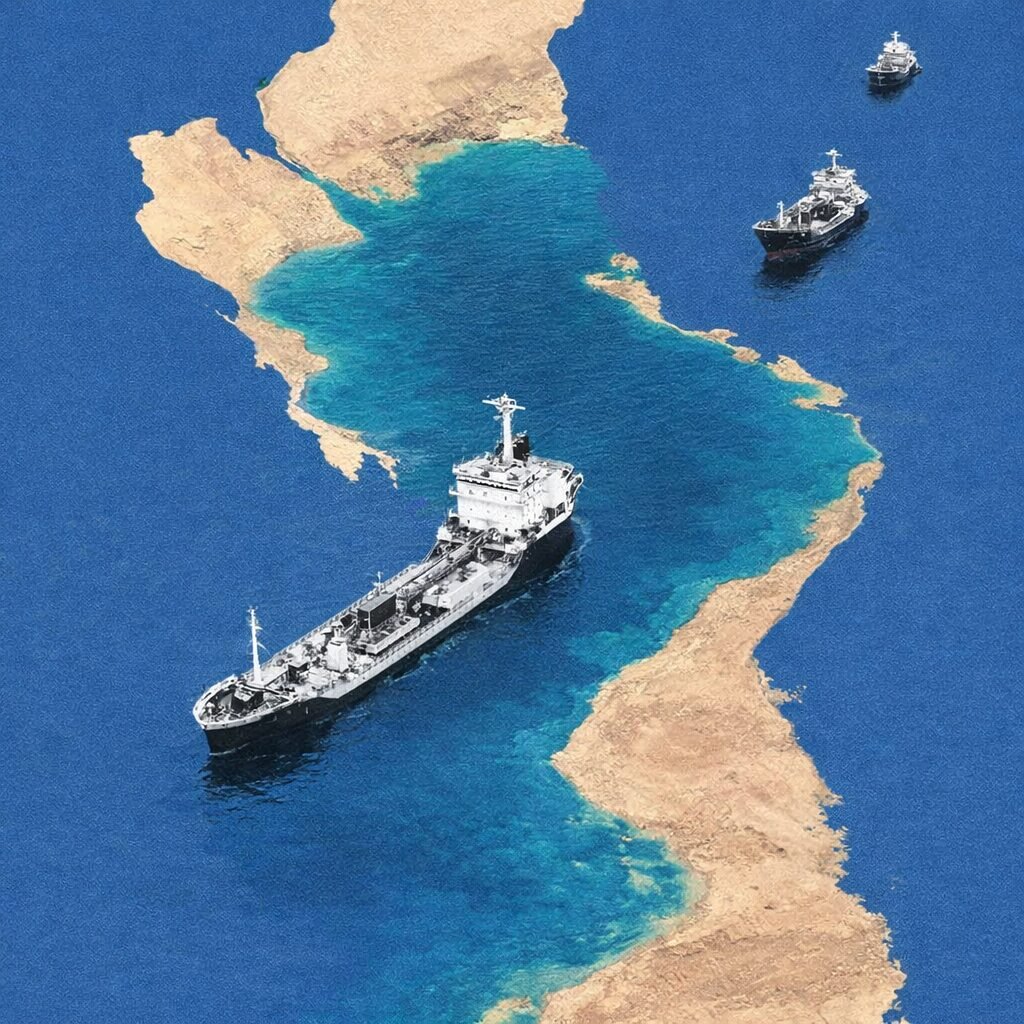

President Donald Trump has just announced that the United States is officially reinstating a strict naval blockade on Iran, declaring the U.S. military the supreme “guardian” of the Strait of Hormuz. In his usual string of controversial statements on Monday, Trump revealed that the U.S. will immediately impose a mandatory 20% cargo fee on all commercial vessels transiting through the critical waterway to reimburse Washington for the massive costs of providing regional security. The unilateral escalation comes less than 48 hours after Iran claimed it had locked down the Strait of Hormuz completely destroying last month’s temporary peace agreement.
Reinstating the Iran Blockade to Enforce Transit
Following a weekend of intense, direct drone and missile exchanges between American forces and Iran’s Revolutionary Guards, Tehran suspended all merchant ship transits, demanding an absolute end to Western military intervention. Rejecting Iran’s authority over international waters, the Trump administration has deployed heavy naval assets to break the Iranian gridlock. Trump made his strategy entirely clear on social media, asserting that the strategic corridor is open and will remain open by force under a newly revived, comprehensive Iran blockade.

Passing the Bill to Wealthy Trade Nations
The most shocking thing in this strategy is the administrative decision to commercialize the security operation. Rather than funding the naval deployment through the standard defense budget, the white house intends to treat the U.S. military like a premium maritime protection agency. Asserting that global trade routes benefit wealthy foreign nations that refuse to contribute their fair share, Trump defended the mandatory 20% tariff on shipping containers. If international trade hubs want their tankers protected from Iranian coastal missile batteries, they will have to pay the new American surcharge upfront, completely shifting how global maritime law operates.
My Opinion
Charging a 20% protection tax on international shipping is a wild; we have never seen an American president treat the United States Navy like a private security firm sending an invoice to global trade partners.
On one hand, you can understand Trump’s underlying frustration. For decades, the U.S. has poured trillions of dollars and countless military lives into securing global shipping corridors like the Strait of Hormuz while wealthy nations in Europe and Asia quietly reaped the rewards without spending a dime of their own capital. By forcing these countries to cover the bill for American escort fleets, Trump is keeping his core political promise to put domestic economic interests first.
However, running a military operation like a corporate franchise is short-sighted. This 20% penalty isn’t just going to hit wealthy governments; it is going to be passed down directly to everyday consumers. Freight companies will pass the expense down to suppliers, meaning retail prices, global manufacturing costs, and domestic energy prices are going to spiral wildly out of control. Furthermore, setting a precedent where the U.S. claims total ownership over an international strait and charges a toll opens up a terrifying legal box. What happens when China decides to act as the “guardian” of the South China Sea and demands its own 20% cut from passing American cargo ships? By turning international waters into a paid toll road, we are eroding the very laws that keep global commerce moving smoothly.
Bottom Line
The decision by President Trump to declare the United States the supreme guardian of the Strait of Hormuz sets up a problem in the East. Reinstating a full-scale naval blockade will undoubtedly escalate physical hostilities with Iranian coastal forces, while the new 20% commercial cargo fee threatens to throw international supply lines into absolute chaos. As naval vessels prepare to enforce this policy shift, the global economy is bracing for a painful wave of inflation and surging energy prices.