In a year when volume sales across Nigeria’s beauty and personal care market fell by double digits, one brand managed to grow, expand, and cement its place among the country’s top five makeup brands. That brand is Beauty by AD.
Founded by Adeola Adeyemi in 2016—or 2017, depending on the source—the Lekki-based brand has become a case study in how to build a thriving beauty business in a challenging economy. While many categories struggled in 2024, with unit prices rising 40-50% due to currency depreciation, Beauty by AD continued to expand its global footprint, attract loyal customers, and prove that Nigerian beauty brands can compete on the global stage.
The Secret: Colour Cosmetics and Inclusivity
One of the biggest reasons Beauty by AD has succeeded where some competitors have struggled is its focus on a category where Nigerian brands have historically been underrepresented: colour cosmetics. With brands like Zaron Cosmetics leading the way before it, Beauty by AD carved its own space in the market with foundations, lipsticks, and powders.
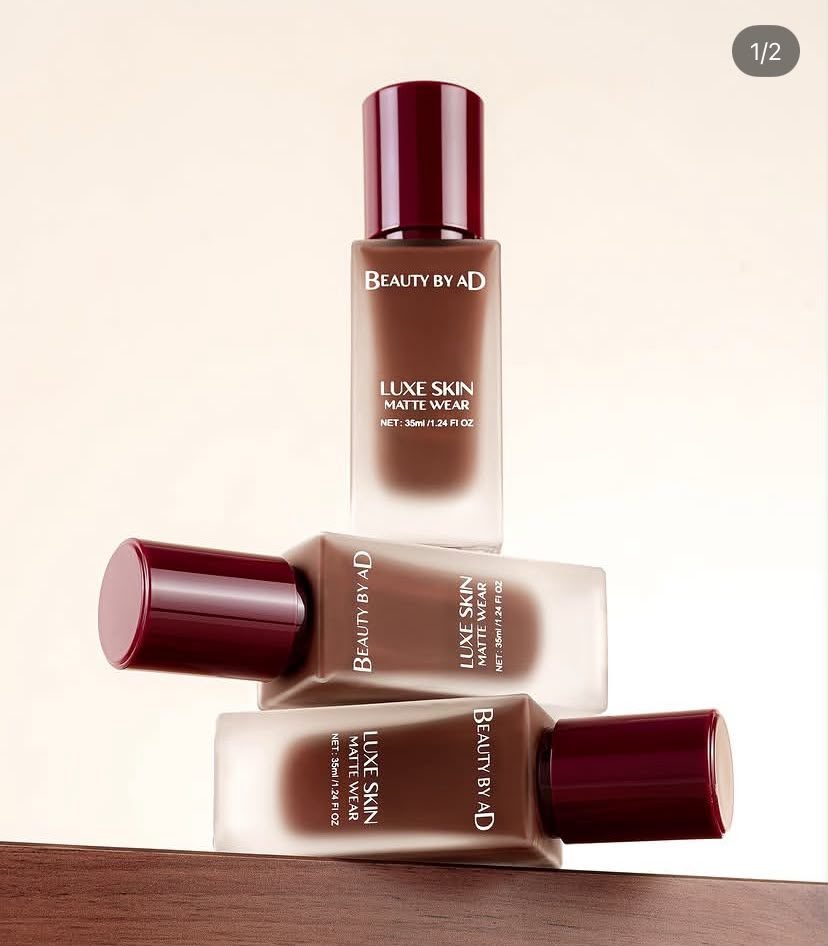
The brand’s Luxe Skin Foundation has become a favourite among Nigerian makeup lovers because “the brand just understands what people want their skin to look like”. With 15 shades covering a wide range of undertones and a soft matte finish that holds up in Nigeria’s weather, it has become a go-to for women looking for products made for their skin.
“She saw the gaps in the market and launched a beauty brand that understands undertones, honours Black skin, and delivers high-quality products without compromising on glamour or performance,” Marie Claire Nigeria noted.
Where It Sits Among Its Competitors
When Adeola Adeyemi said in 2023 that Beauty by AD was “among the first five makeup brands in Nigeria,” she wasn’t exaggerating. The brand now has distributors in Canada, the USA, and Europe, making it one of the most globally recognised Nigerian beauty labels.
But it faces stiff competition:
Zaron Cosmetics, founded in 2010, is arguably the biggest homegrown name in Nigerian beauty. With over a decade of presence and an established reputation, Zaron dominates the affordable, quality category.
Yanga Beauty, founded in 2014 by Jennifer Ukolo, has become one of the most recognisable beauty brands on the continent, known for its brow products, bold lip colours, and rich foundations.
Zikel Cosmetics brings a bold, inclusive approach with a wide range of foundation shades and eye palettes that flatter every skin tone. Nuban Beauty, founded by a medical laboratory scientist, delivers the kind of professional-grade formulas that makeup artists swear by.
Dabota Cosmetics, launched by former beauty queen Dabota Lawson in 2015, blends skincare and makeup products specifically for African skin.
Each of these brands has its strengths. But what has set Beauty by AD apart is its founder’s visibility and global ambition.
The Diiadem Effect
Adeola Adeyemi, popularly known as Diiadem, is not a faceless CEO. She is the face of her brand. A former model and video vixen who turned her passion for makeup into a business, she has built a personal brand that resonates with her audience.
“I wanted African women to feel like the main character, to hold a product and feel proud, seen, and spoiled,” she told Marie Claire Nigeria. Her personal story—from limited resources to global recognition—makes her brand feel relatable and aspirational at the same time.
Beauty by AD was the subject of a RADComm Business Woman of the Week feature, with the company describing her as “a transformative force, seamlessly bridging the gap between luxury beauty and authentic cultural representation”. In March 2025, Adeyemi represented Nigerian beauty at the House of Lords in the UK, an event titled “The Global Rise of Nigerian Soft Power: Building Bridges Across Borders”.
The Industry Context
The Nigerian beauty and personal care market saw double-digit current value growth in 2024, but this was driven by a sharp rise in unit prices (40-50% in many categories), not increased volume sales. Volume fell by double digits.
In this environment, local players have a competitive advantage. They understand melanin-rich skin, the Nigerian climate, and cultural expectations in ways that international brands often miss. As Euromonitor noted, there is “a growing preference for natural and indigenously sourced ingredients,” with activity by local players boosting the presence of such products.
The Bottom Line
The Nigerian beauty market is projected to rebound with improving economic conditions, and categories like skin care and colour cosmetics are expected to lead the way. For local players like Beauty by AD, Yanga, and Zaron, this is an opportunity to deepen their hold on the market. For international brands, competition is only getting stiffer.