Andy Burnham, U.K. Labour leader, takes his final step on Friday toward becoming the next British prime minister. At an emotional special conference packed with party officials, Burnham secured overwhelming support from Labour lawmakers to officially assume control of the governing party. The fast-tracked transition means he is scheduled to formally replace Keir Starmer at Downing Street on Monday, making him the seventh person to lead the country in a turbulent decade.
Burnham inherits a party deeply rattled by the rise of Reform UK, the populist movement led by Nigel Farage that has been dominating national opinion polls. By stepping into this role, the new leader faces the challenge of instantly rebuilding public trust and protecting his party’s parliamentary majority before the next general election.
The Master Plan to Thwart the Rise of Reform UK
The main reason Labour lawmakers united so quickly behind Andy Burnham, the U.K. Labour leader, is his unique political appeal outside of London. Famously nicknamed the “King of the North” during his highly visible tenure as the metro mayor of Greater Manchester, Burnham has spent years building a reputation as a champion for working-class communities that feel forgotten by central government offices.
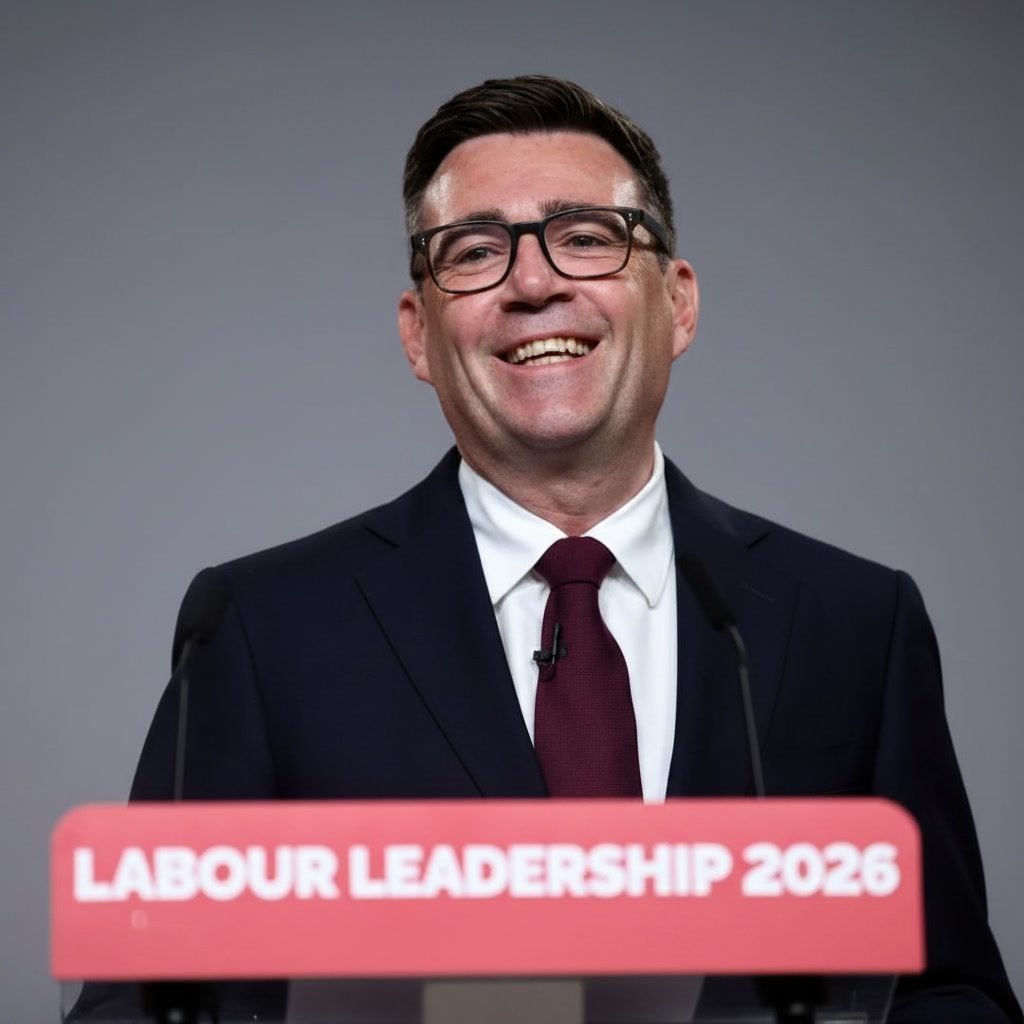
During his acceptance address, Burnham outlined a clear domestic agenda aimed directly at winning back voters who have drifted toward populism. He promised a massive rebalancing of economic power away from the capital city, pledging to return real control to local municipal councils, invest heavily in regional green energy manufacturing, and bring vital public transport utilities back under state ownership. This focus on local economic renewal is specifically designed to dismantle the anti-establishment arguments that Farage has used to capture the working-class vote.
Building a New Cabinet
While the weekend transition marks a personal achievement for the 56-year-old politician, he has very little time to celebrate. Starmer was forced out by his own lawmakers after a severe collapse in his personal approval ratings left the party facing electoral disaster. Because of that internal rebellion, Burnham had to quickly return to Parliament by winning a seat in Makerfield last month just to qualify for the leadership.
In his Friday speech, Burnham told reporters that he has not yet finalized his top cabinet appointments. However, he emphasized that his incoming team will represent all geographic regions and factions of the party to show total internal unity. With a general election legally required by 2029, economic development specialists warn that the new prime minister must translate his regional growth ideas into measurable, visible improvements within the next eighteen months if he hopes to keep his party in power.
My Opinion
The ascension of Andy Burnham, U.K. Labour Leader, to the position of prime minister is an act of sheer political panic by a desperate parliamentary party. Labour lawmakers did not pick Burnham because they suddenly fell in love with his regional devolution policies; they picked him because they are absolutely terrified of losing their jobs to Nigel Farage at the next election.
Starmer’s administrative approach was completely hollow, and it left the country feeling entirely directionless.
Burnham represents the exact opposite. He is charismatic, naturally empathetic, and actually knows how to speak to regular working-class human beings without sounding like a rigid corporate lawyer.
However, running a single metropolitan region like Greater Manchester is completely different from running a G7 nation with a broken economy, crumbling public infrastructure, and a deeply cynical public. Burnham’s promise to give people “hope back” sounds wonderful at a party rally, but hope does not fix underfunded hospitals or lower energy bills.
The populist threat from Farage is not going to vanish just because the prime minister now has a northern accent. If Burnham spends his first hundred days in office getting bogged down in messy internal party compromises or delaying his radical regional reforms to please corporate donors, the public will turn on him just as fast as they turned on his predecessor. This is Labour’s absolute last chance to prove they can actually govern, and if Burnham fails to deliver real, material change quickly, he will go down in history as little more than a temporary speed bump before a total populist takeover.
Bottom Line
The official confirmation of Andy Burnham, U.K. Labour Leader, marks the beginning of a political experiment in British governance. By taking the reins on a platform of regional renewal, Burnham is betting the entire future of his party on the idea that local economic investment can successfully defeat populist anger. As he prepares to walk into Downing Street on Monday, the entire country will be watching to see if the “King of the North” can successfully govern the South.