Tensions are deepening within Iran’s political establishment as hardline factions accuse senior government officials of undermining the country’s leadership following the death of former Supreme Leader Ali Khamenei.
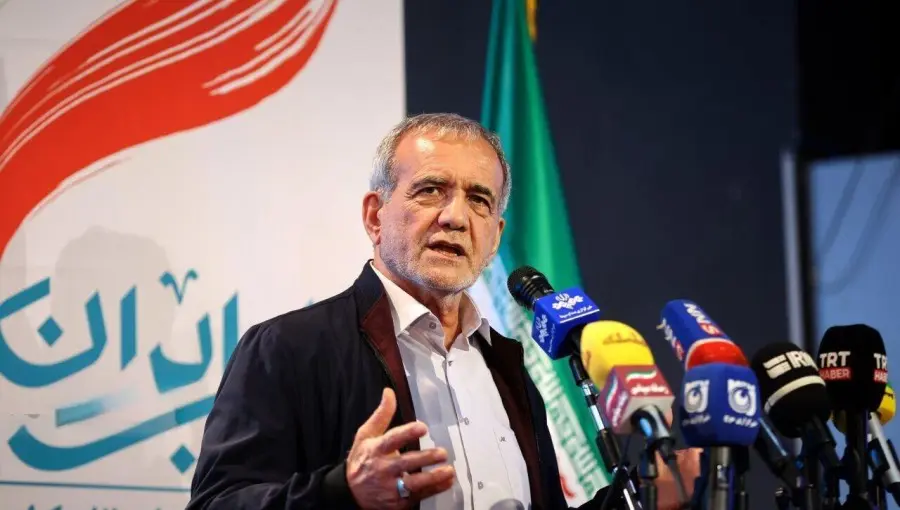
The divisions became visible during Khamenei’s funeral in Tehran last week, where mourners directed chants at President Masoud Pezeshkian instead of solely honouring the late leader.
According to reports, some members of the crowd shouted “death to the compromiser,” accusing the president of yielding to the United States.
Iran’s Foreign Minister Abbas Araghchi also reportedly came under attack during the funeral, with some mourners throwing stones and calling him a “traitorous sellout” over his role in negotiating a ceasefire agreement with the administration of US President Donald Trump.
The hostility follows claims by Iran’s hardline camp that officials who negotiated the truce and sanctions relief are attempting to weaken the Islamic Republic’s revolutionary principles while Supreme Leader Mojtaba Khamenei, son and successor of the late Ali Khamenei, remains largely absent from public view.
Hardliners argue that instead of retaliating over Ali Khamenei’s death, the country’s leadership accepted an agreement that contradicted Mojtaba Khamenei’s directives. The new supreme leader has yet to publicly address the nation or visibly assert his authority.
Some conservative figures have alleged that senior officials are consolidating power by sidelining parliament, ignoring the supreme leader’s instructions during negotiations and attempting to suppress nightly demonstrations organised by loyalists.
Mahmoud Nabavian, a hardline member of parliament, questioned the government’s intentions in a post on X.
“Warning to the people of Iran: Is a coup on the way??” he wrote before Khamenei’s funeral.
Days later, he added: “In these moments of farewell to the martyred Imam (Khamenei), we raise the banner of vengeance for his blood and stand firm against the coup.”
With Mojtaba Khamenei remaining out of sight, President Pezeshkian, Parliament Speaker Mohammad Bagher Ghalibaf and Foreign Minister Araghchi have become the public faces of Iran’s post-war administration.
Arash Azizi, a US-based Iran analyst and author of What Iranians Want, said hardliners have redirected their frustrations toward the officials currently running government affairs.
“Mojtaba’s continued absence means that they don’t have access to him and also that Ghalibaf and allies are effectively in charge of the country… the ultra-hardliners have thus accused Ghalibaf and Pezeshkian of plotting a ‘coup’ against Mojtaba,” Azizi said.
Although Iranian authorities have repeatedly appealed for national unity following the conflict, Khamenei’s funeral became a platform for radical factions demanding renewed confrontation with the United States and rejecting any peace agreement.
The fragile ceasefire has since come under renewed strain after attacks on commercial shipping in the Strait of Hormuz triggered fresh US military strikes and renewed calls from hardliners to abandon the truce.
Before the latest escalation, some conservatives openly threatened government officials over the agreement.
During a public ceremony, regime-aligned religious singer Mohammad Ali Bakhshi warned President Pezeshkian:
“Mr President, if the leader’s conditions are not fulfilled, then it will be us, the blade and your throat. We will bring hell upon you.”
Although the statement drew criticism, no legal action has reportedly been taken against Bakhshi.
Hardline lawmakers have also criticised the growing influence of the Supreme Council for National Security, accusing officials of reducing the authority of both parliament and the supreme leader.
Kamran Ghazanfari, a conservative member of parliament, alleged that the country’s leadership was gradually shifting power away from traditional institutions.
“They are trying to elevate the role of the Supreme Council for National Security while diminishing the role of the Supreme Leader and parliament. This is the political coup they have designed and are carrying out step by step.”
Earlier this week, Nabavian and another outspoken critic of the agreement were removed from parliament’s National Security Commission.
Nabavian had previously opposed negotiations with Washington and reportedly attempted to derail the talks by leaking details of the proposed agreement before it was signed.
Political analysts say Iran’s current leadership appears determined to reduce the influence of the country’s most uncompromising factions.
Hamidreza Azizi, a visiting fellow at the German Institute for International and Security Affairs, said the government views the hardliners as a growing liability.
“We’re seeing Ghalibaf exerting influence to sideline these hardline elements. They are too costly for the system, and they’re bringing their rivalries out in the open, especially as the situation in Iran becomes unstable,” he said.
Despite the public infighting, observers believe Iran’s leadership remains united on broader strategic goals, including securing sanctions relief while maintaining control over the Strait of Hormuz.
However, Mojtaba Khamenei’s continued absence from public life, the expanding role of the Revolutionary Guards and renewed calls for military retaliation have strengthened hardline voices demanding a tougher approach toward both the United States and Israel.
Former foreign minister Manouchehr Mottaki urged more aggressive action during a televised interview.
“My suggestion is that we go to one of the US bases in the region, where there are hundreds, maybe thousands of these American terrorists. It would be enough if we took 100 soldiers and brought them back to Iran.”