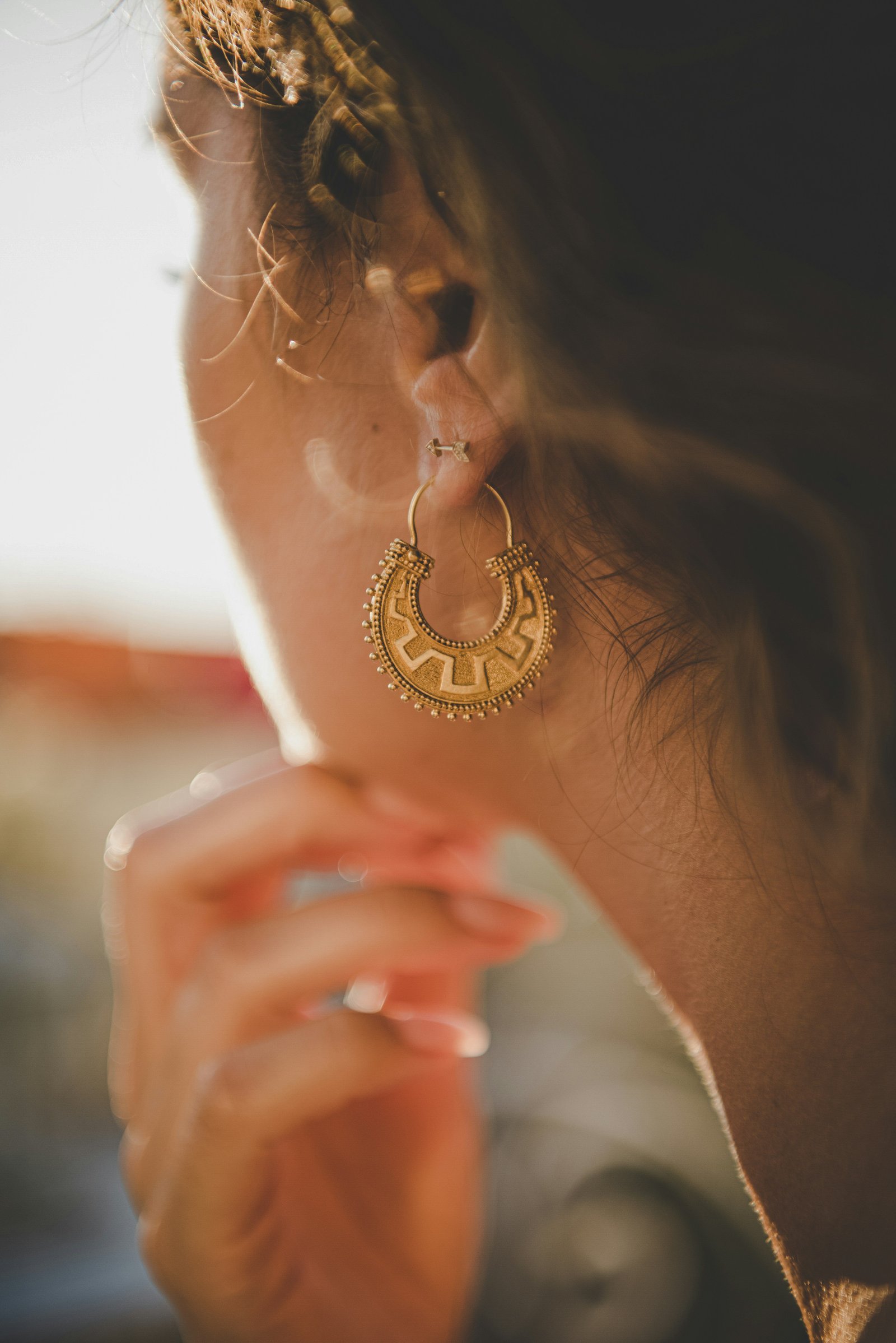

At a London photocall for Christopher Nolan’s The Odyssey, Zendaya wore a pair of earrings crafted from ancient Iranian gold artefacts dating back to 700BC that sparked immediate backlash.
The film tells the story of a Greek king’s long journey home. But the controversy surrounding these earrings is about a different kind of journey entirely; one that involves looted artefacts, cultural heritage, and a Hollywood machine that failed to read the room.
Zendaya, who plays the goddess Athena in the epic, arrived at the London event on July 15, 2026, wearing a creation from London-based gallery and dealer Barron. The earrings were fashioned from pieces attributed to the Ziwiye hoard, a cache of gold, silver, bronze, and terracotta discovered in north-western Iran in 1947 and subsequently looted by shepherds. According to a 2015 research paper, surviving pieces were “sold in antique markets out of Iran in the 1960s” and are now scattered across different museums and private collections.
And so, a red carpet accessory became a lightning rod for questions about who owns history and what it means to wear it.
The Backlash: “Hijacking Iran’s Cultural Contributions”
Archaeologists, art historians, and cultural heritage advocates were quick to condemn the use of such culturally significant artefacts as a promotional tool for a Hollywood film.
“This is a hijacking of Iran’s contributions to humanity,” one critic reportedly claimed.
Prof. Sussan Babaie, an Iranian-born art historian at the Courtauld Institute, expressed “outrage” that the earrings were being used in this way. She argued that the jewellery likely had “extremely important spiritual connotations” and called the presentation a “flattening and transforming” of ancient Iran’s cultural contributions to humanity.
“These are objects that are not meant to be displayed as accessories,” she said. “It’s human heritage. It’s world heritage, not just accessories.”
The timing, she added, was “maddening”: the press tour glamorised the antiquities of Iran “just as billions of American dollars are being used to bomb Iran,” destroying sites of cultural and historical interest.
The Debate: Who Owns the Past?
The row is part of a larger reckoning facing Western institutions that hold ancient artefacts. The British Museum has faced criticism over looted Benin bronzes, sacred Ethiopian altar tablets, and the Parthenon marbles. Kim Kardashian was similarly criticised in 2022 for wearing a dress that belonged to Marilyn Monroe at the Met Gala, with a collector warning that such artefacts must be “protected and preserved”.
Dr Annelise Baer, an archaeologist and producer, said the main ethical issue was “that the earrings themselves are made out of looted antiquities.” She added: “Zendaya wearing them is kind of a secondary fact… but because she has worn them on a red carpet for a major international movie premiere, this has suddenly put all of that into the public eye in a way that we haven’t really seen before.”
But not everyone agrees with the stance. The earrings belong to Barron London, which states on its website that it works with “collectors, estates and institutions to uncover and place pieces of significance.” In a formal statement, the gallery said the artefacts “are responsibly stewarded in accordance with their documented provenance and all applicable legal requirements.” They maintained that “the intention behind the loan was never commercial. It was to celebrate the remarkable artistry of ancient Persian goldsmiths and to encourage wider appreciation of one of the world’s great artistic traditions.”
Conclusion
Zendaya’s earrings have done what few red carpet accessories can: they have sparked a global conversation about cultural heritage, the ethics of display, and the responsibility that comes with wearing history. The Greek odyssey of the film’s title is a story of a journey home. But for these ancient Iranian artefacts, after nearly 3,000 years, the question of where “home” is remains stubbornly unanswered