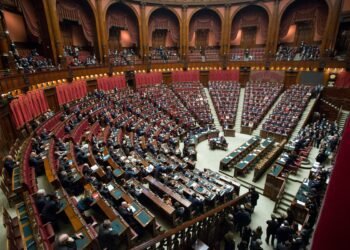
The House approved legislation Wednesday that would bar members of Congress from purchasing individual stocks, advancing an ethics proposal that lawmakers in both parties have championed for years but repeatedly failed to enact.
The 232-198 vote came as lawmakers prepared to return home for the midterm elections. Republicans are working to show action on an issue that has become a symbol of voter distrust.
But the breakthrough was tempered by Republican provisions that exempt the president from the trading ban and include an unrelated voter identification requirement. The bill’s passage in the Senate remains uncertain.
“This bill, quite simply, is a sham,” said Rep. Joe Morelle, a New York Democrat, calling the voter ID provision a “poison pill” designed to sink the legislation.

What the Bill Does
The Stop Insider Trading Act would prohibit lawmakers, their spouses, and dependent children from buying individual stocks while in office; allow them to keep stocks they already own; and require public notice at least seven days before selling existing stocks.
Some investments would be exempt, including interest in widely held investment funds and certain trust-held investments.
The bill does not extend to the president or vice president. President Donald Trump disclosed in May that he had made more than 3,600 buy and sell orders in the first quarter of this year, many involving companies directly impacted by his decisions.
The Loopholes and Criticism
Outside ethics groups said the bill leaves intact the very conflicts it is meant to address by allowing lawmakers to keep existing stock holdings.
The Campaign Legal Center urged Congress to reject the measure, saying it “fails to address the two inherent problems with congressional stock ownership: the appearance of insider trading and members’ ability to profit from their official position.”
Critics argued the legislation falls well short of a true stock trading ban because it would let lawmakers keep stocks they already own and continue selling them.
The Voter ID Poison Pill
Bipartisan support eroded after Republicans added a requirement that voters present photo identification at the polls. This is a key element of the SAVE Act, an election measure backed by Trump that has repeatedly stalled in the Senate.
Rep. Chip Roy, R-Texas, who preferred a stronger bill requiring divestiture, said: “You got to build a coalition in a body. And I think this is a giant step forward.”
But Kentucky Rep. Thomas Massie, who was defeated in a primary earlier this year, derided the strategy: “Republicans added voter-ID in the legislation. Not to get Dems to vote for voter-ID, but to get them to vote against the stock trading ban, so they can use it in the Nov. election.”
A Potent Campaign Issue
Congressional stock trading has become a potent campaign issue as candidates from both parties call for banning the practice. The issue has been a fixture of campaign ads for several years as candidates seek to tap into voters’ distrust of Washington.
“Banning congressional stock trading is a simple proposition: If you serve the public, you serve only the public,” said New York Rep. Mike Lawler. “You don’t get to benefit from the power the people have loaned you. This reform is about fairness.”
Lawmakers have faced ethics scrutiny and, in some cases, criminal investigations over stock trades that critics say benefited from nonpublic information obtained through official duties.
The Bottom Line
The House passed a bill banning members of Congress from buying individual stocks, but the legislation exempts the president and includes a voter ID requirement that has drawn Democratic opposition. Supporters call it a “giant step forward” while critics say it falls short of a true ban. The bill’s future in the Senate remains uncertain.