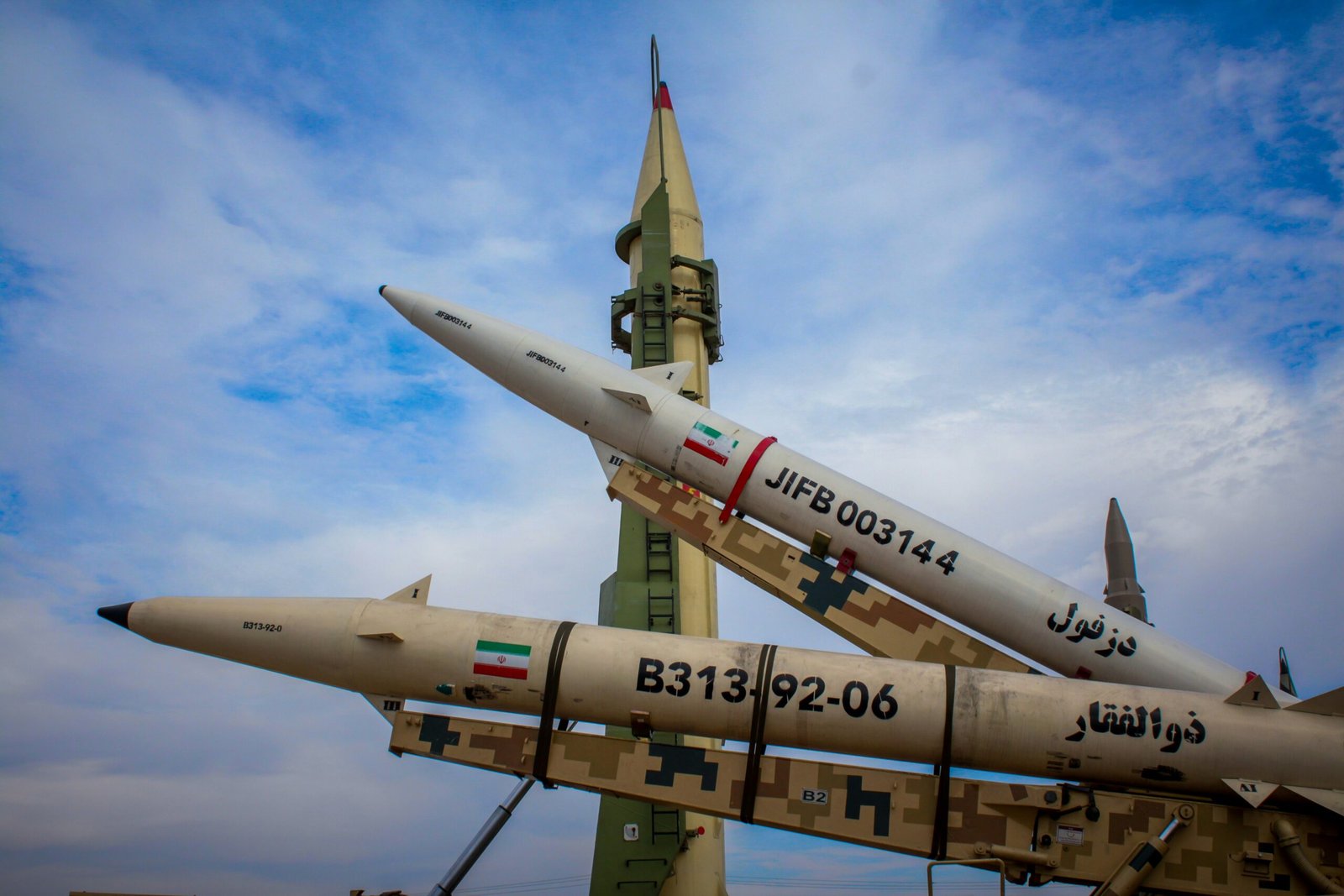
Iran reportedly used newly developed electro-optical missiles for the first time during an attempted attack on US warships on Wednesday, as Tehran intensified its retaliation against American military assets in the region.
The Islamic Revolutionary Guard Corps launched a series of overnight strikes targeting US forces in Jordan and 10 American vessels operating near the Strait of Hormuz.
According to The Telegraph, the attempted attack on the US ships involved Iran’s electro-optical seekers, a technology that uses cameras and light sensors to identify, track and strike targets with a high degree of precision.
US Central Command confirmed that the strikes had taken place but said the attacks were unsuccessful. Iranian missiles targeting US forces in Jordan were also intercepted.
The latest strikes were carried out in response to earlier US attacks that destroyed five Iranian oil tankers near Kharg Island, a major oil hub controlled by the Iranian regime.
“In response to the US’s aggressive actions against Iranian oil tankers, armed forces, in accordance with their inherent right of legitimate defence, attacked US military bases and facilities located in Jordan, which continues to support US military attacks against Iran, as well as several US vessels,” it said.
Iran first announced the development of its new missile technology late last year, introducing the Qassem Bassir, a medium-range ballistic missile equipped with electro-optical sensors.
The Iranian regime claimed the technology would allow the missile to strike targets with greater accuracy while operating without GPS. That capability, according to Tehran, would also make the weapon more difficult for electronic jamming systems to disrupt.
Mohsen Rezaei, Iran’s newly appointed secretary of the Supreme National Security Council, suggested that a new “special anti-destroyer” missile had been used for the first time during Wednesday’s operation.
He described the weapon as part of a new direction in Iran’s defence strategy.
However, it remained unclear whether the missile deployed against the US vessels was the Qassem Bassir.
The escalation also extended to commercial shipping, with the IRGC warning of possible attacks on oil tankers and military bases in Bahrain and Kuwait.
The Iranian force called on crews aboard oil tankers in the area to leave the vessels immediately, raising further concerns about the security of shipping through the Strait of Hormuz.
The waterway has become a major focus of concern amid the escalating exchange of attacks between Iran and the United States because it handles about 20 per cent of global oil transportation.
The latest confrontation has also been accompanied by attacks linked to Iran-backed Houthi rebels, including a strike targeting oil facilities in Saudi Arabia.
The combined attacks on military and energy targets have heightened fears that the conflict could disrupt the movement of crude through the strategically important waterway.
The growing uncertainty has already affected global oil markets, with crude prices rising above $100 per barrel for the first time since July.