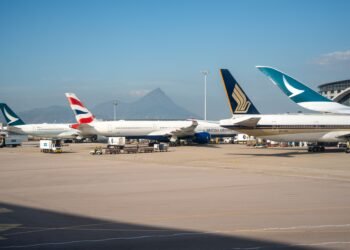
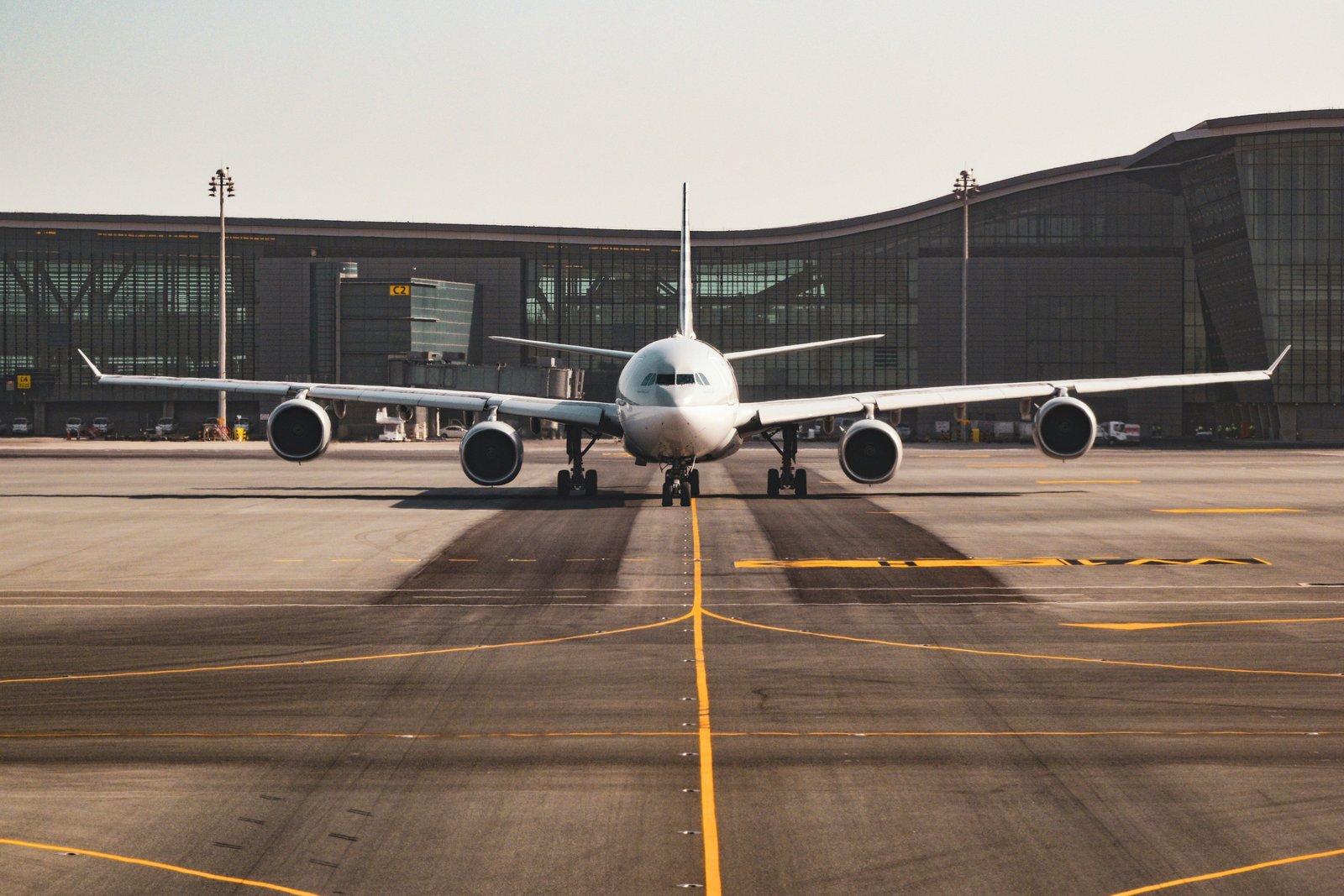

Air travel across the United States slowly began returning to normal on Saturday as the airspace reopens after major FAA outage disruptions that grounded flights nationwide and stranded tens of thousands of passengers. Speaking at a Saturday news conference, Transportation Secretary Sean Duffy announced that the aviation network is back at full operations, praising pilots, airline staff, air traffic controllers, and Federal Aviation Administration (FAA) personnel for safely landing every single aircraft that was airborne when the crisis hit.
The rare nationwide ground stop, which began Friday afternoon at 3:36 p.m. EST while more than 3,500 planes were in the air and lasted until around 8:20 p.m. EST, marked the first national flight stoppage since a January 2023 FAA computer malfunction, and the longest since the September 11, 2001 attacks. Even with planes taxiing and taking off again, flight tracking site FlightAware recorded over 4,100 flight cancellations and roughly 3,200 delays on Saturday, following a staggering 9,159 cancellations and 7,190 delays on Friday as carriers scrambled to reposition aircraft and flight crews.
Outdated Hardware, Contractor Errors, and Investigation Findings
Federal officials traced the massive breakdown to aging telecommunications infrastructure and legacy equipment rather than a cyberattack or artificial intelligence glitch. According to Duffy, a preliminary investigation revealed that a contractor for defense and technology firm L3Harris was working at a remote FAA facility, switching old copper wiring to fiber while replacing a router.

The newly switched router began flooding neighboring routers with roughly 1,000 login attempts every four to five seconds, overloading the network and causing inconsistent data flows across 17 facilities. Senior government sources confirmed the failure was isolated to outdated Cisco 600 series routers manufactured between 2001 and 2006.
FAA Administrator Bryan Bedford defended the decision to halt all departures out of an abundance of caution after engineers could not pinpoint the cause of the system instability for 45 minutes. While Homeland Security Secretary Markwayne Mullin and Duffy both confirmed there is zero evidence of malicious activity, Duffy sharply criticized federal contractors for taking taxpayer money while delivering poor service, noting investigators are still determining whether human error or a faulty router triggered the cascade. In response to the breakdown, the Trump administration boosted its funding request for air traffic control modernization to $50 billion late Friday, building on an earlier $12.5 billion down payment.
Safety Reassurances and Ongoing Airline Recovery
Despite lingering schedule headaches, federal officials assured the public that flying remains completely safe. As U.S. airspace reopens after major FAA outage repairs, Duffy emphasized that America operates the busiest and safest airspace in the world, though he advised travelers to check directly with their airlines before heading to major hubs such as Boston, Atlanta, Miami, Pittsburgh, New York City, Los Angeles, and Baltimore.
Major carriers spent Saturday working through the massive backlog of stranded flyers. Delta Air Lines offered flexible rebooking options while warning passengers to expect continued delays and schedule adjustments as crews and planes are repositioned. American Airlines similarly noted that while recovery steps are underway, the ripple effects of the four-hour nationwide ground stop will continue causing scattered delays and cancellations throughout the day. Still, now that U.S. airspace reopens after major FAA outage stabilization tests, officials expressed confidence that normal flight schedules will be fully restored ahead of the busy Thanksgiving travel rush.
My View
It is frankly embarrassing that the world’s leading superpower nearly ground its entire aviation network to a halt because a 20-year-old router got overloaded during a routine wire swap.
For years, politicians in the U.S. have argued over budgets while kicking the can down the road on upgrading America’s air traffic control system. Relying on Cisco routers built between 2001 and 2006 and paying private contractors billions of dollars without strict oversight is just the perfect way for disaster. We should all be deeply grateful to the air traffic controllers and pilots whose professionalism safely brought more than 3,500 planes down to the ground without a single physical accident.
However, gratitude for frontline workers does not excuse systemic negligence at the top. Taxpayers and travelers deserve modern, reliable aviation infrastructure, not excuses after 13,000 flights are canceled over two days. Congress and the Department of Transportation must hold sloppy contractors accountable and ensure every single dollar allocated for modernization actually goes toward replacing outdated equipment before a minor technical glitch turns into a tragedy.