
For Wells, a high school teacher living in one of the neighbourhoods covered by New York City’s new childcare initiative, securing a place for her two-year-old daughter felt almost like winning a highly competitive university admission.
Wells and her partner had completed the online application in June in about five minutes. Months later, they were emotional as they accompanied their daughter to Friends of Crown Heights in Brooklyn for her first day.
The family took photographs beside a first-day-of-school backdrop while the toddler explored her unfamiliar surroundings.
The intense competition for places made Wells’ comparison with Harvard particularly fitting. Lisa Joseph-Mayers, who works with families at the centre, said 339 applications were received for just 12 available places.
That put the acceptance rate at about 3.5 per cent, compared with Harvard’s 4.2 per cent acceptance rate for its class of 2029.
Even after the programme began, parents were still calling to ask about vacancies. Joseph-Mayers said at least two parents contacted the centre during drop-off hoping to secure a place, only to be informed that all spaces had been taken.
“It’s going to be like that for the rest of the week,” Joseph-Mayers said.
The demand was so high that some parents reportedly tried to establish family connections with children already enrolled because siblings were given priority during the selection process.
Across the city, more than 5,700 applications were submitted for roughly 2,000 available places, according to city officials.
While the response has demonstrated the strong demand for affordable childcare, it has also exposed difficulties with the programme’s rollout. Some centres reportedly lacked the funding needed to open, while others rushed to arrange bridge financing before the start of the school year.
The programme is expected to expand sixfold by next year, putting additional pressure on providers as they work to meet the growing demand.
Asked about delays in funding, the city referred to previous comments made by Mayor Mamdani and Governor Kathy Hochul.
“I think it’s critically important that we both address longstanding issues in our New York City public school system and advance an agenda that makes it more affordable for families to stay in this city,” Mamdani said at a September 10 press conference.
At Friends of Crown Heights, however, the transition was relatively straightforward. Tanya McDougal, the centre’s educational director, said the organisation had previously operated a classroom for two-year-olds, making it easier to bring the service back.
For parents such as Jessica Arroyo, gaining admission represented a major relief. Arroyo, who works in hospital registration, said the centre’s 8am to 6pm schedule was especially useful because it fitted around her working hours.
“It meant everything,” Arroyo said of her daughter’s acceptance.
“I can work in peace,” she said. “She can learn, make new friends.”
Mercy and Fabian Best were also among the parents bringing their daughter to the centre on her first day. For the couple, the subsidised childcare offered more than convenience; it also provided financial breathing room.
With infant and toddler childcare in New York City capable of costing families more than $20,000 a year, the savings would allow them to spend more on their older child’s extracurricular activities at public school.
“New York City is very expensive, and one less thing you have to worry about while receiving quality education helps us in the long run,” Fabian said.
The children, however, appeared largely unaware of the significance of the new programme or the competition that had surrounded their places.
Some struggled with the excitement of their first day, with crying, tiredness and other emotional reactions making the morning challenging for parents and staff.
The mood soon changed as the toddlers settled into their classrooms.
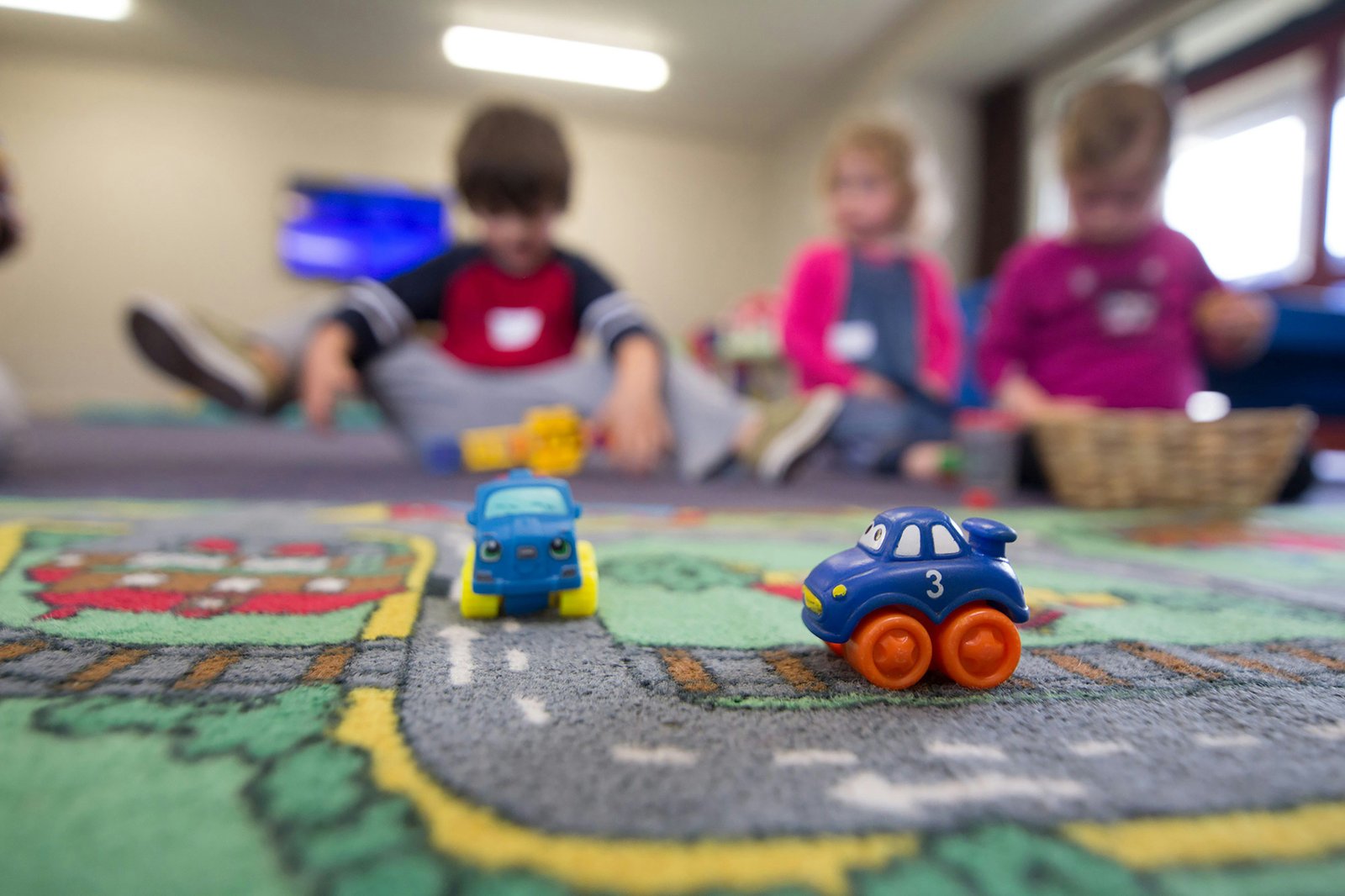
One child picked up a toy broom and began sweeping, another explored the play kitchen, while several others shouted “pizza!” as they played with toy slices. At another point, a small traffic jam formed around toy cars, while the children also experimented with a xylophone.
When Journey, Arroyo’s daughter, was asked what she wanted to do during the day, her response was brief: “Move.”
She eventually got her wish when Ms Lisa played music for the toddlers. Journey began dancing alongside her new classmates, turning an emotional first morning into a joyful start to her new experience.