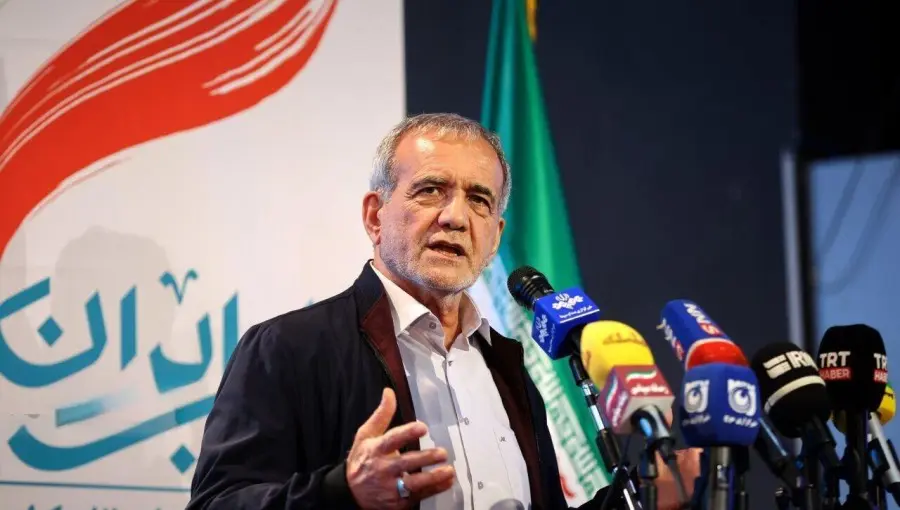

Iranian President Masoud Pezeshkian has said Tehran is prepared to resume negotiations with the United States on its nuclear programme, but insisted that Washington must first take steps to rebuild trust between the two countries.
Speaking in an interview with Margaret Brennan, Pezeshkian said Iran had presented a proposal through mediators that could lead to the reopening of the Strait of Hormuz after seven days if certain conditions were met.
He said negotiations on ending the conflict, and potentially Iran’s nuclear programme, could begin once the United States accepted the proposal.
According to Pezeshkian, the framework was based on an earlier memorandum of understanding signed by both sides in Pakistan.
He said the agreement had been disrupted by disagreements over shipping routes but maintained that Tehran remained willing to implement the arrangement.
“If the United States agrees to proceed in that way, everything will return to the way it was before,” Pezeshkian said.
He added that Iran and the United States would first need to reopen their respective channels before sitting down to address other outstanding issues.
Iran Says It Will Honour Strait Agreement
Pezeshkian said Iran would abide by any agreement it formally accepted, including arrangements governing the movement of ships through the Strait of Hormuz.
He said shipping routes were supposed to be agreed upon by Iran and Oman, with vessels required to coordinate if they intended to travel outside those routes.

“If they operate according to that framework, I think all of us will abide by it,” he said.
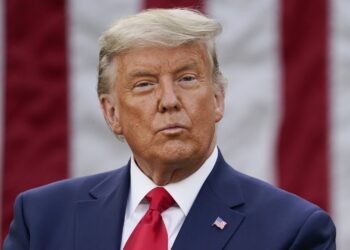
Asked whether he would meet directly with US President Donald Trump, Pezeshkian pointed to what he described as years of broken agreements and military attacks during periods of negotiations.
He recalled the collapse of the Joint Comprehensive Plan of Action and subsequent negotiations, arguing that Iran had repeatedly entered talks only for agreements to be abandoned or followed by military action.
“The first thing that needs to happen is that the distrust created by this war has to be overcome,” he said.
Pezeshkian said Washington would also have to demonstrate that it did not intend to overthrow the Iranian government before direct negotiations could take place.
Iran Rejects Nuclear Weapons, Backs Inspections
On Iran’s nuclear programme, Pezeshkian said Tehran was willing to negotiate limits and allow inspections within the framework of international agreements.
He rejected claims that Iran was seeking nuclear weapons, saying the development of such weapons was prohibited under Islamic religious principles.
“Developing- developing- nuclear weapons is haram,” he said.
Pezeshkian also said Iran could reach an agreement on inspections with the International Atomic Energy Agency as part of new negotiations.
He argued that Iran had previously complied with international inspection arrangements but accused the United States and Israel of attacking nuclear facilities despite those arrangements.
Pezeshkian Defends Iran’s New Supreme Leader
The Iranian president also discussed the country’s new Supreme Leader, saying he had met with him twice.
Pezeshkian rejected concerns about the leader’s health and said he was medically fit after the injuries he sustained during US-Israeli strikes.
“From a medical standpoint, he’s completely healthy. Hear this from me as a physician, and accept it. He has no issues,” Pezeshkian said.
He explained that the Supreme Leader had remained out of public view partly because of security concerns, arguing that Iranian officials involved in negotiations had previously been targeted.
Pezeshkian said Iran had established a six-member team made up of representatives from various government institutions, security forces and parliament to coordinate decisions concerning negotiations.
President Rejects Pressure Over Economic Sanctions
The Iranian president also criticised the economic sanctions imposed on his country, arguing that restrictions affecting food, medicine and other necessities ultimately hurt ordinary citizens.
He described the sanctions and military campaign against Iran as “inhumane and savage” and accused the United States and Israel of committing what he called genocide.
Pezeshkian maintained that Iran was not seeking war and said the country would defend itself if attacked.
“We don’t want to fight, but certainly, if they strike us, we will defend ourselves,” he said.
He also defended the Iranian government’s handling of protests, acknowledging that innocent people had been killed while arguing that armed individuals had joined demonstrations and attacked security forces.
Iran Refuses To Release Americans As Gesture
Asked why Iran would not release two Americans detained in the country as a gesture aimed at rebuilding trust, Pezeshkian questioned whether such a move would change Washington’s approach.
“Do you think by setting them free, we can rebuild trust?” he asked.
He said Iran had previously released prisoners as part of an understanding with the United States but claimed Washington failed to fulfil its side of the agreement concerning Iranian funds.
Pezeshkian said Tehran remained open to negotiations but wanted the United States to honour commitments already made.
Pezeshkian Leaves Door Open For Trump Meeting
Despite repeatedly questioning whether direct talks with Trump would be productive, Pezeshkian did not completely rule out future engagement.
He said Iran would need to see evidence that Washington could be trusted to honour written agreements before a direct meeting could take place.
“Let them abide by what was written. And then, we can sit down closely and resume negotiations,” he said.
Pezeshkian also addressed threats against Trump and his family, saying the Iranian government was not seeking such actions and that some of the rhetoric was driven by anger over the conflict.
“If in Iran think if something happens to the family. We in the government do not want to dominate- if we intended to do so, we wouldn’t be sitting at the negotiating table,” he said.
He concluded by saying Iran wanted peace and better relations with neighbouring countries, arguing that the region could work together on development if the conflict ended.
“We’re all friends with our neighbors. They have inflicted the war on us. We have no intentions of having any conflict, we can join hands and develop the region,” he said.