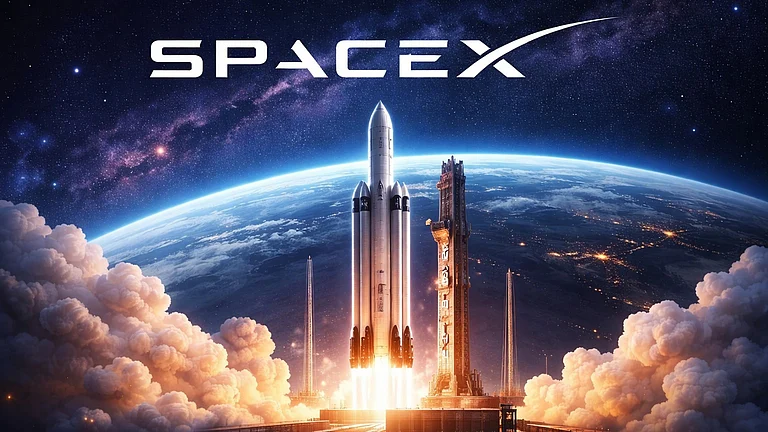
US President Donald Trump purchased up to $5m worth of bonds issued by SpaceX, the aerospace company owned by billionaire Elon Musk, shortly before announcing a policy intended to accelerate commercial space transportation, according to financial disclosure documents released on Thursday.
The investment was part of 517 financial transactions Trump made in August, renewing concerns about potential conflicts of interest surrounding his business dealings while in office.
The filings also showed that Trump bought up to $25m in Meta shares, as much as $6m in Microsoft stock and a smaller quantity of Oracle shares.
The purchases came weeks before Trump hosted Musk, Meta chief executive Mark Zuckerberg and other artificial intelligence industry leaders at a White House summit. During the event, Trump opposed calls for tighter regulations to address safety concerns, favouring a less restrictive approach.
Richard Painter, who served as the chief ethics lawyer under former President George W. Bush, told CNN on Thursday that the transactions could raise questions about the president’s financial interests.
“There is a conflict of interest. I’m not saying he’s doing anything illegal, but this really gives the appearance of corruption,” Painter said.
Painter, now a professor at the University of Minnesota Law School, noted that the president, vice president, and members of Congress are exempt from federal conflict-of-interest laws that apply to other government officials.
The White House, however, said Trump had no direct involvement in managing the investments.
“President Trump’s stock and bond portfolio is independently managed by third-party financial institutions,” White House spokesperson Davis Ingle said in a statement to CNN. “All holdings are maintained in discretionary accounts and invested through computer-based model portfolios that automatically replicate recognized indexes, such as the Schwab 1000.”
Ingle further maintained that Trump and his family had no control over the investment decisions.
He said neither Trump nor “any member of his family has any ability to direct, influence or provide input regarding how the portfolio is invested or when investments are bought or sold.”
“All investment decisions are made entirely by independent managers. There are no conflicts of interest,” the spokesperson added.
Despite the White House’s explanation, the timing of the SpaceX and Meta investments has attracted attention.
According to the filings, Trump bought between $1,000,001 and $5m in senior unsecured SpaceX bonds on August 18. The bonds are due in July 2031 and carry an interest rate of 5.35 per cent.
Two days later, the White House announced that Trump had signed a national security presidential memorandum aimed at ushering in what it described as the “golden age” of American space transportation.
The policy seeks to increase the number of launches and reentries conducted on US soil to more than 1,000 annually by 2030. It also aims to speed up approval processes by streamlining permits and environmental reviews.
SpaceX, a major federal contractor, could benefit from the changes because of its extensive involvement in commercial and government space operations.
Asked what advice he would have given Bush if the former president had considered purchasing securities issued by a federal contractor, Painter responded bluntly.
“No effing way. Don’t buy the bonds. Don’t do that.”
Democratic Senator Elizabeth Warren of Massachusetts also criticised Trump’s financial activities, accusing him of using his position for personal gain while Americans face rising living costs.
“Rather than bringing down the cost of gas and groceries, President Trump is using his office to enrich himself. That’s corruption, plain and simple,” Warren told CNN in a statement.
She called on lawmakers to introduce restrictions on the financial activities of elected officials, including the president.
“It’s long past time for Congress to act and ban stock ownership and trading by members of Congress and the president,” Warren said.
The disclosure of the transactions has renewed debate over whether existing ethics safeguards adequately address potential conflicts involving the president’s private investments and government decisions that may affect companies in which he holds financial interests.