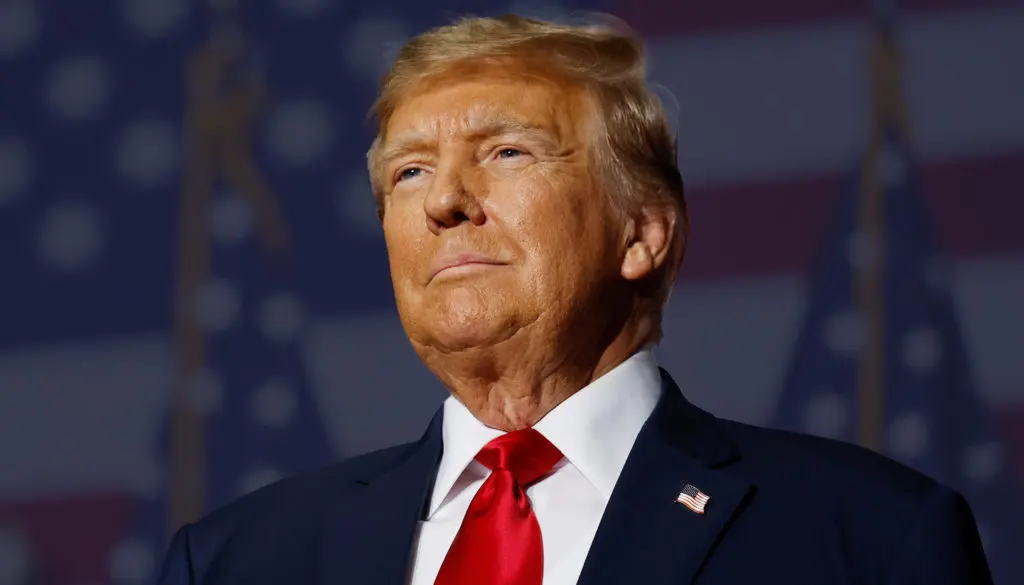

US President Donald Trump and his Department of Justice have adopted a confrontational position towards Democrats following their victories in last week’s midterm elections, raising the prospect of a major political clash as the opposition prepares investigations into his administration.
Trump set the tone in a social media post, describing investigative demands already made by Democrats as “extortion at the highest level” and insisting that those responsible should face consequences.
Attorney General Todd Blanche also defended the president’s position, suggesting that Democrats could face criminal investigations over their planned inquiries into the administration.
“They are not allowed to just go around threatening existing members of the administration, to go around threatening companies, and that’s what President Trump is extremely worried about and he should be,” Blanche said during appearances on Sunday political programmes.
Meanwhile, Democratic Representative Robert Garcia, who is expected to lead the influential House Oversight Committee in the next Congress, said his party would investigate what he described as the “Trump crime family”.
Garcia dismissed suggestions that the administration’s threats would discourage Democrats from pursuing investigations.
“The days of us not fighting back are over,” the California lawmaker said.

The growing tension points to a potentially difficult final two years of Trump’s presidency, with Congress expected to face renewed pressure to exercise its constitutional oversight responsibilities.
According to The Associated Press Voter Poll, a survey of more than 100,000 people who voted in the midterm elections, approximately seven in 10 voters believe Congress has not done enough to provide checks and balances on presidential powers.
Democrats have also indicated that impeachment proceedings could be considered as part of their efforts to hold members of the administration accountable.
House Democratic leader Hakeem Jeffries said officials found to have taken advantage of or stolen from Americans should face appropriate consequences under the law.
“If there are people who have been shortchanging the American people, screwing over the American people, or stealing from the American people, then they need to be held accountable in a manner consistent with Congress’ role, constitutionally,” Jeffries said.
However, some Democrats have cautioned against allowing investigations and political confrontations to dominate their agenda, arguing that improving the financial conditions of ordinary Americans should remain their priority.
There are concerns within the party that its recent electoral successes could be short-lived if disagreements with Trump overshadow its campaign promises, particularly efforts to reduce the cost of living.
Adam Hamilton, a newly elected senator from Kansas who became the first Democrat elected to the chamber from the state in 94 years, expressed reservations about pursuing impeachment.
Hamilton said his campaign focused on bringing Americans together and that he did not want the next two years to deepen political divisions.
“I’m not as interested in impeachment as setting up guardrails,” he said.
He acknowledged the need for some investigations but maintained that Democrats should also concentrate on policies capable of improving people’s lives.
Vermont Senator Bernie Sanders, an independent who caucuses with Democrats, similarly warned against spending the entire congressional session investigating the president.
“We cannot spend all of our time investigating Trump,” Sanders said. “We’ve got to stand up for working-class families, make a real difference in their lives.”
Jeffries also questioned the possibility of cooperation with the Trump administration following the president’s decision to appoint longtime adviser Stephen Miller as chief of staff, replacing Susie Wiles.
Although Jeffries had previously expressed willingness to work with Republicans whenever possible, he described Miller’s appointment as an “awful choice” and ruled out working with him.
“There’s not going to be an opportunity, certainly, to work with Stephen Miller and what he represents. And we’re committed to forcefully pushing back against the extremism that they may try to continue to unleash on the American people,” he said.
Miller, who played a major role in developing Trump’s immigration enforcement policies, faced criticism from Democrats over his involvement in the administration’s mass deportation programme.
Immigration enforcement was also a major issue during the midterm elections, with the AP Voter Poll indicating that approximately six in 10 voters believed the administration had gone too far in its actions.
Jeffries further declared his support for a resolution introduced by Republican Representative Thomas Massie seeking the impeachment of Defense Secretary Pete Hegseth.
He said Democrats would consider the proposal when lawmakers return to the Capitol, adding that Hegseth should leave office.
“I’m a hard yes on the Hegseth resolution,” Jeffries said.
Hegseth, however, dismissed the impeachment effort in a video, describing it as an attempt at “the politics of personal destruction” and insisting that it would not succeed.
Meanwhile, the incoming Democratic senators have raised questions about the party’s leadership, particularly Senate Minority Leader Chuck Schumer, who is expected to retain his position after helping Democrats regain control of the chamber.
Hamilton disclosed that he had spoken with Schumer about his concerns, describing the New York senator as a polarising figure in Kansas.
He said he preferred a leader who could attract support across party lines and promote cooperation between Republicans and Democrats.
“What I’d be looking for is a leader who can lead from the center, somebody who can bring Republicans and Democrats together,” Hamilton said.
“It feels like it is a time for fresh and new ideas and somebody who can unite us instead of dividing us.”
Hamilton added that he would consult other Democratic senators before making any recommendations concerning the leadership position.
Another incoming senator, Abdul El-Sayed of Michigan, also expressed reservations about Schumer, who did not support his candidacy during the Democratic primary.
El-Sayed said he had initially supported Maryland Senator Chris Van Hollen for the leadership position but acknowledged that Van Hollen did not appear interested in contesting for the role.
He added that he and Schumer had eventually found common ground after the primary election, despite their earlier differences.
“The question to me is, who wants to be the leader who’s going to make sure that we deliver on the mandate that we just got?” El-Sayed said.
The developments signal an increasingly difficult political relationship between Trump and congressional Democrats, with investigations, possible impeachment proceedings and disagreements over the administration’s policies expected to shape the next phase of American politics.