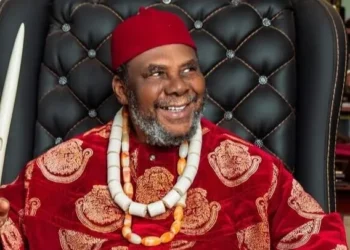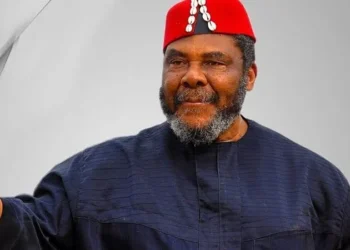
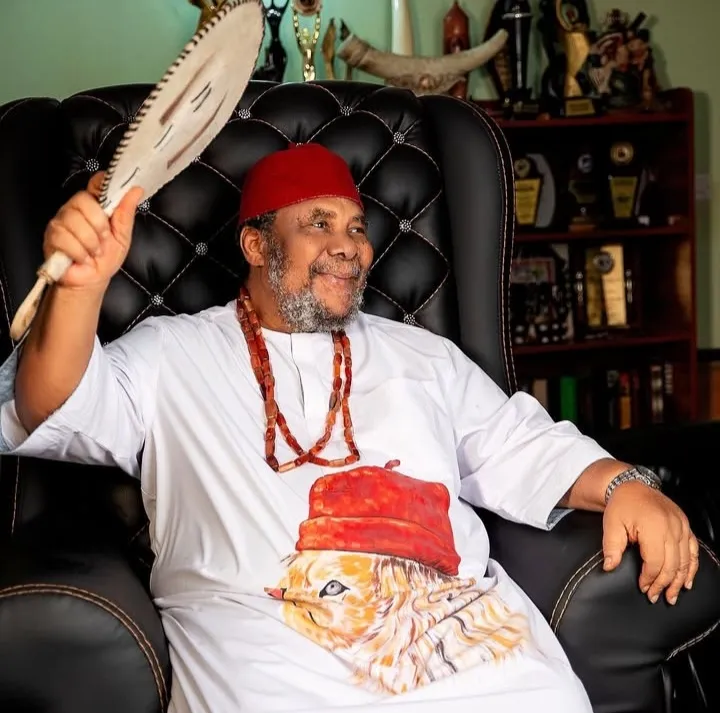

Nigeria is in mourning, and if you grew up watching Nigerian movies, this one hurts differently. Chief Pete Edochie has passed on at 79, leaving behind a body of work that practically built the Nollywood we know today. He did not just act; he owned the screen. Whenever his deep voice came through the television speakers, everybody in the sitting room kept quiet. His whole life was dedicated to the arts, starting way back in 1967 when he joined the Eastern Nigeria Broadcasting Corporation as a broadcaster, rising all the way to Director of Programmes at the Anambra Broadcasting Service before he even became a household face in movies.
From Broadcasting to Making Nollywood What It Is Today
Before social media started turning his lines into memes and stickers, Pete Edochie was a proper broadcaster who knew how to use words. When he played Okonkwo in the 1980s television adaptation of Chinua Achebe’s Things Fall Apart, he brought that book to life in a way nobody has matched since. After that, he went on to build a filmography that defined an entire era of Nigerian cinema:
- The King of Proverbs: Whether he was playing a strict father, an Igwe, a ruthless chief, or a man fighting for his family in classics like Living in Bondage, Rituals, Igodo, Narrow Escape, Egg of Life, and Lionheart, Pete Edochie dropped Igbo proverbs like he was breathing. He made you respect our culture just by watching him speak.
- Pure Presence: He never needed to shout or jump around to hold a scene. One long look, one quiet pause, or one heavy proverb from him could change the entire mood of a movie.
- Proudly Nigerian, Never Diluted: He carried his identity everywhere he went. He proved that you can tell deeply local Nigerian stories, in our own way and our own pace, and the whole world will still sit down and watch.
Nature Is Taking Its Course, Where Are the Replacements?
Seeing our legends leave one after another is a hard pill to swallow, and it brings up an uncomfortable truth nobody in Nollywood wants to face. Nature is taking its course. We lost Olu Jacobs; we have lost so many veterans who built this industry from scratch in the days of VHS cassettes, and now Pete Edochie is gone. Meanwhile, the legends still with us, people like Nkem Owoh (Osuofia), Patience Ozokwor (Mama G), and Ngozi Ezeonu, are getting older. They cannot carry these heavy elder roles forever.
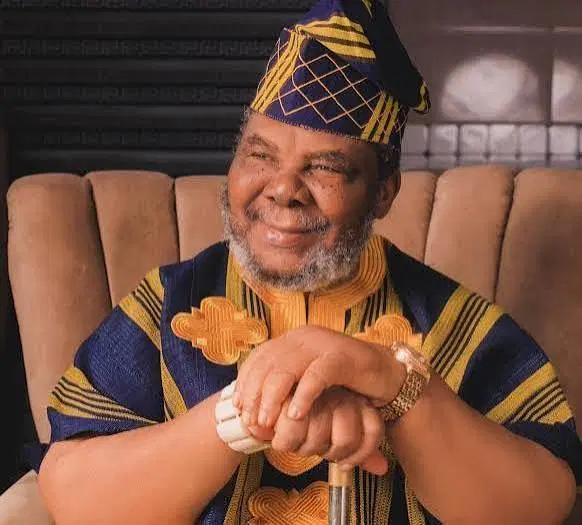
Look at the industry right now and be honest with yourself: where are the replacements? Even the senior actors holding things down today, like Mike Ezuruonye and his mates, still came up under that older school of acting. After them, there is a big gap that nobody seems ready to fill.
Is Modernity Making Nollywood Lose Its Nigerian Soul?
Nobody is saying Nollywood should go back to poor picture quality or 1990s cameras. Good production, Netflix deals, and cinema budgets are great. The problem is that somewhere along the line, modernity started making our actors look disconnected from who we actually are.
Today, many younger actors can wear agbada, isiagu, or coral beads on set, yet the moment they open their mouths, you can tell it is just costume. The proverbs sound crammed, the body language looks like something copied from American series, and everybody is trying so hard to sound “international” that the real Nigerian flavor disappears. Wearing traditional clothes is easy; carrying Nigerian heritage in how you walk, how you pause, how you talk, and how you carry yourself is something else entirely.
My View
Pete Edochie lived and breathed his craft, and the best way Nollywood can honor him is not just typing “RIP legend” on Instagram, but taking a hard look at where our movies are going.
An industry cannot live on old memories forever, yet it also cannot grow properly if the new generation treats Nigerian culture like something foreign they only wear when a script demands it. Directors, producers, and casting teams need to start looking for and training actors who genuinely understand our languages, our elders, and our everyday Nigerian reality, not people who act like they are uncomfortable in their own skin.
Icons like Pete Edochie, Olu Jacobs, Nkem Owoh, and Patience Ozokwor became unforgettable because they were 100 percent original and proudly Nigerian. If Nollywood loses that spirit, no amount of modern packaging will save it.